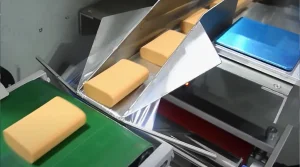
Factory Price vs. Landed Cost: What Toy Buyers Need to Know
Why is the cheapest toy factory not always the best choice? Learn to compare factory prices, shipping fees, import duties, and landed costs.
#1 Toys Manufacturer in China. WhatsApp: +86 139-6690-0919. Email: [email protected]

#1 Toys Manufacturer in China. WhatsApp: +86 139-6690-0919. Email: [email protected]

If you are sourcing or selling toys in the US or EU market (especially slime, putty, or air-dry clay sensory toys), here is the bottom line:
👉 For wholesalers, brands, and retailers, the key question is not “Is it tested?” but:
“Can this product consistently pass compliance across batches and audits?”
This standard ensures the toy is physically and chemically safe for children during normal use.
It covers:
📌 Buyer insight:
If a supplier cannot clearly map product design to ASTM F963 risks, it is a high-risk sourcing option.
👉 What it means for you as a buyer:
CPSIA is a legal entry requirement for selling children’s products in the U.S.
It requires:
📌 Buyer insight:
Without CPSIA documentation, even a “safe product” cannot legally enter Amazon US or retail shelves.
👉 What it means for you as a buyer:
EN71 ensures toys are safe under EU consumer protection law.
It includes:
Plus often linked:
📌 Buyer insight:
EU compliance failures are most commonly caused by hidden chemical substances, not product design.
| Factor | ASTM F963 | CPSIA | EN71 |
|---|---|---|---|
| Market | US | US | EU |
| Type | Safety standard | Legal requirement | Regulatory standard |
| Main concern | Product safety risks | Legal market access | Child health safety |
| Key risk for buyers | Unsafe design | Missing certification | Chemical non-compliance |
| Retail requirement | Recommended/required | Mandatory | Mandatory |
For wholesalers, brands, and supermarkets, slime and air-dry clay are “high return-risk categories.”
📌 Buyer insight:
In sensory toys, compliance is not a document — it is a repeatable production system.
If you are a brand or retailer, these are the real decision filters:
✔ Full CPSIA + ASTM F963 documentation is available
✔ EN71 + REACH compliance is confirmed for EU
✔ Supplier has batch-level consistency control
✔ Material safety is validated BEFORE mass production
❌ Only “test reports” are provided without traceability
❌ No clarity on chemical formulation (especially slime/clay)
❌ Supplier cannot explain compliance differences between US and EU
❌ Documents exist but are not linked to production batches
The most important sourcing principle is:
Compliance risk is determined at the factory level, but liability is carried at the retail level.
This means:
…all carry final legal and reputational risk.
Successful toy buyers don’t just ask:
❌ “Is this product certified?”
They ask:
✔ “Can this supplier guarantee consistent CPSIA / EN71 / ASTM compliance at scale?”
👉 This shift reduces recalls, marketplace takedowns, and customs issues dramatically.
Look for suppliers who can provide:
More Related...
Why is the cheapest toy factory not always the best choice? Learn to compare factory prices, shipping fees, import duties, and landed costs.

A practical guide to toy manufacturing in China for US buyers, covering production processes, ASTM F963, CPSIA, quality control, costs, and logistics.
Learn how screen-free play creates opportunities for toy brands and why sensory products like playdough, clay, slime, and kinetic sand are a strong product fit.
Improve kids toy sales with packaging tips that communicate safety, benefits, and product experience for online shoppers.

Our team will answer your inquiries within 48 hours.
Copyright © 2026 GuangDong AKIA Technology Co,. Ltd. All Rights Reserved