Factory Price vs. Landed Cost: What Toy Buyers Need to Know
Why is the cheapest toy factory not always the best choice? Learn to compare factory prices, shipping fees, import duties, and landed costs.

Private label toys are products sold under a company’s own brand, while the manufacturing is handled by an established toy producer. This model allows small brands to enter the toy market without building a factory. To use it well, it is important to understand how private labeling works, how it differs from other manufacturing methods, and what kinds of toys are commonly offered.
Private label toys are toys made by a manufacturer and sold under another company’s brand name. In most cases, the factory already has proven product designs. The brand owner selects suitable products and adds its own logo, packaging, labels, or small design changes.
This approach does not mean the brand builds the toy from scratch. Instead, it starts with an existing product platform. Depending on the factory’s ability, changes may include colors, materials, accessories, or printed graphics while the core structure remains the same.
Private label, OEM, and ODM are often confused because all three involve outside manufacturers. The main difference is who controls the product design before production begins.
In private label manufacturing, the factory usually owns the original design, and the brand customizes selected parts of the product. OEM manufacturing follows the buyer’s complete product design, while ODM manufacturing starts with a factory-developed design that can be modified to meet customer needs.
Private label projects often require fewer engineering changes than OEM projects. As a result, development time is usually shorter. However, the level of product uniqueness may also be lower because other brands could use similar base designs.
Many toy categories are suitable for private labeling because they already have stable production methods and well-tested safety processes. The final choice depends on the target age group, material requirements, and product complexity.
Some toy types also require extra testing. For example, electronic toys need electrical safety checks, while plush toys often require testing for filling materials and seam strength. Understanding these differences helps brands make better product decisions.

Educational toys support learning through activities such as counting, matching, sorting, or language practice. They are usually designed around a specific age range because children’s thinking skills change as they grow.
Many educational toys include printed cards, puzzles, or simple interactive parts. Clear instructions and age grading are important so children can use the product in a safe and suitable way.
Plush toys are made from soft fabrics with fiber filling. During development, manufacturers pay close attention to stitching quality, filling consistency, and the strength of attached parts such as eyes, noses, or decorative pieces.
For products intended for young children, embroidered details are often preferred over small plastic parts. This reduces the risk of detachable components that could become choking hazards.
Wooden toys are commonly produced from hardwood or engineered wood with smooth, rounded edges. Surface coatings should meet toy safety requirements and remain stable during normal use.
Manufacturing also focuses on moisture control because wood can expand or shrink under different environmental conditions. Good material control helps reduce cracking and surface defects over time.
STEM toys introduce basic ideas from science, technology, engineering, and mathematics through hands-on play. They may include building parts, gears, magnets, or simple electronic components.
Because these toys often contain multiple pieces, manufacturers must carefully evaluate mechanical safety, assembly quality, and clear labeling. Age recommendations become especially important as product complexity increases.

Outdoor and activity toys include products such as flying discs, sports sets, ride-on toys, and sand play equipment. These toys are designed to handle repeated movement and changing weather conditions.
Material durability is an important part of development. Manufacturers also test products for impact resistance, load capacity, and surface safety to reduce wear during regular outdoor use.
Arts and crafts toys encourage children to create with drawing tools, modeling materials, paper, or simple craft kits. These products often contain several different material types in one package.
Safety evaluation focuses on more than the finished toy. Paints, adhesives, inks, and modeling compounds should meet applicable chemical safety requirements, especially for products intended for younger children.
Building a toy factory requires large investments in equipment, skilled workers, quality systems, and safety management. For many small brands, private label manufacturing offers another path. It allows them to use existing production resources while focusing on product planning, compliance, and customer needs.
Opening a factory involves costs beyond production equipment. Companies also need buildings, production lines, testing tools, warehouse space, and trained staff. These expenses can be difficult for a new business to manage.
With private label toys, the manufacturer already owns these facilities. The brand mainly invests in product customization, packaging, certification, and inventory. This reduces the amount of capital needed before the first product launch.
Many private label products are based on designs that have already been produced and tested. Because the basic structure already exists, development usually begins with customization instead of a completely new engineering process.
This can shorten the time needed for design reviews, prototype changes, and production preparation. Even so, every customized product should still complete the required safety testing before entering the market.
Toy production includes many technical steps, such as material sourcing, mold maintenance, process control, and quality inspection. Each stage requires specialized knowledge and consistent management.
By working with an experienced manufacturer, small brands do not need to build these systems from the ground up. Instead, they can spend more time reviewing product specifications, monitoring quality results, and confirming that production follows agreed standards.
Launching a new toy always involves some uncertainty. Customer feedback may lead to changes in colors, packaging, or product features after the first production run.
Private label manufacturing makes it easier to begin with smaller production quantities when available. This allows brands to evaluate product performance, collect user feedback, and make practical improvements before planning larger orders.

Without the daily work of running a factory, small brands can devote more attention to the product itself. This includes selecting suitable age groups, improving packaging, writing clear instructions, and reviewing safety information.
Customer experience also extends beyond the toy. Easy-to-read labels, durable packaging, and accurate product descriptions help users understand how to use the product safely and as intended. These details often play an important role in long-term product quality.
Private label toy development follows a series of planned steps, from choosing a product to final inspection. Although each project is different, most manufacturers use a similar workflow. A clear process helps reduce errors, improve communication, and support consistent product quality.
The first step is to choose the type of toy and the children it is designed for. Age group affects almost every part of product development, including size, materials, safety features, and testing requirements.
Manufacturers also consider how children in different age ranges play and learn. A toy for toddlers has very different design rules than one made for school-age children or teenagers.
After selecting the toy category, the next task is to define its key features. This may include dimensions, materials, colors, moving parts, or simple interactive functions.
Safety requirements should be reviewed at the same time. Designers need to consider risks such as sharp edges, small detachable parts, pinch points, or unsuitable materials before production begins.
Private label projects usually start with an existing product rather than a completely new design. Brands can often adjust visual and functional details while keeping the main product structure unchanged.
Common changes include color combinations, printed graphics, packaging, instruction manuals, accessories, or surface finishes. Some manufacturers also allow small structural changes if they do not affect product safety or production stability.
Before mass production, the manufacturer prepares one or more prototypes for review. These samples allow both sides to check whether the product matches the approved specifications.
The evaluation may include appearance, dimensions, assembly quality, function, and ease of use. If problems are found, changes are made before moving to the next stage, reducing the chance of costly production errors.

Packaging is developed alongside the product because it must protect the toy during storage and transportation. It also provides important information for consumers.
Labels normally include the product name, recommended age, safety warnings, manufacturer or importer details where required, and care instructions. Clear and accurate labeling helps users understand how the toy should be used.
After the design is finalized, the product should complete the required safety testing before entering the market. The exact tests depend on the toy type and the country where it will be sold.
Testing may cover mechanical safety, chemical content, flammability, and other requirements defined by local regulations. Documentation from accredited laboratories is commonly used to demonstrate compliance with applicable standards.
Once testing is complete and production is approved, manufacturing begins. During this stage, factories monitor materials, assembly processes, and finished products to maintain consistent quality.
Final inspections are usually carried out before shipment. Inspectors check product appearance, function, labeling, packaging, and quantity to confirm that the finished toys meet the agreed specifications and quality requirements.
Selecting a toy category is one of the earliest product decisions. It affects design, safety testing, production methods, and long-term product management. Instead of following short-term trends, brands should compare different toy categories based on technical requirements and the needs of their target users.
Children’s physical and cognitive abilities develop quickly during childhood. A toy that is suitable for one age group may present safety or usability problems for another.
Age grading should be based on the toy’s design, size, function, and possible hazards. Manufacturers often evaluate factors such as small parts, required motor skills, and user understanding before assigning an age recommendation.
Some toys are designed mainly for open-ended play, while others focus on teaching specific skills such as counting, building, or problem-solving. Many products combine both purposes to different degrees.
When selecting a toy category, the intended learning goal should match the child’s developmental stage. Features should remain simple enough for the target age instead of adding unnecessary functions that may increase complexity.
Some toy categories have strong seasonal demand. Outdoor toys may sell more during warm months, while holiday-themed products often have a short sales period.
Evergreen categories, such as building toys, puzzles, and basic plush toys, usually remain relevant throughout the year. Understanding these patterns helps brands plan production schedules and inventory more effectively.

Different toy categories present different safety risks. Plush toys require attention to seam strength and filling materials, while wooden toys need smooth edges and stable surface coatings.
Electronic toys, ride-on products, and activity toys often require additional testing because they include moving parts or electrical components. Safety requirements should always be reviewed before finalizing the product category.
Not all toy categories require the same level of manufacturing expertise. Simple products with fewer components are generally easier to produce and inspect for quality consistency.
Products with electronics, precision mechanisms, or many small parts usually involve more assembly steps and stricter quality control. Understanding manufacturing complexity early helps brands set realistic development plans and quality expectations.
Toy safety is a basic part of product development, not a final step before shipping. Different countries have different legal requirements, but they all aim to reduce risks during normal use and foreseeable misuse. Understanding the main safety standards helps brands prepare products for testing and market entry.
Toy safety regulations are designed to reduce hazards that children may face during play. These rules cover product design, materials, labeling, and performance under normal use conditions.
Meeting safety requirements also requires proper documentation. Test reports, technical files, and product records help demonstrate that a toy has been evaluated according to the regulations of its target market.
Physical and mechanical tests examine whether a toy can cause injury during normal use or after reasonable wear. Common checks include sharp edges, sharp points, small parts, moving components, and structural strength.
Some tests simulate dropping, twisting, pulling, or compressing the toy. These evaluations help determine whether parts may break off or create hazards during expected use by children.
Toy materials should be evaluated for chemicals that may present health risks. Testing often includes heavy metals, restricted elements, and certain chemicals used in plastics, coatings, textiles, or surface finishes.
The exact limits depend on the regulations of the destination market. Manufacturers usually review raw materials before production to reduce the chance of failing laboratory testing later.
Many toy safety regulations include flammability requirements for materials such as fabrics, plush coverings, costumes, and certain decorative parts. The goal is to reduce fire risks during normal use.
Testing measures how quickly a material burns under controlled laboratory conditions. Products that burn too rapidly may not meet the safety requirements of the intended market.

Age grading helps match a toy with the abilities and safety needs of children at different stages of development. It is based on product design, function, and potential hazards rather than marketing alone.
Warning labels provide additional safety information when needed. Common examples include choking hazard statements, adult supervision advice, and instructions for proper use or assembly.
Independent laboratory testing provides an objective evaluation of whether a toy meets applicable safety requirements. Many manufacturers submit production samples to accredited laboratories before the product is released.
Testing should represent the final production version whenever possible. If important design or material changes are made later, additional testing may be required to confirm continued compliance.
ASTM F963 is the primary toy safety standard used in the United States. It covers mechanical and physical safety, flammability, and requirements for certain chemicals used in toys.
The standard is updated from time to time as new safety information becomes available. Manufacturers should confirm that testing follows the current version required by U.S. regulations.
EN 71 is the main toy safety standard used in the European market. It consists of several sections that address topics such as mechanical safety, flammability, and the migration of certain chemical elements.
Different parts of EN 71 apply to different product types. The required testing depends on the toy’s design, materials, and intended use.
The Consumer Product Safety Improvement Act (CPSIA) is a U.S. law that establishes additional safety requirements for children’s products. It includes limits for lead content and certain phthalates, along with rules for product tracking labels and compliance documentation.
For many children’s toys sold in the United States, compliance involves both CPSIA requirements and applicable ASTM F963 testing. The specific obligations depend on the product category and age group.
ISO 8124 is an international series of toy safety standards developed by the International Organization for Standardization (ISO). It provides guidance on mechanical safety, flammability, and chemical aspects of toy products.
Although ISO 8124 is widely recognized around the world, it is not automatically a legal requirement in every country. Some regions adopt it directly, while others use national standards that include similar technical principles.

Good toy design combines safety, function, and child development. Every design choice, from materials to product size, can affect how a toy performs during everyday use. Careful planning at the design stage also helps reduce manufacturing problems and supports more consistent product quality.
Children develop different physical, cognitive, and social skills as they grow. A toy should match the abilities of its intended age group rather than simply appealing to a wide audience.
Designers consider factors such as hand strength, coordination, attention span, and problem-solving ability. These factors influence the toy’s size, complexity, and the way children are expected to interact with it.
Material choice affects safety, durability, appearance, and manufacturing methods. Common options include plastics, wood, fabric, silicone, and metal, depending on the product type.
Materials should also meet the safety requirements of the target market. In addition to regulatory compliance, manufacturers often evaluate consistency, surface quality, and compatibility with the production process.
Children often drop, pull, twist, or repeatedly use toys during normal play. The product should remain functional without creating new safety risks as it wears over time.
Designers may strengthen joints, improve fastening methods, or select materials with better wear resistance. Durability testing helps identify weak points before large-scale production begins.
A toy should fit comfortably in a child’s hands and be easy to hold, move, or operate. Controls, handles, and moving parts should match the physical abilities of the intended users.
Simple operation also reduces confusion during play. Clear product design often removes unnecessary steps and allows children to interact with the toy in a natural and predictable way.
Inclusive design aims to make toys usable by children with different abilities whenever practical. This may involve considering vision, hearing, movement, or learning differences during product development.
Examples include larger handles, easy-to-read graphics, simple instructions, or parts that require less force to operate. These adjustments should support usability without changing the toy’s main purpose.
Sustainable toy design considers the environmental impact of a product throughout its life cycle. This may include reducing unnecessary material use, improving packaging efficiency, or selecting recyclable materials where appropriate.
Design also plays a role in product longevity. Toys that are durable, easy to maintain, and less likely to break may remain in use longer, helping reduce unnecessary waste over time.

Material selection affects safety, durability, appearance, and manufacturing methods. Different toy categories often require different material combinations to meet functional and regulatory needs. Understanding the basic properties of common materials helps brands make informed design and production decisions.
Plastics are widely used in the toy industry because they can be molded into many shapes and support high-volume production. Different plastics have different strengths, flexibility, and surface properties.
The material should be selected according to the toy’s function rather than cost alone. Manufacturers also verify that the plastic meets applicable safety requirements for the intended market.
Acrylonitrile Butadiene Styrene (ABS) is a rigid engineering plastic with good impact resistance. It is commonly used for building toys, vehicle bodies, and electronic toy housings.
ABS provides a smooth surface that is suitable for painting or printing. It also maintains its shape well during normal use, making it a common choice for durable molded parts.
Polypropylene (PP) is a lightweight plastic with good chemical resistance and flexibility. It is often used for storage containers, toy accessories, and parts that bend during normal use.
Because PP resists moisture and many household chemicals, it performs well in products that require repeated handling. It is also commonly used for living hinges in molded plastic parts.
Thermoplastic Elastomer (TPE) combines rubber-like flexibility with the processing methods of plastic. It is frequently used for soft grips, flexible toy parts, and squeeze toys.
TPE can improve comfort and reduce surface hardness in certain applications. Manufacturers select specific grades based on the required softness, durability, and safety performance.
Wood is commonly used for puzzles, stacking toys, building blocks, and educational products. Hardwoods and engineered wood panels are both used, depending on the product design and manufacturing process.
The wood should be properly dried to reduce changes caused by moisture. Smooth sanding and safe surface finishes also help improve product quality and reduce the risk of splinters.

Fabric materials are used for plush toys, dolls, soft books, and fabric play sets. Common fabrics include polyester, cotton blends, and short-pile plush, depending on the intended texture and function.
Manufacturers also evaluate the filling material, seam strength, and colorfastness. These factors help the toy remain safe and maintain its appearance during repeated use.
Silicone is used in some toys because it remains flexible across a wide range of temperatures. It is commonly found in teething products, sensory toys, and soft accessory parts.
Its smooth surface is easy to clean, and it does not become brittle under normal conditions. For children’s products, the silicone grade should comply with applicable safety regulations.
Metal components are often used for axles, springs, fasteners, magnets, and structural supports. Stainless steel and coated steel are common choices because they provide strength and wear resistance.
Metal parts should have smooth edges and secure assembly. Manufacturers also evaluate corrosion resistance and the strength of connections to reduce safety risks during long-term use.
Surface finishes give toys their colors, patterns, and protective layers. They are applied to plastic, wood, and metal parts through different manufacturing processes.
Paints, inks, and coatings should meet the chemical safety requirements of the destination market. Manufacturers also check adhesion, abrasion resistance, and color stability to maintain product quality over time.
Some toy manufacturers use recycled plastics, responsibly sourced wood, or plant-based materials in selected products. These materials are chosen according to both performance requirements and available manufacturing methods.
An alternative material should not reduce product safety or durability. Before large-scale production, manufacturers normally verify that the material performs consistently and meets the same safety standards as conventional options.
Quality control begins before production starts and continues until the finished products are ready for shipment. Each inspection stage helps identify problems early, reducing waste and improving consistency. A structured quality system also supports product safety and compliance with customer specifications.
The first quality check takes place when raw materials and purchased components arrive at the factory. Materials should match the approved specifications before they enter production.
Inspectors may verify dimensions, color, appearance, material type, and supporting documents. If a material does not meet the required standard, it is normally separated for further review or returned to the supplier.

Quality checks continue during manufacturing instead of waiting until production is complete. This approach allows problems to be found before they affect a large number of products.
Inspectors monitor key production steps such as molding, assembly, printing, and fastening. Measurements, visual checks, and sampling inspections help confirm that each process remains within the required specifications.
After production is complete, finished toys are inspected against the approved product requirements. This inspection verifies that the product matches the sample confirmed before mass production.
Common inspection items include appearance, dimensions, assembly quality, labeling, accessories, and overall workmanship. Products that do not meet the acceptance criteria are removed for repair or further evaluation.
Functional testing confirms that the toy operates as intended. Depending on the product type, this may include checking moving parts, electronic functions, sound features, or assembly performance.
Durability testing evaluates how the toy performs after repeated use. Factories may simulate dropping, pulling, pressing, or repeated movement to identify weaknesses that could affect product safety or reliability.
Packaging should protect the toy during storage, transportation, and handling. Damage to the packaging may also affect the condition of the product inside.
Inspectors verify packaging materials, printing quality, barcode accuracy, warning labels, and carton strength. They also check that all required accessories, manuals, and labels are included before shipment.
Products from different production batches should maintain the same quality, appearance, and performance. Consistent production helps reduce variation between shipments and supports reliable product quality.
Traceability systems record information such as production dates, material batches, and manufacturing lines. If a quality issue is identified later, these records help manufacturers locate the affected products more quickly and accurately.
Packaging does more than protect a toy during transport. It also provides essential information for safe use, product identification, and regulatory compliance. Well-designed packaging should be clear, accurate, and suitable for the requirements of the target market.

Toy packaging should include basic product details that help users identify and use the item correctly. The exact requirements vary by country, but some information is commonly required.
Typical details include the product name, brand name, manufacturer or importer information where applicable, country of origin, and relevant compliance markings. All information should be easy to read and remain visible during normal handling.
Safety warnings inform users about known hazards that cannot be removed through product design alone. The wording should be clear, direct, and appropriate for the intended users.
Common warnings address choking hazards, adult supervision, protective equipment, or proper use. These statements should follow the regulations of the destination market and should not replace safe product design.
Age recommendations help parents and caregivers choose toys that match a child’s stage of development. They are based on safety and expected abilities rather than learning level or marketing preference.
The recommended age should reflect factors such as product size, complexity, and possible hazards. An incorrect age label may increase the risk of improper use or safety problems.
Each product should have a clear identification system for inventory management and product tracking. Barcodes support warehouse operations, retail sales, and distribution throughout the supply chain.
Many manufacturers also add batch numbers, production dates, or internal product codes. These identifiers improve traceability and help locate affected products if a quality issue is discovered later.
Some toys require written instructions to explain assembly, operation, maintenance, or storage. Clear manuals help users understand how the product should be used under normal conditions.
Instructions should use simple language and easy-to-follow illustrations when needed. Safety notes should appear in appropriate sections instead of being hidden within large blocks of text.
Many manufacturers are reducing unnecessary packaging materials while maintaining product protection. Package size, material selection, and structural design all influence packaging efficiency.
Where practical, recyclable or responsibly sourced materials may be used. However, packaging should still provide sufficient strength to protect the toy throughout storage, handling, and transportation.
Launching private label toys can simplify the manufacturing process, but it still requires careful planning. Small brands often need to balance product expectations, production limits, safety requirements, and market demand.

Toy development requires decisions about materials, design details, production methods, and testing. Lower costs may sometimes affect material choices or manufacturing processes, while higher quality standards usually require more control and evaluation.
Safety should remain a basic requirement throughout development. A lower production cost should not come from reducing necessary testing, using unsuitable materials, or removing important quality checks.
Many manufacturers set minimum order quantities (MOQs) because production setup, material purchasing, and packaging preparation involve fixed costs. For small brands, large order quantities can create inventory pressure.
Before starting production, brands should understand the factory’s MOQ requirements and evaluate storage capacity, market demand, and product lifespan. Careful planning helps reduce the risk of holding more inventory than needed.
Private label toys often begin with existing product designs, which can reduce development time but may limit customization options. Some changes may not be practical because they require new molds, different materials, or additional engineering work.
Clear communication with the manufacturer is important during the design stage. Brands should understand which changes are simple adjustments and which changes may affect cost, safety, or production feasibility.
Maintaining the same quality level across different production batches can be challenging. Small changes in materials, production settings, or assembly processes may affect the final product.
Quality control systems help manage these differences. Regular inspections, approved samples, and clear product specifications provide a reference for checking whether production remains consistent.
Toy regulations vary between countries and regions. A product that meets one market’s requirements may need additional testing or labeling changes for another market.
Small brands should identify the target markets early and review the relevant safety standards before production begins. This helps prevent delays caused by missing documents, incorrect labels, or failed testing.
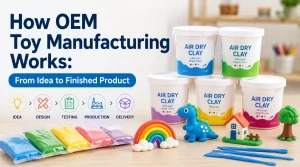
Read More >> How OEM Toy Manufacturing Works: From Idea to Finished Product
Producing too many toys can create storage costs and increase the risk of outdated inventory. Producing too few may create supply problems if demand increases unexpectedly.
A practical inventory plan should consider production time, expected demand, product seasonality, and sales performance. Starting with realistic quantities and reviewing market feedback can help guide future production decisions.
Creating a private label toy line requires more than selecting products and adding a brand name. A strong product line depends on careful planning, safety awareness, quality management, and continuous improvement. These practices help small brands build products that meet user needs while following industry requirements.
A focused product range allows brands to manage development and quality control more effectively. Starting with too many product types can make it harder to control materials, testing, packaging, and inventory.
A smaller selection also makes it easier to understand customer responses. After gaining experience and collecting market information, brands can gradually expand into related toy categories.
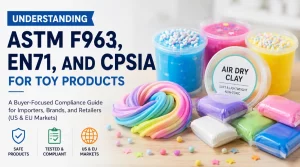
Read More >> ASTM F963, EN71, and CPSIA for Toy Products
Safety should be considered during the first design discussions, not after the product is finished. Early decisions about materials, size, structure, and functions can directly affect safety performance.
Design teams should review possible hazards before production starts. This includes considering how children interact with the toy and whether the product remains safe during expected use.
Testing helps confirm whether a toy meets performance and safety requirements. It should cover the final product design, including the actual materials and components used in production.
Testing may include mechanical checks, material analysis, durability evaluation, and other assessments depending on the toy category. Careful testing reduces the chance of unexpected issues after launch.
Good documentation supports communication between brands, manufacturers, and testing organizations. Important records may include product specifications, material information, test reports, approved samples, and production details.
Keeping accurate records also makes future updates easier. When a product needs changes, clear documentation helps teams understand what has already been tested and approved.
Real-world feedback can reveal problems that may not appear during factory testing. Parents, caregivers, and children may provide useful information about usability, durability, and overall experience.
Feedback should be reviewed carefully and used to improve future versions. Changes should still follow safety requirements and maintain the original product purpose.
A toy line should be developed with future growth in mind. Related products can often share similar design principles, materials, or target audiences.
However, expansion should be based on product performance and market understanding rather than simply increasing the number of items. A well-planned product range usually develops step by step with consistent quality standards.
Private label toys provide a practical way for small brands to enter the toy market without building their own factories. However, successful product development depends on more than selecting a design and adding a brand name.
Careful planning, proper material choices, safety compliance, quality control, and clear documentation are all important parts of the process. By understanding each stage of development, brands can create toys that meet industry requirements and provide a reliable play experience for children. A thoughtful approach helps reduce risks and supports long-term product improvement.
Why is the cheapest toy factory not always the best choice? Learn to compare factory prices, shipping fees, import duties, and landed costs.

A practical guide to toy manufacturing in China for US buyers, covering production processes, ASTM F963, CPSIA, quality control, costs, and logistics.
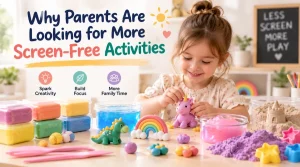
Learn how screen-free play creates opportunities for toy brands and why sensory products like playdough, clay, slime, and kinetic sand are a strong product fit.
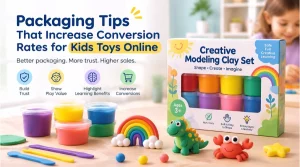
Improve kids toy sales with packaging tips that communicate safety, benefits, and product experience for online shoppers.