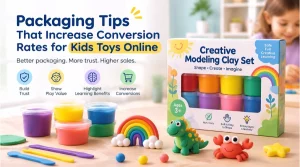
Packaging Tips That Increase Conversion Rates for Kids Toys
Improve kids toy sales with packaging tips that communicate safety, benefits, and product experience for online shoppers.
#1 Toys Manufacturer in China. WhatsApp: +86 139-6690-0919. Email: [email protected]

#1 Toys Manufacturer in China. WhatsApp: +86 139-6690-0919. Email: [email protected]

Parents are increasingly looking for activities that help children stay engaged without relying on digital screens. This does not necessarily mean eliminating technology from children’s lives. Instead, many families are looking for a better balance between digital entertainment and hands-on play.
For toy brands and retailers, this creates a growing opportunity for screen-free products that provide active participation, creativity, sensory engagement, and meaningful play time.
Air dry clay, playdough, kinetic sand, slime, craft kits, puzzles, building toys, and other hands-on activities can fit naturally into this category. However, not every screen-free toy offers the same value. Brands need to understand what parents are actually looking for and how to translate those needs into commercially viable products.
The main reason is not simply that parents dislike screens. Digital devices are now part of everyday life, so many parents are looking for activities that provide a different type of experience.
Screen-free activities can offer children opportunities to:
The key opportunity is therefore not “replacing screens.” It is offering a different form of engagement that screens cannot provide in the same way.
It is important for toy brands to understand this distinction.
Parents are not necessarily choosing between “technology” and “traditional toys.” Many families use both.
A child might watch a digital tutorial and then use air dry clay to make a model. Another child might use a tablet for entertainment and later play with kinetic sand or build a physical craft project.
This creates an important product-development insight:
The strongest screen-free products do not need to compete directly with digital entertainment. They need to offer an experience that encourages children to participate, create, manipulate, and make decisions.
One of the strongest advantages of screen-free activities is physical interaction.
With playdough, for example, children can squeeze, roll, flatten, cut, combine, and reshape the material. With kinetic sand, they can scoop, mold, compress, and build. Air dry clay allows children to create objects that can remain after the activity is finished.
These activities involve continuous physical interaction rather than simply watching content.
For product developers, this leads to a useful rule:
If a child can actively change the material or outcome through their own actions, the product has stronger potential as a hands-on screen-free activity.
Another reason for the demand for screen-free activities is the desire for more creative play.
Open-ended materials such as playdough and air dry clay allow children to create different results from the same basic product.
For example, a single playdough set can become:
This flexibility gives the product a longer range of possible activities than a toy with only one predefined outcome.
For brands, open-ended play can increase the perceived value of a product because one set can support multiple activities and repeated use.
Sensory toys are particularly well suited to the screen-free play trend because they engage multiple physical senses through direct interaction.
Common examples include:
However, sensory appeal alone does not guarantee a successful product.
A strong sensory toy should combine tactile engagement with a clear play concept, appropriate age positioning, practical packaging, and a reason for children to return to the product.
Screen-free play becomes more commercially attractive when parents can immediately understand what children are expected to do with the product.
A package that simply says “sensory dough” may communicate less value than a product built around a specific activity.
For example:
This does not mean every product needs a complicated educational curriculum.
The better approach is to give the product a clear play purpose while leaving enough flexibility for children to create their own results.
Parents often evaluate toys based on more than entertainment value. Products that combine play with creativity, exploration, or skill development can provide a stronger reason to purchase.
Screen-free sensory toys can support activities related to:
For B2B brands, the important point is to avoid making unsupported educational claims.
Product benefits should be connected to actual play actions rather than using broad claims such as “makes children smarter” or “improves intelligence.”
Another product opportunity comes from activities that children can start and continue with limited adult intervention.
Open-ended sensory materials can support this type of play because children can decide what to make and how to continue the activity.
For example, a playdough set can provide several colors and tools while allowing children to choose their own projects.
For product developers, the key is finding the right balance.
Too much structure can make a toy feel repetitive. Too little structure can make the product difficult to understand.
A strong product often provides:
Screen-free activities can also create opportunities for parents and children to participate together.
This is particularly relevant for craft kits, modeling activities, sensory sets, and educational toys.
A parent might help a child:
For brands, this can influence both product design and marketing.
Instead of positioning a product only as a “kids’ toy,” a brand can communicate how the product supports a specific shared activity.
The more clearly a product explains how it can be used, the easier it is for parents to understand its value.
Not every screen-free product automatically becomes a strong commercial product. Parents still evaluate quality, price, usability, safety, and play value.
A useful product-development framework is:
| Product Factor | What Parents May Look For | Why It Matters for Brands |
|---|---|---|
| Hands-On Interaction | Children can physically manipulate the product | Creates active engagement |
| Creativity | Children can make different things | Supports repeat use |
| Sensory Experience | Interesting textures and physical feedback | Creates product differentiation |
| Educational Value | Play can involve skills or concepts | Strengthens product positioning |
| Ease of Use | Children can understand how to start | Reduces barriers to play |
| Repeatability | Product can support multiple activities | Improves perceived value |
| Safety | Product and materials are appropriate for the intended age | Important for parent confidence and market access |
| Packaging | Easy storage and clear product presentation | Improves retail and e-commerce usability |
Brands should avoid creating a generic product and simply adding “screen-free” to the marketing message.
Instead, start with the play experience.
Decide what the child will actually do with the product.
Examples include modeling, building, creating scenes, mixing colors, making figures, or completing themed projects.
Choose the sensory material based on the intended activity.
Use playdough when: the product requires repeated shaping and reshaping.
Use air dry clay when: the product focuses on creating models that can remain after the activity.
Use kinetic sand when: the product emphasizes tactile building, molding, and sandbox-style activities.
Use slime when: stretching, mixing, squeezing, and texture-based interaction are central to the concept.
Consider whether the product should include:
The younger the target age, the more important clear and simple play guidance generally becomes.
A strong screen-free product should ideally support more than one activity.
This can increase repeat use and give parents a clearer reason to purchase a product rather than a single-use activity.
Before mass production, evaluate the formula, accessories, packaging, instructions, usability, durability, and applicable safety requirements as one product system.
Sensory toys have several characteristics that naturally align with the demand for screen-free activities.
They are generally:
This makes sensory products particularly flexible for private label development.
For example, the same basic playdough formulation can be developed into different products by changing the:
This flexibility allows brands to create differentiated products without necessarily developing an entirely new material from scratch.
For toy brands, “screen-free” should generally be treated as a product positioning angle rather than the entire product proposition.
A stronger message is usually:
Screen-free + creative play
or
Screen-free + sensory exploration
or
Screen-free + educational activity
or
Screen-free + family activity
This gives the product a more specific reason to exist.
For example, instead of positioning a product simply as “a screen-free toy,” a brand could build a product around a themed modeling activity that encourages children to create, explore colors, and complete several projects.
For toy brands, wholesalers, and retailers, product concept is only one part of the decision. Manufacturing capability also affects whether a screen-free product can be commercialized successfully.
Before selecting a supplier, consider:
For children’s products sold in North America and Europe, applicable safety and regulatory requirements should also be considered during product development rather than only after production.
Products developed for these markets may need to address standards and regulations such as ASTM F963, CPSIA, and EN71, depending on the product and destination market.
Simply describing a toy as screen-free does not explain why children will want to use it.
Better approach: Define the actual play experience first.
More components do not always create more value. Excessive accessories can increase product cost, packaging complexity, and production difficulty.
Better approach: Include accessories that directly support the intended play activities.
If children need extensive instructions before they can begin, the product may create unnecessary barriers to play.
Better approach: Provide a simple starting point while allowing open-ended exploration.
Broad claims about intelligence or development can create marketing and compliance risks.
Better approach: Describe specific play actions and observable product features.
A product that provides only one short activity may have limited perceived value.
Better approach: Design multiple activities or open-ended possibilities where appropriate.
Before launching a new screen-free sensory product, ask the following questions:
If most of these questions can be answered clearly, the product has a stronger foundation for the screen-free play market.
The growing interest in screen-free activities is not simply about reducing children’s screen time. It reflects a broader demand for hands-on experiences that encourage children to create, manipulate, explore, and participate.
For toy brands and B2B buyers, the strongest opportunity is to develop products that combine several clear benefits:
Air dry clay, playdough, kinetic sand, and slime are particularly adaptable to this product strategy because they can be developed into different themes, activity kits, color combinations, and packaging formats.
For private label brands, the key is not to create a product simply because it is “screen-free.” The better approach is to create a product that gives children a compelling hands-on reason to put the screen down and start making something.
When developing a new sensory toy, manufacturers and brands should evaluate the material, activity concept, accessories, packaging, production feasibility, and applicable safety requirements as one complete product system. This approach can help create screen-free products that are both meaningful for children and commercially practical for the B2B market.
Many parents want to balance digital entertainment with hands-on activities that encourage creativity, physical interaction, sensory exploration, and independent or family play.
Examples include playdough, air dry clay, kinetic sand, slime, arts and crafts, puzzles, building activities, drawing, and other hands-on creative projects.
Yes. Sensory toys such as playdough, kinetic sand, air dry clay, and slime can provide hands-on activities without requiring a digital screen.
Playdough allows children to squeeze, roll, cut, shape, combine, and reshape the material. Its open-ended format can support multiple creative activities with the same product.
Start with a clear play objective, choose the appropriate material, provide an accessible starting activity, allow room for creativity, and validate usability, packaging, manufacturing feasibility, and safety requirements before launch.
Yes. Hands-on toys can support activities involving fine motor practice, colors, shapes, creativity, problem solving, and following instructions. Educational claims should be based on specific product features and activities.
They can be. Sensory products offer multiple opportunities for customization through colors, themes, accessories, packaging, and activity concepts, allowing brands to develop differentiated product lines.
More Related...
Improve kids toy sales with packaging tips that communicate safety, benefits, and product experience for online shoppers.

Explore how sensory toys gain popularity online and what product features help increase engagement, sharing, and long-term market potential.
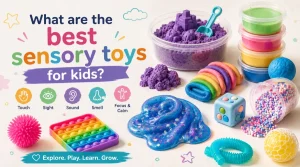
What are the best sensory toys for kids? Learn how different sensory materials support touch, focus, creativity, and child development.
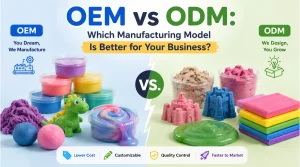
Compare OEM and ODM manufacturing models for sensory toys. Learn how each option affects product design, development speed, flexibility, and market strategy.

Our team will answer your inquiries within 48 hours.
Copyright © 2026 GuangDong AKIA Technology Co,. Ltd. All Rights Reserved