Factory Price vs. Landed Cost: What Toy Buyers Need to Know
Why is the cheapest toy factory not always the best choice? Learn to compare factory prices, shipping fees, import duties, and landed costs.
#1 Toys Manufacturer in China. WhatsApp: +86 139-6690-0919. Email: [email protected]

#1 Toys Manufacturer in China. WhatsApp: +86 139-6690-0919. Email: [email protected]
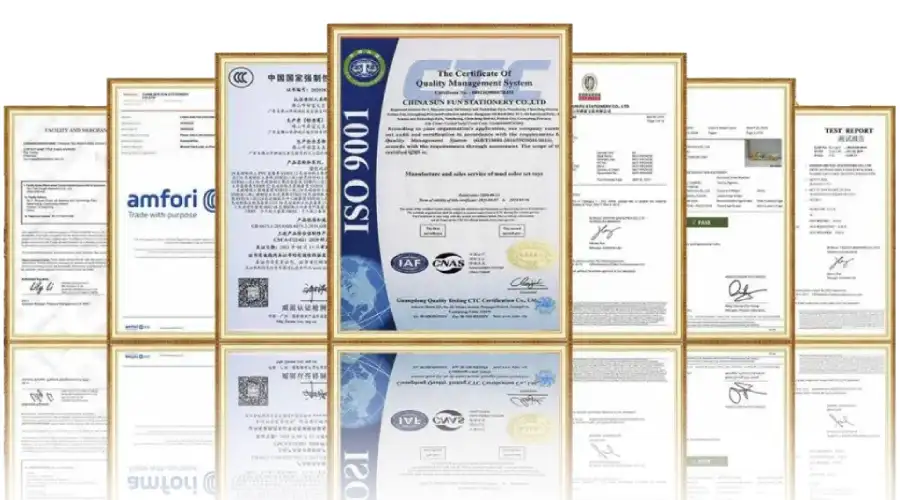
To evaluate a toy factory’s production capabilities, buyers should assess six key areas: manufacturing equipment, production capacity, quality control, product development, regulatory compliance, and supply chain management. A reliable supplier must demonstrate not only that it can manufacture a sample, but also that it can consistently produce the required quantity, quality, and specifications within the agreed delivery schedule.
For educational sensory toys such as air dry clay, playdough, kinetic sand, and slime, buyers should pay particular attention to formula consistency, material handling, filling and packaging accuracy, batch traceability, and product-specific safety testing.
A toy factory’s production capability is its ability to manufacture products according to defined specifications, at the required volume and quality level, within an acceptable lead time and cost. It involves more than machinery or factory size.
Buyers should evaluate the following six dimensions before selecting an OEM or ODM toy manufacturer.
| Evaluation Area | What to Check | Evidence to Request |
|---|---|---|
| Manufacturing equipment | Whether equipment matches the product and production process | Equipment list, production-line photos, process demonstrations |
| Production capacity | Available output, bottlenecks, and peak-season capacity | Actual production records, capacity calculations, production schedules |
| Quality control | Incoming inspection, in-process checks, and final inspection | Inspection procedures, quality records, defect-handling procedures |
| Product development | Ability to develop, test, and refine products and packaging | Sample records, formulation or design workflow, testing reports |
| Regulatory compliance | Product-specific testing, documentation, and traceability | Applicable test reports, material documentation, batch records |
| Supply chain management | Material availability, supplier reliability, and delivery planning | Procurement procedures, material lead times, contingency plans |
Decision rule: A factory should be considered production-ready only when it can provide verifiable evidence across all six areas relevant to the product. A large facility or an impressive sample alone does not establish reliable mass-production capability.
Different toy categories require different manufacturing processes. Before evaluating a factory’s equipment, identify the processes needed for your product, including material preparation, mixing, forming, filling, assembly, and packaging.
| Product Category | Key Production Processes | Important Capability Indicators |
|---|---|---|
| Air dry clay | Material preparation, mixing, kneading, portioning, sealing | Consistent texture, moisture retention, portion weight, sealed packaging |
| Playdough | Ingredient mixing, kneading, coloring, portioning, filling | Color consistency, softness, workability, batch-to-batch uniformity |
| Kinetic sand | Material blending, texture control, portioning, filling, sealing | Consistent flow and moldability, uniform texture, filling accuracy |
| Slime | Mixing, ingredient dosing, texture adjustment, filling, sealing | Consistent viscosity, appearance, portion weight, leakage prevention |
These processes are examples rather than universal equipment requirements. The appropriate setup depends on the factory’s actual formulation, product design, packaging format, and production volume.
How to judge the answer: Look for a clear explanation of how equipment affects product consistency and output. If a supplier lists machines but cannot explain the process controls or quality checks associated with them, its equipment list is insufficient evidence of manufacturing capability.
A factory’s stated daily or monthly capacity may represent theoretical output under ideal conditions. Buyers should instead evaluate practical capacity for the specific product, order quantity, packaging configuration, and delivery window.
Start with the total order quantity and the number of available production days. Then account for changeovers, planned maintenance, quality inspections, packaging, and other production constraints.
Required average daily output = Total order quantity ÷ Available production days
For example, an order of 30,000 sensory toy kits with 20 available production days requires an average output of 1,500 finished kits per day. This calculation is only a starting point: the factory must confirm that material preparation, filling, assembly, quality inspection, and packing can all support that rate.
Decision rule: Production capacity is credible when the supplier can explain the assumptions behind its output figures and map those figures to your actual order. A capacity claim without a product-specific schedule should not be treated as a delivery commitment.
Quality control should operate throughout production, not only when finished products are ready to ship. For sensory toys, a small variation in ingredients, mixing, moisture, filling, or sealing can affect usability, appearance, storage stability, and customer complaints.
The factory should define acceptance criteria for incoming raw materials, colors, containers, labels, and packaging components. Material specifications and supplier records should make it possible to identify the materials used in a production batch.
Operators or quality personnel should monitor the process characteristics that influence the finished product. Depending on the formula and product design, these may include mixing consistency, color, texture, moisture, viscosity, portion weight, assembly accuracy, and packaging integrity.
Final inspection should follow documented acceptance criteria. Typical checks include appearance, quantity, weight, labeling, packaging condition, seal integrity, and carton markings. Safety and laboratory testing should be managed separately where required; a visual inspection cannot replace laboratory testing.
| Quality Control Area | What Good Practice Looks Like | Warning Sign |
|---|---|---|
| Material control | Approved specifications and identifiable material batches | Materials are substituted without review or documentation |
| Process control | Defined parameters and recorded checks | Quality depends mainly on operator experience |
| Defect management | Defects are recorded, investigated, and corrected | Defective products are reworked without clear criteria |
| Final inspection | Documented sampling or inspection plan with acceptance criteria | The supplier relies only on informal visual checks |
| Traceability | Production batches can be linked to relevant material and inspection records | The factory cannot identify which batch used a particular material lot |
How to judge the system: Ask for examples of actual inspection records, nonconformity reports, and corrective actions, with confidential customer information removed. Procedures demonstrate what the factory intends to do; completed records help demonstrate what it actually does.
OEM and ODM projects often require more than reproducing an existing product. A capable manufacturer should be able to assess the feasibility of a requested formula, texture, color, shape, kit configuration, or packaging design before committing to mass production.
Buyers should distinguish between two common service models:
The exact division of responsibilities varies by supplier. Confirm which party is responsible for formulation, design ownership, tooling, testing, artwork approval, and final specifications.
Decision rule: A good development process ends with an approved, documented specification that production and quality teams can follow. A visually attractive sample is not enough if its formula, materials, dimensions, or packaging cannot be reproduced consistently.
For children’s toys sold in North America and Europe, regulatory compliance should be evaluated at the product and market level. Buyers should confirm which requirements apply to the specific product, intended age group, materials, design, and destination market.
ASTM F963, the U.S. Consumer Product Safety Improvement Act (CPSIA), and the European EN 71 standards serve different purposes. They should not be treated as interchangeable requirements or as one universal certification.
For the United States, buyers should verify the applicable toy safety requirements, relevant CPSIA provisions, and any required Children’s Product Certificate or third-party testing. For the European Union, buyers should verify the applicable toy safety legislation, relevant EN 71 requirements, conformity assessment, and required documentation for the product being placed on the market.
Important: Do not assume that one test report covers every product in a range. Changes to formulas, colors, components, manufacturing processes, or product design may affect testing requirements. Confirm the scope and validity of reports with the supplier and, where necessary, a qualified compliance professional or laboratory.
Decision rule: A supplier’s compliance claim is meaningful only when the supporting documents match the actual product and intended market. A general statement that a factory is “certified” is not a substitute for product-specific evidence.
Even a factory with suitable equipment can miss delivery targets if materials arrive late, packaging approval is delayed, or outsourced processes become bottlenecks. Supply chain management should therefore be part of the production capability assessment.
How to judge reliability: Ask the factory to break the quoted lead time into sample approval, procurement, production, quality inspection, and packing. A detailed schedule is more useful than a single delivery estimate because it reveals dependencies and potential delays.
A standardized scorecard makes supplier evaluation more objective. It also helps purchasing teams distinguish between a supplier that offers a low quotation and one that can reliably meet technical, quality, and delivery requirements.
The following scorecard is a practical starting point. Adjust the weights to match your product complexity, order volume, risk tolerance, and market requirements.
| Evaluation Category | Suggested Weight | Evidence for a High Score |
|---|---|---|
| Equipment and process suitability | 15% | Equipment and process controls match the product specifications |
| Production capacity and scheduling | 20% | Verified output and a feasible order-specific schedule |
| Quality control and traceability | 20% | Documented inspection, defect handling, and batch records |
| Product development and customization | 15% | Controlled sampling, revisions, and specification approval |
| Safety and regulatory documentation | 20% | Relevant, traceable documentation for the product and destination market |
| Supply chain and delivery management | 10% | Material planning, lead-time transparency, and contingency procedures |
| Total | 100% |
Weighted score formula: Category score ÷ 5 × category weight. Add the weighted scores to obtain a total out of 100.
For example, a score of 4 out of 5 in a category weighted at 20% contributes 16 points to the total score.
Use the total score to compare suppliers, not to override critical requirements. A factory should not pass solely because it scores well in equipment or capacity if it cannot provide necessary compliance evidence or meet essential product safety requirements.
| Warning Sign | Why It Matters | Recommended Follow-up |
|---|---|---|
| Capacity claims without supporting records | Actual output may be lower than the quoted figure | Request a product-specific schedule and recent production evidence |
| Samples differ from the proposed bulk specification | Mass-produced products may not match the approved sample | Confirm specifications, materials, and sample approval records |
| Incomplete or mismatched test reports | The documents may not cover the product being ordered | Verify product identity, scope, test methods, and market applicability |
| No documented defect-handling procedure | Recurring problems may not be investigated or corrected | Request an example of corrective action documentation |
| Uncontrolled material substitutions | Product performance and compliance may be affected | Agree on written change approval requirements |
| Unrealistically short lead times | Procurement, production, inspection, or packaging may be omitted | Request a milestone-based delivery plan |
One warning sign does not automatically disqualify a supplier. The key question is whether the factory can explain the issue, provide evidence, and implement appropriate corrective action. Repeated inconsistencies or refusal to provide reasonable verification deserve closer scrutiny.
Before approving a toy factory, buyers should obtain clear answers to the following questions:
The most useful supplier responses are specific and verifiable. If an answer depends on the product, ask the factory to explain the assumptions and provide a plan for your actual project.
Evaluating a toy factory’s production capabilities requires a structured review of equipment, actual output, quality control, development processes, regulatory documentation, and supply chain management. The strongest supplier is not necessarily the largest factory or the one offering the lowest price. It is the manufacturer that can demonstrate a reliable process for delivering the required product at the agreed quality, quantity, cost, and schedule.
For OEM and ODM sensory toy projects, begin with product-specific requirements, request verifiable evidence, evaluate representative samples, and document the final specifications before mass production. Use a weighted scorecard to compare suppliers, while treating product safety and other mandatory requirements as non-negotiable conditions.
If you are sourcing air dry clay, playdough, kinetic sand, or slime for a toy brand, wholesale program, retail range, or private-label craft kit, evaluate suppliers based on their ability to support your specific product and order requirements.
Guangdong-based sensory toy manufacturers can be considered for projects serving North American and European markets, provided their product capabilities, quality systems, documentation, and delivery plans meet the buyer’s requirements.
Contact our team to discuss your target product, specifications, packaging, order quantity, and delivery schedule. We can review your project requirements and identify the next steps for sampling and production planning.
More Related...
Why is the cheapest toy factory not always the best choice? Learn to compare factory prices, shipping fees, import duties, and landed costs.

A practical guide to toy manufacturing in China for US buyers, covering production processes, ASTM F963, CPSIA, quality control, costs, and logistics.

Learn how screen-free play creates opportunities for toy brands and why sensory products like playdough, clay, slime, and kinetic sand are a strong product fit.
Improve kids toy sales with packaging tips that communicate safety, benefits, and product experience for online shoppers.

Our team will answer your inquiries within 48 hours.
Copyright © 2026 GuangDong AKIA Technology Co,. Ltd. All Rights Reserved