Factory Price vs. Landed Cost: What Toy Buyers Need to Know
Why is the cheapest toy factory not always the best choice? Learn to compare factory prices, shipping fees, import duties, and landed costs.

This table is a starting point rather than a fixed rule. Observe how the child interacts with the toy, whether they stay engaged, and whether the sensory input appears comfortable. Small adjustments often lead to better results than simply choosing a different product.
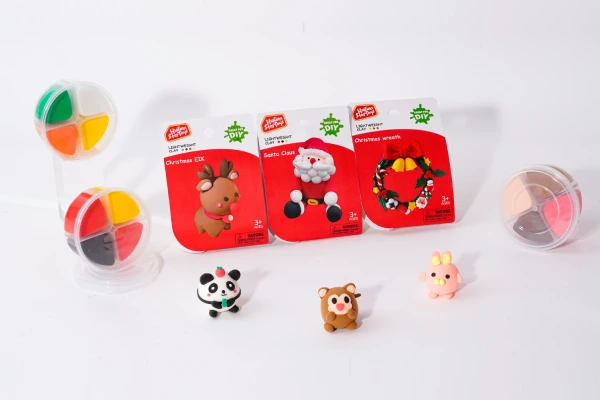
A sensory toy is designed to provide specific sensory input through touch, sight, sound, movement, or body awareness. Unlike many traditional toys, its main purpose is not simply entertainment. It encourages children to explore sensory information during play and supports age-appropriate development through repeated, hands-on experiences.
Children learn by taking in information from several sensory systems at once. Different sensory toys provide different types of input, so understanding these systems helps parents and educators choose toys that better match a child’s needs.
While touch is the most recognized sensory experience, many toys also encourage visual attention, body awareness, balance, and coordinated movement. The sections below explain the main sensory systems involved in children’s play.
The tactile system helps children recognize texture, pressure, temperature, and shape through the skin. It is one of the first sensory systems to develop and plays a key role in everyday learning.
Materials such as play dough, air dry clay, kinetic sand, and slime provide different tactile experiences. Some are soft and stretchy, while others are firm or grainy. Exploring these textures helps children compare materials and practice controlled hand movements.
Visual sensory input includes color, contrast, brightness, shape, and movement. Toys with changing patterns or moving parts encourage children to observe, track, and compare what they see.
Building toys, colorful modeling materials, and toys with simple visual patterns can all support visual attention. The goal is not to create constant stimulation but to provide clear and manageable visual information.
Auditory input comes from sounds with different pitches, rhythms, and volumes. Some sensory toys make gentle sounds that encourage listening without becoming overwhelming.
Examples include soft rattles, musical toys, or toys that produce quiet clicking sounds. For many play activities, moderate sound levels are more suitable than loud or unpredictable noise.
Proprioception is the body’s awareness of muscle force and joint position. It helps children understand how their bodies move without needing to watch every action.
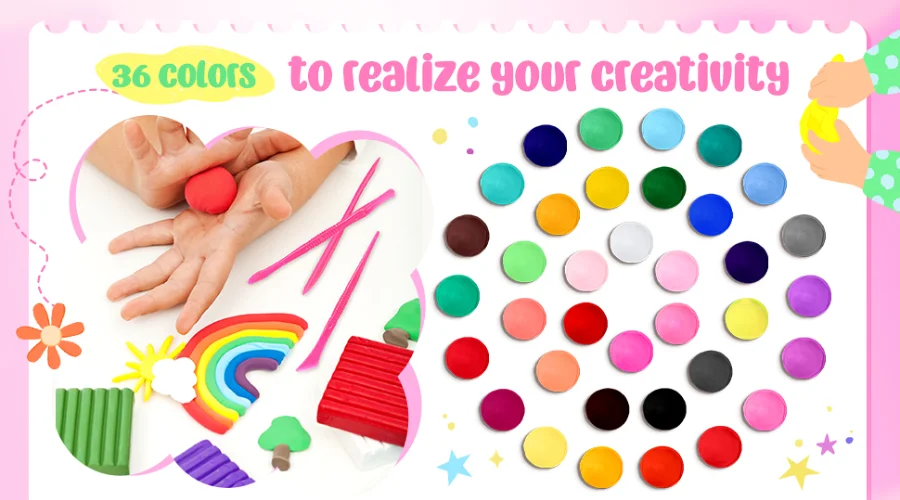
Toys that involve squeezing, pulling, pressing, rolling, or carrying objects provide proprioceptive input. Modeling compounds are a common example because children use controlled hand pressure while shaping the material.
The vestibular system helps control balance, head position, and movement. It allows children to stay upright, coordinate movements, and adjust to changes in direction.
Movement-based toys such as balance boards, stepping stones, or swings provide vestibular input. These activities should always match the child’s age and be used under appropriate adult supervision.

In practice, the two types of play often overlap. For example, a child may use play dough to explore texture during one activity and later use it to create animals or letters. The toy stays the same, but the purpose of the play changes.
Choosing a sensory toy is not about finding the most popular product. A better approach is to look at the child’s sensory preferences, the purpose of play, developmental stage, and product safety. Following these steps makes it easier to choose a toy that fits the child’s needs instead of relying on trial and error.
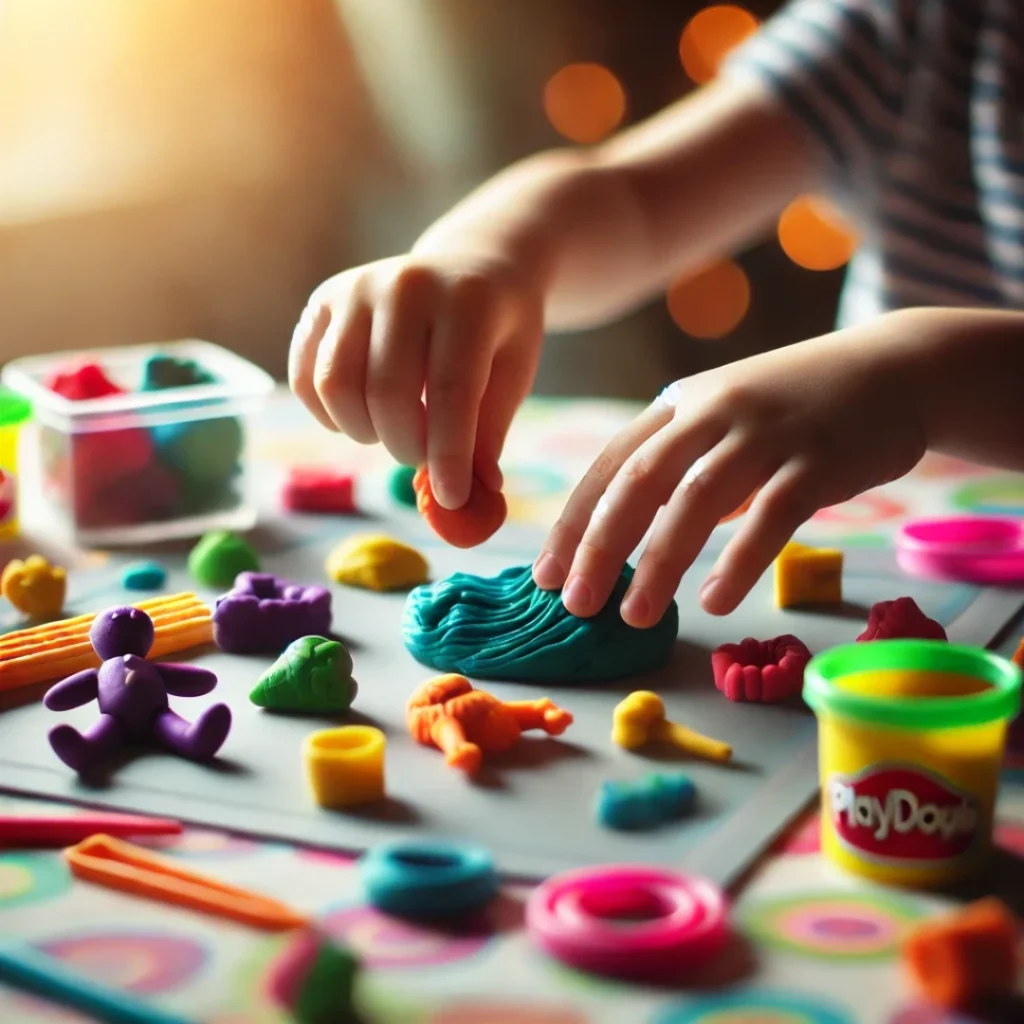
Start by observing how the child naturally interacts with different materials and activities. Some children enjoy messy textures, while others prefer clean, predictable surfaces. Their everyday play often provides useful clues.
Notice what keeps the child engaged and what they avoid. For example, a child who enjoys squeezing, rolling, or digging may respond well to tactile materials. A child who dislikes sticky or rough textures may prefer smooth modeling compounds or simple fidget toys. Observation over several play sessions is usually more reliable than a single activity.

Once you understand the child’s sensory preference, choose a toy based on the goal of the activity. Different sensory toys support different types of play, so matching the toy to the purpose often leads to a better experience.
The table below provides a simple guide.
Age labels are helpful, but developmental ability is often more important. Two children of the same age may have different hand strength, attention spans, and interests.
Choose toys that match the child’s current abilities. Younger children usually benefit from larger pieces and simple textures, while older children often enjoy materials that allow more detailed shaping and longer periods of independent play.
Safety should always come before appearance or novelty. Select sensory toys that are made from age-appropriate materials and include clear safety information and usage instructions.
For modeling compounds and sensory materials, check whether the products comply with recognized toy safety standards such as ASTM F963, EN71, or CPSIA when applicable. These standards help evaluate factors such as chemical safety, physical hazards, and labeling requirements.
Also inspect toys regularly for damage or wear. Even well-made products should be replaced if they become broken, contaminated, or no longer suitable for the child’s age or play environment.
Tactile play helps children learn through touch by exploring texture, pressure, shape, and resistance. Different materials create different sensory experiences, so there is no single “best” option. The right choice depends on the child’s comfort level, hand skills, and the purpose of the activity.
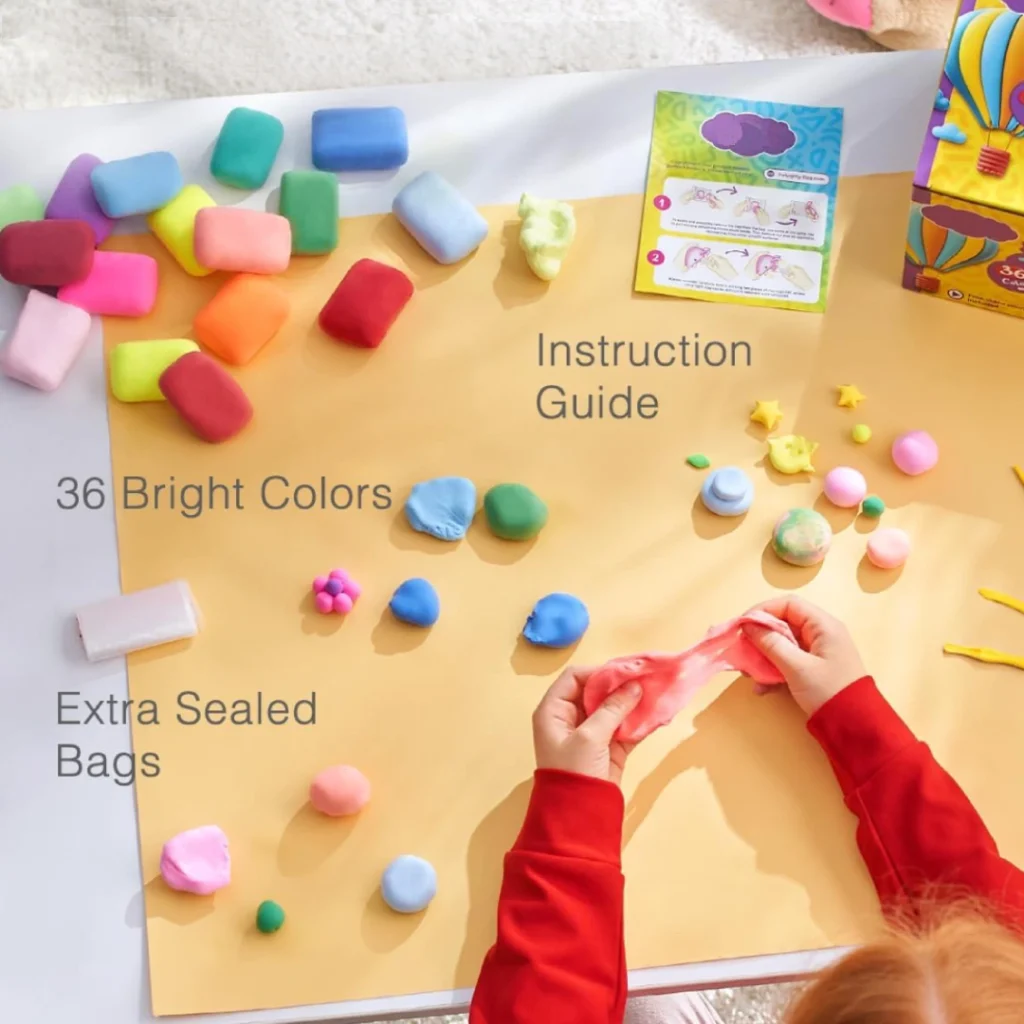
Air dry clay has a firm and smooth texture that gradually hardens when exposed to air. It allows children to pinch, roll, flatten, and sculpt without baking.
Compared with softer compounds, air dry clay requires slightly more hand pressure. This makes it suitable for children who enjoy detailed shaping and longer creative projects. Finished pieces can also be kept after drying, which supports project-based activities.
Play dough is one of the most common tactile play materials. It is soft, flexible, and easy to reshape, making it suitable for repeated squeezing, rolling, and pressing.
Its texture changes easily with hand movement, allowing children to practice basic fine motor skills without needing much force. Because it stays soft during play, it is often a good choice for younger children who are still developing hand strength.
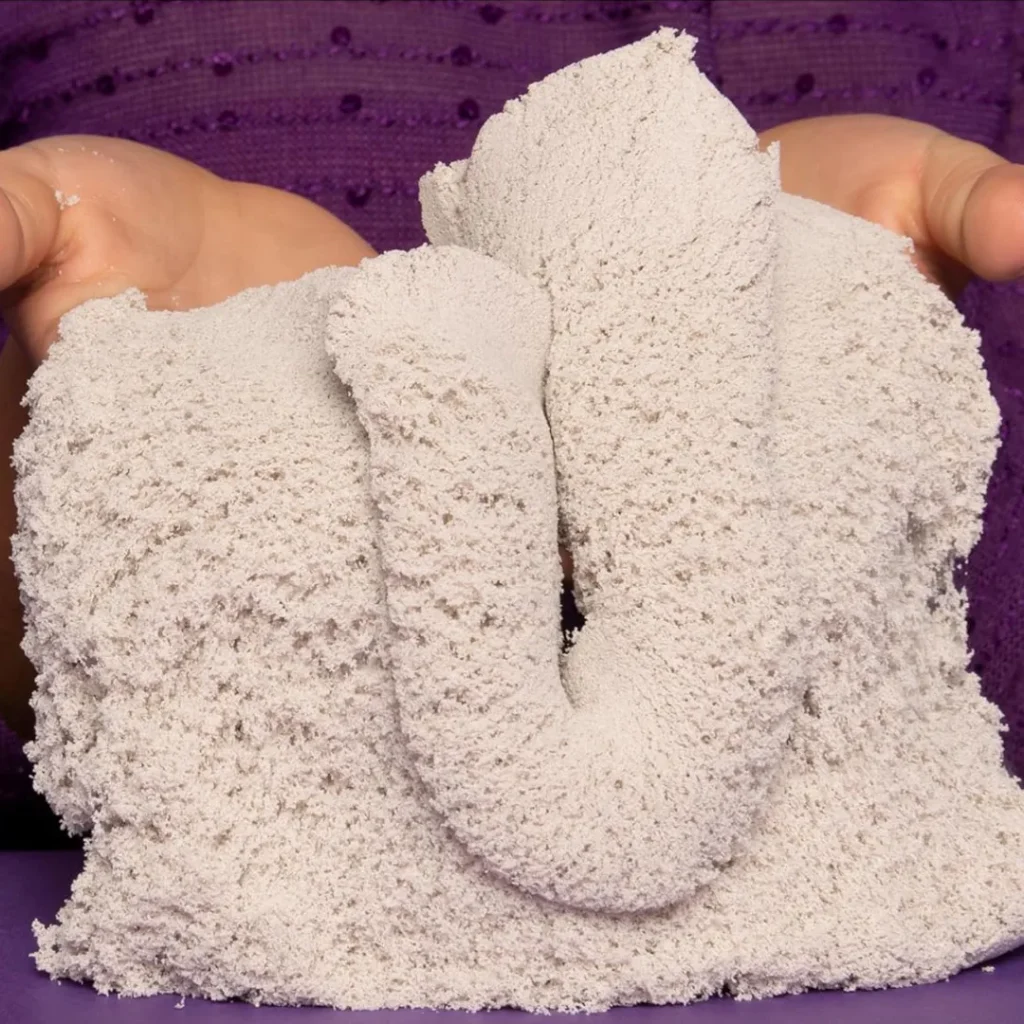
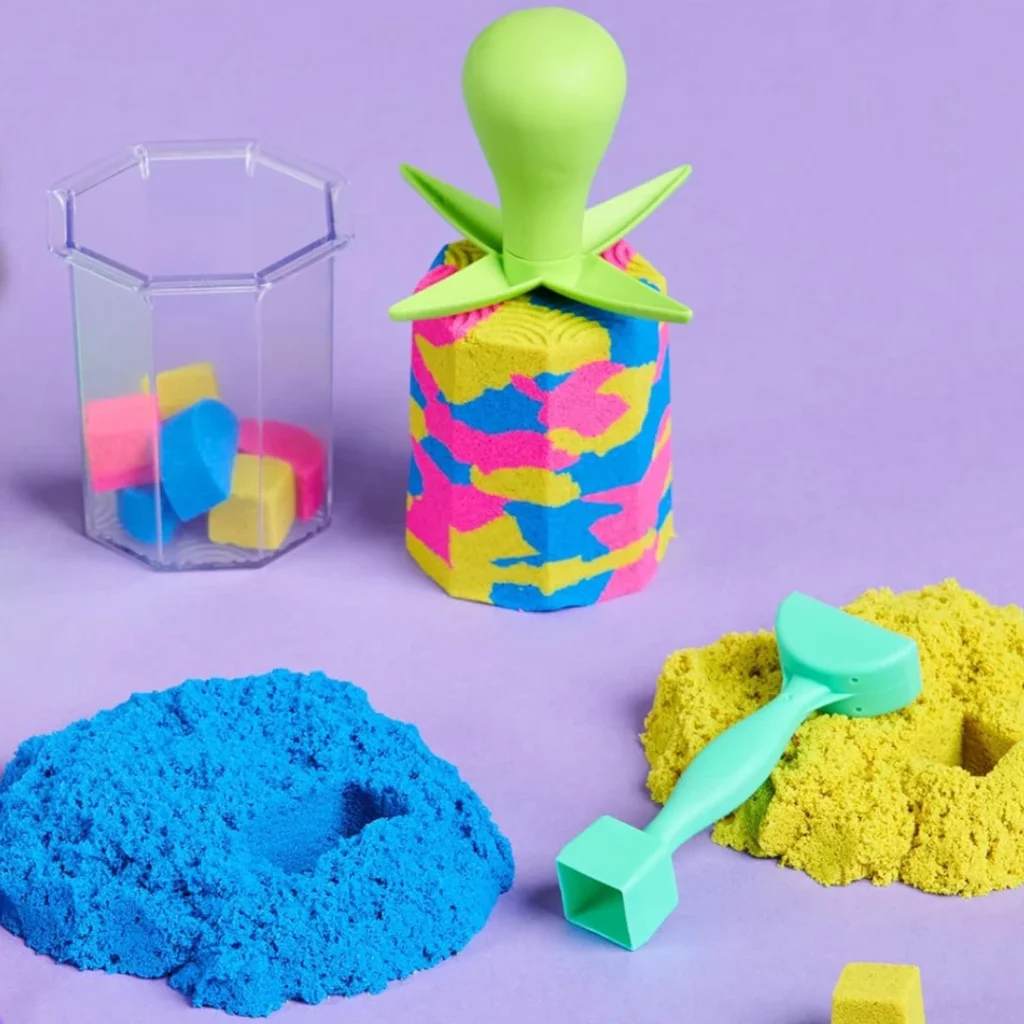
Kinetic sand is a moldable material made from fine sand coated with a small amount of binder. It flows slowly through the hands while still holding its shape when pressed.
Many children enjoy its unique combination of loose and firm textures. It can be scooped, poured, cut, or molded, offering a different tactile experience from clay or play dough with less stickiness.
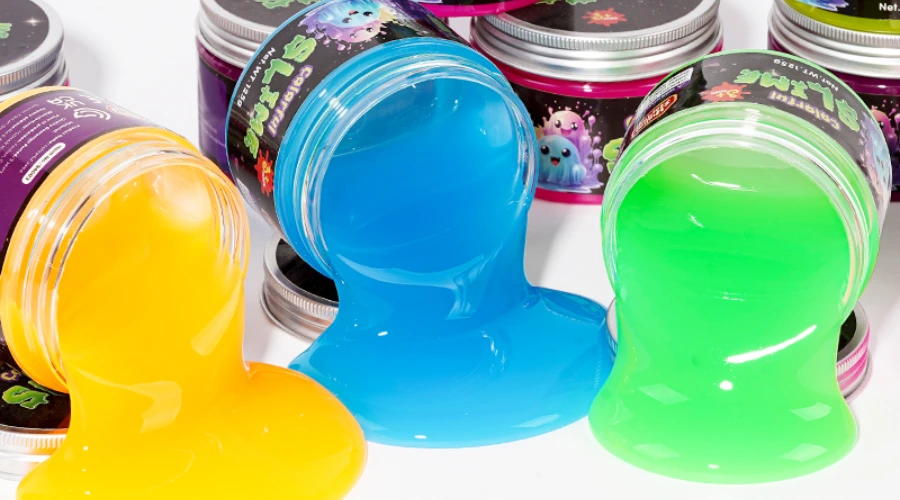
Slime is known for its stretchy, elastic texture. Depending on its formula, it can feel soft, glossy, fluffy, or thick.
Because slime behaves differently from modeling compounds, it provides a distinct tactile experience. Some children enjoy pulling and stretching it, while others may dislike its sticky feel. Individual preference plays a larger role than age alone.

Sensory putty is denser and more resistant than most slimes. It stretches slowly and requires more pressure when squeezed or pulled.
Its higher resistance encourages controlled finger and hand movements. Many children use it for short periods during quiet activities because it is easy to handle and typically creates little mess.
Textured sensory balls feature raised bumps, ridges, spikes, or patterned surfaces. Instead of changing shape, they provide tactile feedback through their outer texture.
Children can squeeze, roll, toss, or simply hold these balls while exploring different surface patterns. They are also easy to carry, making them suitable for both home and classroom settings.
The table below compares common tactile sensory materials. It is intended as a practical guide rather than a fixed rule, since every child responds to sensory input differently.
No single material is suitable for every child. If a child avoids one texture, it does not mean they dislike tactile play altogether. Trying materials with different firmness, resistance, or surface feel is often a more effective approach than repeating the same sensory experience.
Fine motor skills involve the small muscles of the hands and fingers. These skills support everyday tasks such as writing, buttoning clothes, using scissors, and holding utensils. Sensory toys that encourage grasping, pinching, pressing, and placing objects can help children practice these movements through play.
Modeling compounds include materials such as play dough, air dry clay, and modeling clay. Children naturally use different hand movements while rolling, flattening, pinching, and shaping these materials.
The resistance of the material encourages repeated finger movements without feeling like a formal exercise. As children’s skills improve, they can create smaller details that require greater finger control and precision.
Construction toys allow children to connect, stack, and assemble different pieces. Many building activities require both hands to work together while applying controlled pressure.
Children also practice planning, adjusting, and correcting their movements as they build. Choosing larger or smaller pieces can help match the activity to the child’s developmental level.
Pegboards ask children to pick up small pegs and place them into matching holes. Although the activity is simple, it requires careful finger control and visual guidance.
As children become more confident, they can create patterns, sort colors, or copy designs. These added challenges encourage more accurate hand movements while keeping the activity engaging.
Lacing and threading toys require children to guide a string through holes in beads, cards, or shapes. This activity combines finger control with visual attention and patience.
Children learn to adjust the position of both hands while completing each step. Larger beads are often easier for beginners, while smaller pieces provide a greater challenge for older children.
Different toys strengthen different hand movements. Using a variety of activities is often more effective than relying on a single toy.
The table below shows how common fine motor toys support different skills.
No single toy develops every fine motor skill. A combination of molding, building, placing, and threading activities exposes children to a wider range of hand movements and helps keep play varied and engaging.
Calming sensory toys are designed to provide predictable sensory experiences that some children find helpful during quiet moments or stressful situations. These toys do not remove emotions or solve behavior challenges, but they can offer a simple way for children to engage their senses and support self-regulation skills.
The most suitable calming toy depends on the child’s sensory preference. Some children respond well to slow hand movements, while others prefer visual input or gentle pressure. Observing the child’s response is the best way to find a suitable option.
Slow-resistance putty provides a firm texture that requires steady hand pressure to stretch, squeeze, or pull. The repeated movements create a predictable tactile experience.
Because it moves slowly and offers resistance, putty can be suitable for children who enjoy quiet hand activities. It is often used during short breaks, waiting time, or seated activities where children need a simple way to keep their hands engaged.

Soft squishy toys are made from flexible materials that change shape when pressed. They provide immediate tactile feedback through squeezing and releasing.
These toys are usually easy to use and require little instruction. However, the texture and firmness should match the child’s preference, as some children may prefer softer materials while others prefer stronger resistance.
Weighted plush toys provide additional pressure through added weight. Some children find deep pressure input comfortable, especially during quiet activities.
The size and weight of the toy should be appropriate for the child’s age and ability. Weighted products should be used carefully and should not restrict movement or replace professional guidance when a child has specific sensory needs.
Visual sensory bottles contain moving materials, liquid effects, or floating objects that children can watch. They mainly provide visual input rather than touch-based feedback.
Slow-moving visual effects may encourage children to pause and observe. These toys are often used as a quiet activity, especially during transitions between tasks or when children need a calm moment.

Calming toys are often most useful during specific situations rather than all day. For example, they may be helpful during transitions, waiting periods, quiet breaks, or before activities that require attention.
The key is to use these toys as a support tool, not as a replacement for communication, routines, or adult guidance. A child’s response should always guide how and when the toy is used.
Calming toys work best when they match the child’s needs and are introduced in a consistent, supportive way. Not every child finds the same sensory input calming, so observation and flexibility are important.
Sensory toys used in classrooms should provide helpful sensory input without interrupting learning. The best options are usually small, quiet, and simple to use. They should allow children to engage their hands while keeping their attention on the main activity, such as reading, writing, or listening.
A classroom sensory toy is not meant to replace teaching strategies or classroom routines. Instead, it can be a support tool for children who benefit from additional sensory input during specific learning situations.
Quiet fidget toys are small tools that children can move or hold with their hands while staying focused on another task. Common examples include simple textured items, small manipulatives, and silent fidget devices.
The main feature is low distraction. A good fidget toy should not produce loud sounds, bright lights, or complex movements that draw attention away from learning.
Stress balls are soft objects that can be squeezed and released repeatedly. This simple movement provides tactile and resistance input through the hands.
They are easy to use during seated activities because they require little visual attention. However, the size and firmness should be suitable for the child’s hand strength and age.
Twist-and-turn fidgets involve repeated movements such as rotating, clicking, or bending. They provide a predictable action that some children enjoy during quiet tasks.
These toys are most suitable when the movement stays controlled and does not become a distraction. Simple designs are often better for classroom settings than toys with multiple features.
Portable tactile materials are small sensory items that children can use at a desk or during short breaks. Examples include sensory putty, small amounts of modeling compounds, or compact textured objects.
These materials are useful because they are easy to store and can be used for short periods. Teachers and caregivers should set clear rules for when and how they can be used.
A classroom sensory toy should balance sensory support with learning needs. The goal is to provide useful input without creating extra distractions.
The best classroom sensory toys are not always the most complex ones. In many cases, simple tools that provide predictable movement or texture are easier to manage and more effective for daily use. Teachers should observe whether a toy improves participation or becomes a distraction, then adjust its use accordingly.
Children’s sensory needs change as they grow. A toy that works well for a toddler may not provide enough challenge for an older child. When choosing a sensory toy, age can be a useful starting point, but developmental skills, interests, and sensory preferences should also be considered.
The goal is to select materials that are safe, engaging, and suitable for the child’s current abilities. The following guide shows common sensory toy choices by age group.
The most suitable sensory toy is one that matches the child’s development and encourages successful play. Age is only one part of the decision.
Sensory toys are most effective when they are used with a clear purpose and matched to the child’s needs. Simply having more sensory toys does not always create better results. The type of toy, play environment, and length of activity all influence the child’s experience.
A good sensory play routine focuses on observation. Parents and educators should notice how children respond and adjust the activity based on their comfort level, interest, and development.
Children have different attention spans depending on their age, development, and the type of activity. Sensory play does not need to last for a long time to be meaningful.
For younger children, short play sessions with breaks are usually more suitable. For example, a toddler may explore play dough for several minutes, while an older child may spend more time creating detailed models with air dry clay.
The goal is not to increase play time as much as possible. Instead, choose a duration that keeps the child engaged without causing frustration or loss of interest.
Using the same sensory toy repeatedly may reduce a child’s interest over time. Rotating different materials can provide new sensory experiences and encourage exploration.
For example, children can use play dough one day, kinetic sand another day, and air dry clay for a longer creative project later. The same material can also be used in different ways, such as shaping, cutting, pressing, or building.
A small selection of well-chosen toys is often more useful than having too many options available at the same time. Too many choices may make it harder for children to focus on one activity.
Open-ended play allows children to explore freely and create their own ideas. Structured activities provide clear goals and help children practice specific skills.
Both approaches are valuable. For example, a child may first explore the texture of kinetic sand freely and then use molds to create specific shapes. This combination supports both creativity and skill development.
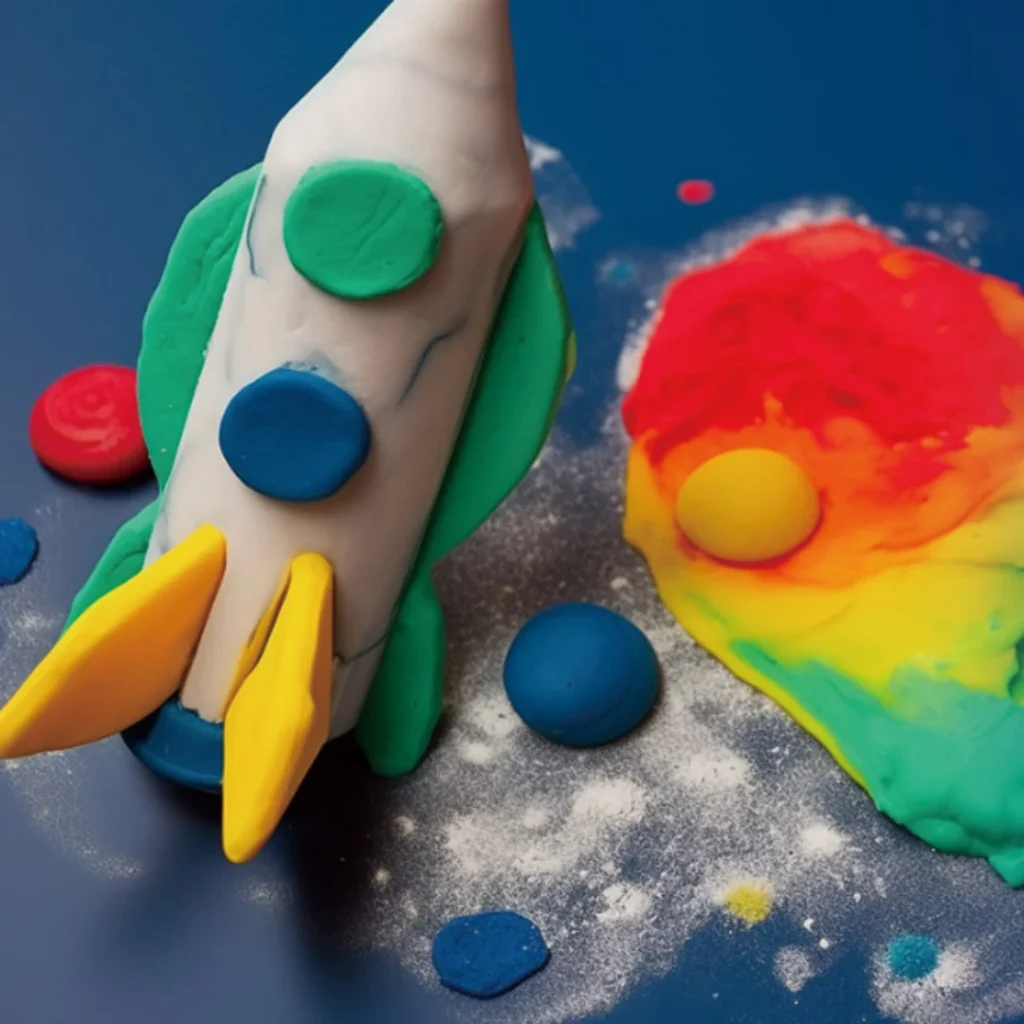
Open-ended activities are useful for imagination, while structured tasks can help children practice following steps, problem-solving, and attention control.
Children respond differently to sensory input. A texture, movement, or sound that one child enjoys may feel uncomfortable for another child.
During play, observe simple signals. If a child returns to the activity, stays focused, and explores the material, the sensory experience may be suitable. If the child avoids the toy, becomes upset, or loses interest quickly, the activity may need adjustment.
Adjustments can include changing the material, reducing the amount of sensory input, shortening the activity time, or offering a different type of play. Effective sensory play is not about finding one perfect toy, but about finding the right match between the child and the experience.
Choosing the best sensory toy for kids is about matching the toy with the child’s sensory needs, developmental stage, and play goals. There is no universal “best” option. Materials like air dry clay, play dough, kinetic sand, slime, and other sensory tools provide different experiences that support exploration, creativity, and skill practice.
By observing children’s responses and selecting safe, age-appropriate toys, parents and educators can create more effective sensory play experiences. The right sensory toy is one that encourages comfortable, meaningful, and purposeful play.
Why is the cheapest toy factory not always the best choice? Learn to compare factory prices, shipping fees, import duties, and landed costs.

A practical guide to toy manufacturing in China for US buyers, covering production processes, ASTM F963, CPSIA, quality control, costs, and logistics.
Learn how screen-free play creates opportunities for toy brands and why sensory products like playdough, clay, slime, and kinetic sand are a strong product fit.
Improve kids toy sales with packaging tips that communicate safety, benefits, and product experience for online shoppers.