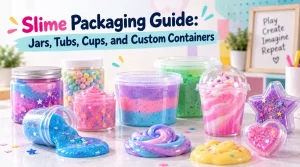
Slime Packaging Guide: Jars, Tubs, Cups, and Custom Containers
Compare slime jars, tubs, cups, and custom containers to find the right packaging for your product, budget, target market, and shipping needs.
#1 Toys Manufacturer in China. WhatsApp: +86 139-6690-0919. Email: [email protected]

#1 Toys Manufacturer in China. WhatsApp: +86 139-6690-0919. Email: [email protected]

Glitter, beads, and charms can make slime products more visually distinctive, more interactive, and easier to differentiate in a crowded sensory-toy market. However, each decoration serves a different product-development purpose. Glitter primarily improves visual appeal, beads add tactile variation, and charms create themes and collectible elements.
For toy brands developing or sourcing slime products, the best approach is not to add decorations simply for appearance. Instead, choose each component according to the product’s target age, texture, play concept, visual theme, packaging format, and compliance requirements.
This guide explains how glitter, beads, and charms can be used in slime development and how brands can decide which combination is appropriate for a new product.
Basic slime already provides sensory stimulation through stretching, squeezing, pulling, folding, and mixing. Decorative add-ins can extend this experience by introducing additional visual or tactile elements.
From a product-development perspective, add-ins can contribute to four main areas:
| Add-In | Primary Function | Product Benefit |
|---|---|---|
| Glitter | Visual enhancement | Creates sparkle, color variation, and premium appearance |
| Beads | Tactile enhancement | Adds texture, resistance, and sensory feedback |
| Charms | Theme and play concept | Supports storytelling, pretend play, and collectibility |
| Combination | Multi-sensory experience | Creates more differentiated slime products |
The important distinction is that more add-ins do not automatically mean a better slime product. Excessive decorations can make the slime difficult to manipulate, change its texture, increase production complexity, or make the product unsuitable for certain target age groups.
Therefore, add-ins should be selected as part of the product concept rather than treated as an afterthought.
Glitter is most useful when the primary product objective is to improve visual appeal and create an eye-catching slime experience.
It can transform a relatively simple slime base into a product with a stronger shelf presence and more distinctive appearance.
Glitter can create:
For example, a clear slime with silver or holographic glitter can support a galaxy theme, while pastel slime combined with fine iridescent glitter can create a softer fantasy aesthetic.
Glitter size should match the intended texture and visual effect.
Fine glitter is generally appropriate when the goal is a smooth visual effect with minimal interference with the slime texture.
Medium glitter creates stronger visual contrast and can provide a more noticeable sensory experience.
Chunky glitter creates a stronger decorative effect but may have a greater impact on the slime’s texture and handling characteristics.
For products designed around smooth, stretchy slime, smaller glitter particles are often easier to integrate. For novelty or highly decorative products, larger glitter can be considered when the texture and target age are appropriate.
Choose glitter when visual differentiation is more important than adding substantial tactile resistance.
It is particularly useful for products where packaging and shelf appearance are major purchasing factors.
Beads are most useful when the goal is to make the slime feel different from standard smooth slime.
Unlike glitter, which mainly changes the visual appearance, beads create a noticeable physical sensation when the slime is squeezed, stretched, or manipulated.
Depending on their size, shape, and material, beads can create different sensory effects.
For example, small lightweight foam beads can create a different experience from larger solid beads. The choice should therefore be based on the intended sensory profile rather than appearance alone.
Bead size can affect both the play experience and product suitability.
Smaller beads generally create a more integrated texture, while larger beads produce stronger tactile contrast.
However, larger components also require more careful consideration of:
For children’s products, component selection should always be evaluated according to the applicable toy-safety requirements for the target market.
Choose beads when the product needs a stronger tactile identity than conventional smooth slime can provide.
Beads are particularly suitable for brands positioning slime as a sensory-focused product rather than purely a novelty item.
Charms are most effective when the product concept is built around a theme, character-inspired aesthetic, seasonal idea, or collectible experience.
A charm can give the slime a recognizable focal point without changing the entire slime texture.
Possible themes include:
For example, a pastel slime containing small food-themed charms can support a dessert concept, while blue translucent slime with ocean-themed decorative elements can create an underwater concept.
One slime base can potentially support multiple SKUs simply by changing the decorative concept.
Same slime texture + different charms = different themed products.
This can help brands create product families without developing an entirely different slime formulation for every SKU.
A brand could therefore develop a series such as:
while maintaining a similar core slime structure.
Choose charms when theme recognition and product storytelling are important parts of the value proposition.
Charms can be especially useful for collections, seasonal launches, gift sets, and products designed around multiple themes.
There is no universal “best” add-in. The appropriate choice depends on what the product is supposed to achieve.
| Product Goal | Recommended Add-In |
|---|---|
| Increase visual appeal | Glitter |
| Create stronger tactile variation | Beads |
| Build a recognizable theme | Charms |
| Develop collectible variations | Charms |
| Create a premium visual effect | Glitter |
| Make slime feel more textured | Beads |
| Create a multi-sensory product | Glitter + Beads |
| Build a themed sensory set | Glitter + Charms |
| Create a highly decorative novelty product | Glitter + Beads + Charms |
A useful product-development rule is:
Start with the primary play benefit, then select the decoration.
Do not start with “Which decoration looks attractive?” Start with:
What should the child see, feel, and do when interacting with this slime?
This produces a more consistent product concept.
Using multiple add-ins can create a richer sensory experience, but the combination should be controlled.
This combination provides both visual and tactile differentiation.
For example:
Clear slime + holographic glitter + lightweight beads
can create a visually striking product with additional texture.
This combination works well when the brand wants the slime to feel noticeably different from a standard smooth formula.
This combination is useful for themed products.
For example:
Pink slime + iridescent glitter + dessert-themed charms
can communicate a specific theme without substantially changing the basic slime texture.
This approach can be useful for collections where each SKU needs its own visual identity.
This combination emphasizes tactile interaction and themed play.
However, because both components introduce physical pieces into the slime, the overall product should be evaluated carefully for texture, handling, packaging, and target-age suitability.
This is the most visually and physically complex option.
It can work well for novelty products, gift sets, or highly themed products, but more components also mean more variables to control.
The formulation, component compatibility, production process, packaging, and safety evaluation all become more important.
One of the most important decisions in slime development is the intended age range.
The same decorative concept may not be appropriate for every age group.
When selecting glitter, beads, or charms, manufacturers and brands should consider:
For children’s products, component selection should be evaluated as part of the complete finished product rather than independently.
For products intended for the North American and European markets, brands should also make sure the finished product is evaluated against the applicable requirements, such as ASTM F963, CPSIA, and EN71, depending on the market and product category.
The key principle: Decorative components should support the play experience without creating unnecessary safety or compliance complexity.
Decorations do not exist independently from the slime base. They can change how the product feels during play.
Several factors should therefore be evaluated during development.
A high concentration of solid components can interfere with the continuous stretch of slime.
If the intended product experience is long, smooth stretching, the amount and size of add-ins should be controlled.
Some users enjoy mixing decorative components throughout the slime. Others prefer decorations to remain visually concentrated.
The product concept should determine whether the add-ins are:
The difference between the slime base and the add-in can be used intentionally.
For example:
Soft slime + crunchy beads = strong tactile contrast
while:
Smooth translucent slime + fine glitter = primarily visual contrast
This is why sensory product development should consider both the base formula and the decorative components together.
Packaging is another important consideration when developing decorated slime products.
There are two common approaches.
The glitter, beads, or charms are already inside the slime.
Advantages:
The slime is packaged separately from some decorative components, allowing the user to add or mix them.
Advantages:
The right choice depends on the product positioning.
If the primary selling point is ready-to-use sensory play, integrated decorations may be more appropriate.
If the product is positioned as a DIY or creative activity, separate components can provide additional interaction.
One of the strongest commercial advantages of decorative components is their ability to support multiple SKUs from a similar product platform.
For example, a manufacturer can develop a common slime base and create different versions through:
Color + scent + glitter + beads + charms + packaging
This creates opportunities for:
For small brands and startups, this can be particularly useful because product differentiation does not always require developing an entirely new slime formulation for every SKU.
However, every variation should still be evaluated as a finished product for its specific components, formulation, packaging, and intended market.
Adding more visual elements can seem like an easy way to increase product appeal, but several mistakes can reduce the quality of the final product.
More glitter or more beads does not necessarily create a better sensory experience.
Excessive components can change the texture and make the slime harder to stretch or manipulate.
A charm may look attractive but still be unsuitable for the intended product concept.
Component selection should consider function, age range, safety, compatibility, and manufacturing requirements.
The same decoration can behave differently in clear slime, butter slime, fluffy slime, or other formulations.
The base texture should therefore be considered before finalizing the add-in combination.
Adding glitter, multiple bead types, several charm shapes, scent, color effects, and other features can make a product difficult to manufacture consistently.
A strong product concept often uses one primary sensory feature and one or two supporting features.
Safety and compliance should be considered during product development, not only after the formula and components have been finalized.
Changing a component late in development can affect testing, packaging, labeling, and production timelines.
For brands developing a new slime product, the following sequence can make the process more efficient.
Determine whether the product is intended for:
Choose the primary objective:
Visual → prioritize glitter or other visual effects.
Tactile → prioritize beads or other texture components.
Creative → consider separate add-ins or DIY formats.
Themed → prioritize charms and coordinated colors.
The formulation should support the intended sensory experience.
Consider:
Choose only the components that support the product concept.
A simple formula can be:
1 primary feature + 1 supporting feature
For example:
Clear slime + holographic glitter
or:
Soft slime + foam beads + themed charm
Evaluate:
Before mass production, confirm that the selected components can be consistently sourced, measured, incorporated, packaged, and inspected at production scale.
This is particularly important for private-label products, where consistency between batches is part of the brand experience.
For brands planning multiple SKUs, decorations can be used as a structured product architecture rather than random variations.
Focus: Glitter
Focus: Beads
Focus: Charms
Focus: Combination
This structure makes it easier for a retailer or distributor to understand the differences between SKUs and gives brands a clearer product-development roadmap.
When sourcing decorated slime products, buyers should ask manufacturers more than simply whether they can add glitter or charms.
Useful questions include:
These questions help buyers evaluate whether a supplier can support complete product development, rather than simply filling an existing slime formula into packaging.
Glitter, beads, and charms enhance slime in different ways: glitter improves visual impact, beads increase tactile variation, and charms strengthen themes and collectible appeal.
The best combination depends on the intended product experience.
A practical decision rule is:
For toy brands, wholesalers, and startups, the objective should not be to create the most decorated slime possible. The objective is to create a clear product concept in which the slime texture, add-ins, packaging, target age, and market positioning work together.
A capable OEM/ODM partner can help translate that concept into a manufacturable product through formulation development, component selection, sampling, packaging customization, and finished-product testing.
For brands developing private-label slime collections, this approach can turn a basic slime formula into a broader and more differentiated product line while keeping product development focused on the actual play experience.
More Related...
Compare slime jars, tubs, cups, and custom containers to find the right packaging for your product, budget, target market, and shipping needs.
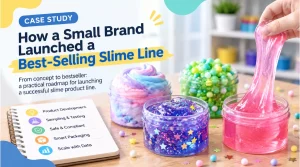
Learn the key steps behind a successful slime launch, from product development and sampling to safety compliance, packaging, and production.
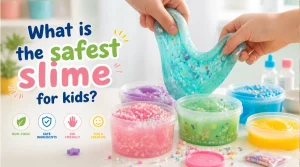
Explore what makes slime safe for children and learn simple ways to support fun, responsible, and healthy sensory play at home or school.

Explore the key traits behind best-selling slime products on Amazon, from texture and safety to developmental value and consumer demand.

Our team will answer your inquiries within 48 hours.
Copyright © 2026 GuangDong AKIA Technology Co,. Ltd. All Rights Reserved