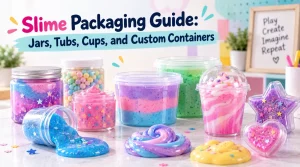
Slime Packaging Guide: Jars, Tubs, Cups, and Custom Containers
Compare slime jars, tubs, cups, and custom containers to find the right packaging for your product, budget, target market, and shipping needs.
#1 Toys Manufacturer in China. WhatsApp: +86 139-6690-0919. Email: [email protected]

#1 Toys Manufacturer in China. WhatsApp: +86 139-6690-0919. Email: [email protected]
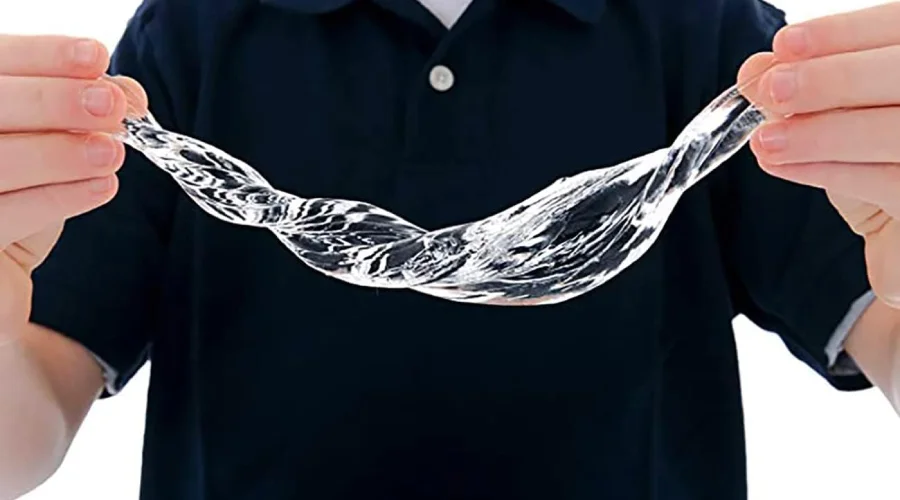
To prevent slime products from drying out during storage and shipping, manufacturers and toy brands need to control three key factors: formula stability, packaging airtightness, and environmental conditions. A suitable slime formula helps maintain the product’s texture, while well-sealed packaging reduces moisture loss during storage and transportation.
However, packaging alone cannot solve every drying problem. Slime may lose moisture because of an unsuitable formula, poorly sealed containers, incompatible packaging materials, damaged closures, or prolonged exposure to unfavorable storage conditions.
For toy brands, wholesalers, and importers, the most reliable approach is to evaluate the formula and packaging together, conduct storage and transportation tests, and establish measurable quality standards before mass production.
Understanding the cause of moisture loss is the first step toward preventing it. In most cases, slime drying problems are related to one or more of the following factors.
Many slime formulations contain water or other volatile components that contribute to their softness and stretchability. If the packaging is not sufficiently sealed, moisture may gradually escape during storage.
Potential causes include:
How to evaluate it: Check whether the container or pouch maintains its seal under normal handling and storage conditions. If slime in properly sealed samples remains stable but products with loose closures become firmer, packaging performance should be investigated first.
Packaging is only one part of product stability. A slime formula that does not maintain its intended texture over time may become too firm, sticky, or less elastic even when the container remains sealed.
Formula-related factors may include:
How to evaluate it: Compare samples from different production batches under the same storage conditions. If texture changes occur across multiple batches despite intact packaging, the formulation and manufacturing process should be reviewed.
Temperature fluctuations can affect slime consistency and packaging performance. High temperatures may accelerate moisture loss when packaging is not fully sealed. They may also affect the physical properties of certain formulations or packaging components.
During international shipping, slime products may experience changing temperatures in warehouses, shipping containers, trucks, and distribution centers.
How to evaluate it: Test samples under temperature conditions that reflect the expected distribution environment. Check both the slime’s physical properties and the packaging’s sealing performance after exposure.
Slime containers may be compressed, dropped, or exposed to repeated movement during transportation. Even a well-designed container can develop leakage or seal damage if the packaging structure is not suitable for the shipping conditions.
Common risks include:
How to evaluate it: Conduct packaging integrity and transportation simulation tests using the actual product configuration, rather than testing empty containers alone.
Formula development is the first stage of preventing slime from drying out. A stable formula should maintain its intended physical properties throughout the product’s specified shelf life when stored under the recommended conditions.
For water-based slime formulations, moisture content is an important factor affecting softness, flexibility, and stretchability. If the formulation loses too much moisture, the product may become firmer and less elastic.
Manufacturers should establish consistent formulation specifications and monitor relevant production parameters. These may include ingredient ratios, mixing conditions, batch consistency, and the physical properties of the finished product.
Adding more water is not automatically an effective solution. Excessive or uncontrolled adjustments can affect the product’s texture, stability, and other performance characteristics. Any formula modification should be evaluated through controlled testing.
A slime product should not be evaluated only by how it feels immediately after manufacturing. Buyers should also consider how its texture changes during storage.
Useful evaluation indicators include:
These indicators should be evaluated against product-specific acceptance criteria. Different slime types may have different intended textures, so one universal texture standard is not suitable for every product.
Even a well-developed formula can produce inconsistent results if the manufacturing process is not adequately controlled.
For bulk orders, manufacturers should maintain standardized production procedures and compare finished products against approved reference samples.
Recommended controls include:
Buyer decision: If a supplier can only demonstrate that a fresh sample has good stretchability, this is not enough to establish long-term product stability. Request storage test results or samples from products that have been stored for a defined period.
Packaging is one of the most important factors in preventing slime from drying out. The packaging should provide an effective moisture barrier, maintain a reliable closure, and withstand the expected distribution conditions.
Plastic jars, cups, and tubs are common packaging formats for slime products. Their performance depends not only on the container material but also on the design and quality of the closure.
Important factors to evaluate include:
A screw-top container may offer a more controlled closure than a simple press-on lid in some applications, but the actual performance depends on the design, manufacturing tolerances, and seal structure.
For selected container designs, an additional sealing layer can provide protection before the product is opened.
Possible options include:
These options can reduce the risk of leakage or moisture loss when properly designed and applied. However, the sealing material must be compatible with the container and product, and the finished package should be tested for seal integrity.
Different packaging materials provide different levels of moisture protection. A material that is suitable for one slime formulation may not provide sufficient protection for another.
When comparing packaging options, buyers should consider:
For flexible pouches, multilayer structures may be considered when stronger barrier performance is required. For rigid containers, the closure and sealing system should be evaluated together with the container material.
Important: A thicker package does not automatically provide better moisture protection. Material specifications and finished-package testing are more useful than thickness alone.
Container size and filling volume also influence the packaging design. Excessive empty space can increase the amount of air inside the package and may affect the product’s presentation and handling.
However, filling every container to its maximum capacity is not always appropriate. The product needs sufficient space to accommodate the intended filling process, closure design, and handling requirements.
Manufacturers should establish a consistent filling weight and suitable headspace based on the product and packaging specifications.
Even when the formula and packaging are suitable, poor warehouse management can affect product quality. Slime products should be stored under controlled conditions based on the manufacturer’s validated storage recommendations.
Prolonged exposure to high temperatures may affect the product’s physical properties and packaging performance. Warehouses should avoid placing slime products near heating equipment, direct sunlight, or other heat sources.
For products with defined temperature limits, storage and handling procedures should follow the approved product specifications.
Large temperature fluctuations can create additional risks during storage. A stable warehouse environment helps reduce unnecessary variation between production, storage, and shipment.
Although ambient humidity may affect some packaging materials and storage environments, it does not replace proper moisture-barrier packaging. For a sealed slime product, the integrity of the package is generally more important than simply increasing warehouse humidity.
Long storage periods can increase the risk of products being shipped after their intended quality period. Brands and manufacturers should establish clear production dates, batch identification, and inventory rotation procedures.
Recommended practices include:
International transportation introduces additional risks because products may experience long transit times, temperature fluctuations, vibration, compression, and repeated handling.
To reduce these risks, manufacturers should evaluate the complete shipping package rather than focusing only on the individual slime container.
The inner packaging should protect individual containers, while the outer carton should prevent excessive movement and compression during transportation.
Depending on the product design, suitable options may include:
The objective is to prevent containers from colliding, deforming, or developing damaged closures during transit.
Cartons that are overloaded or stacked incorrectly may transfer excessive pressure to the products inside. This can deform containers or compromise closure performance.
Before shipment, brands should confirm:
Shipping conditions vary according to destination, season, transportation method, and transit time. A product shipped during a hot season may require different risk evaluation from one shipped under milder conditions.
For long-distance shipments, buyers should consider the expected temperature exposure and transportation duration when defining packaging tests.
Where necessary, transportation simulation and temperature exposure testing should be conducted using the actual packaged product.
Testing is the most reliable way to determine whether a slime product can maintain its intended quality during storage and shipping. A packaging design should not be approved based only on appearance or a short handling test.
Before testing, record the condition of freshly manufactured and packaged slime samples.
Useful baseline information includes:
These measurements provide a reference for evaluating changes after storage or transportation testing.
Storage tests help identify potential changes in product quality over time. Accelerated testing can expose weaknesses under selected stress conditions, while real-time testing provides evidence of product performance under the intended storage conditions.
Testing should include:
Accelerated test results should not automatically be treated as an exact prediction of real-world shelf life. The test conditions and their relationship to actual distribution conditions should be considered when interpreting the results.
Packaging tests help determine whether the selected container and closure can withstand normal handling and transportation.
Depending on the packaging format, relevant tests may include:
Testing should be performed on the complete package, including the product, container, closure, labels, and protective shipping materials where relevant.
Weight change can help identify possible moisture loss, but it should not be used as the only quality indicator.
For example, a package may show little measurable weight loss while the slime still develops an undesirable texture. Conversely, small weight variations may occur without affecting the product’s intended performance.
Therefore, buyers should compare both physical measurements and product-use characteristics against predefined acceptance criteria.
Some storage and packaging problems can be avoided by reviewing the following common mistakes before bulk production.
| Common Mistake | Potential Result | Recommended Action |
|---|---|---|
| Choosing packaging based only on appearance | Insufficient moisture protection or poor sealing | Evaluate barrier properties and test the complete package |
| Using loose-fitting lids | Moisture loss or leakage | Check closure compatibility and seal performance |
| Ignoring formula stability | Texture changes even when packaging remains intact | Conduct formula and storage stability evaluations |
| Storing products in excessive heat | Changes in product properties or packaging performance | Follow validated storage recommendations |
| Overloading shipping cartons | Container deformation and damaged closures | Review carton loading and compression resistance |
| Skipping pre-shipment inspection | Defects may reach distributors or retailers | Inspect samples and finished goods before shipment |
| Approving samples without storage testing | Long-term quality problems may remain undetected | Include storage and packaging tests in product approval |
When sourcing private-label slime products, buyers should evaluate a manufacturer’s ability to manage both formula development and packaging performance.
The following questions can help identify potential risks before placing a bulk order:
A reliable manufacturing partner should be able to explain the product specifications, packaging options, testing methods, and quality control procedures clearly.
Preventing slime from drying out requires a coordinated approach to formulation, packaging, storage, and transportation. A suitable formula helps maintain the intended texture, while reliable sealing and appropriate shipping protection reduce the risk of moisture loss and package damage.
For toy brands and importers, the key is to verify these factors before mass production through product sampling, storage evaluation, packaging integrity testing, and clear quality specifications.
As an educational sensory toy manufacturer based in Foshan, China, we provide OEM/ODM development for slime, playdough, air dry clay, kinetic sand, and related children’s products. Customization options include product formulas, colors, textures, packaging formats, accessories, and private-label designs.
Our product development and quality control processes consider applicable requirements for target markets, including ASTM F963, relevant CPSIA requirements, and applicable EN 71 standards. Product-specific testing and supporting documentation should be confirmed according to the final product configuration and destination market.
Looking to develop a custom slime product? Contact our team with your target market, preferred slime texture, packaging requirements, and estimated order quantity to discuss formulation options, samples, MOQ, and production arrangements.
The best packaging depends on the slime formula, container design, storage period, and shipping conditions. Well-fitted plastic containers with reliable closures, suitable sealing liners, or properly heat-sealed pouches may help reduce moisture loss. Finished-package testing is necessary to confirm performance.
Yes. Temperature fluctuations and prolonged exposure to high temperatures may affect slime texture and packaging performance. Manufacturers should evaluate the product under conditions that reflect its expected storage and transportation environment.
Manufacturers can establish baseline samples and conduct storage stability, weight comparison, leakage, seal integrity, and transportation simulation tests. Both product texture and package condition should be evaluated.
A properly developed formula can help maintain the intended texture during storage, but it cannot eliminate moisture loss caused by poor packaging. Formula stability and packaging performance should be evaluated together.
Slime products should be stored in their approved packaging under the manufacturer's recommended temperature and environmental conditions. They should be protected from direct sunlight, excessive heat, packaging damage, and unnecessarily long storage periods.
Buyers should confirm the approved formula, texture specifications, packaging materials, sealing method, storage recommendations, applicable compliance documentation, MOQ, production lead time, and pre-shipment inspection procedures.
More Related...
Compare slime jars, tubs, cups, and custom containers to find the right packaging for your product, budget, target market, and shipping needs.

Learn how glitter, beads, and charms enhance slime products through visual appeal, tactile variety, themed play, and better product differentiation.
Learn the key steps behind a successful slime launch, from product development and sampling to safety compliance, packaging, and production.
Explore what makes slime safe for children and learn simple ways to support fun, responsible, and healthy sensory play at home or school.

Our team will answer your inquiries within 48 hours.
Copyright © 2026 GuangDong AKIA Technology Co,. Ltd. All Rights Reserved