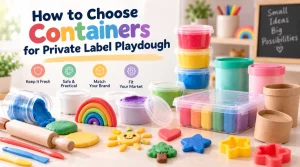
How to Choose Containers for Private Label Playdough
Choosing playdough packaging? Explore key factors for private label containers, including airtightness, size, materials, branding, logistics, and cost.

Private label playdough customization is not only about changing colors or adding new packaging. The key decisions should be based on product purpose, user needs, and safety requirements. A good customization plan usually starts with function, then moves to visual design and sensory features.
For children’s sensory toys, packaging, colors, and scents are the three main customization areas. However, each choice should match the target age group, play environment, and market rules. This approach helps create a product that is practical, safe, and suitable for its intended use.
The main customization options for private label playdough are packaging, colors, and scents. These three elements affect how children use the product, how adults store it, and how the product is presented in different markets.
Before selecting packaging, colors, or scents, it is important to define who will use the product and how it will be used. A playdough set for preschool classrooms may need larger quantities and simple storage, while a home activity kit may focus more on variety and convenience.
Age is also an important factor. Younger children usually need simple designs, easy-to-open packaging, and clear product information. Older children may prefer more creative options, such as mixed colors, themed sets, or additional sensory features.

Market requirements should also be considered at the beginning of the customization process. Different regions may have different safety standards, labeling rules, and material requirements. For example, children’s playdough products sold in the US and Europe commonly need to meet standards such as ASTM F963, EN71, and CPSIA.
Starting with these requirements can reduce later changes in design and production. It also helps ensure that customization choices are suitable for both users and regulations.
A practical way to plan private label playdough customization is to follow three steps: function first, appearance second, and experience third.
First, function should be the priority. This includes the playdough texture, durability, packaging performance, and safety requirements. A product should work well before adding extra design features.
Second, appearance can be adjusted based on the product goal. This includes package design, color selection, and visual style. Appearance should support the product purpose instead of becoming the only focus.
Third, sensory experience can be improved through features such as scent or special color combinations. These features should be added only when they match the target user and product positioning.
This framework helps avoid unnecessary customization. By making decisions in the right order, product developers can balance creativity, production feasibility, and quality control.
Packaging is not only an outer cover for playdough. It directly affects product protection, storage, transportation, and user experience. The right format depends on how the product will be used, who will use it, and how much playdough is needed each time.
For private label playdough, common packaging choices include individual cups, multi-color sets, and bulk packaging. Each format has a different purpose. A good packaging decision should balance product function, safety requirements, and practical use.
Different play scenarios require different packaging structures. For example, a classroom product needs easy sharing and simple storage, while a home activity kit may focus on variety and presentation.
The most common packaging types for playdough include individual cups, multi-color sets, and bulk containers. Each option has its own suitable application based on quantity, user group, and product purpose.
Individual cups are one of the most common playdough packaging formats. Each container holds a small amount of playdough, making it easy to distribute and use separately.
This format is often used in schools, activity kits, party supplies, and small trial packs. It helps reduce direct contact between different colors and allows children to use one portion at a time.
When choosing cup packaging, important factors include cup size, lid sealing, material strength, and ease of opening. The container should protect the playdough while still being simple enough for children and teachers to handle.
Multi-color sets usually include several small containers with different playdough colors. They are designed for users who need more color choices for creative activities.
This format is commonly used for home play, learning kits, and gift-style products. The combination of colors can support activities such as color recognition, shaping, and imaginative play.
However, more colors also mean more packaging parts and higher production complexity. Manufacturers need to consider color consistency, container arrangement, and overall package durability during design.
Bulk packaging is designed for larger quantities of playdough. It is often used by schools, training centers, and other educational settings where many children use the product regularly.
Large containers or bags can reduce packaging waste and make storage easier. However, users need proper storage methods after opening to help maintain product quality.
For bulk formats, packaging design should focus on sealing performance, handling convenience, and clear product information. The package should support repeated use instead of only one-time opening.

The main purpose of playdough packaging is to protect the product and support safe use. A suitable package should maintain product condition from production to the end user.
When selecting packaging, product developers should consider moisture control, material safety, and daily handling needs. These factors can affect how well the product performs over time.
Playdough is a moisture-sensitive material. If the package does not provide enough protection, the product may become dry, hard, or less flexible during storage.
A well-designed container should reduce moisture loss and provide a good seal. The lid structure, sealing method, and material thickness all influence how effectively the package protects the product.
Shelf life also depends on storage conditions, formula design, and packaging quality. Therefore, packaging tests are usually needed before mass production.
For children’s products, packaging materials should meet safety requirements. Materials used for containers, lids, and other components need to be evaluated based on the target market regulations.
Important considerations include avoiding sharp edges, ensuring proper strength, and selecting suitable materials for contact with children’s products. Small parts from packaging should also be considered based on the intended age group.
Compliance standards such as ASTM F963, EN71, and CPSIA provide guidance for evaluating children’s product safety in different markets.
Good packaging should make storage simple after each play session. Features such as resealable lids, stackable shapes, and clear labels can improve daily use.
For example, families may prefer containers that are easy to close and store on shelves. Classrooms may need packaging that allows quick organization and identification of different colors.
The best packaging design solves real user problems. It should not only look attractive but also support repeated use and product care.
Packaging should be developed according to the product’s intended role. A classroom product, educational kit, and home activity set may use different packaging solutions because their users and needs are different.
For educational products, function and efficiency are usually the priority. Packaging should support easy distribution, storage, and repeated handling. For home products, appearance and organization may receive more attention because the package is part of the user experience.
The key principle is to design packaging around product purpose. A suitable format improves product performance, while unnecessary packaging features may increase complexity and cost without adding real value.
Color is one of the most visible customization options for private label playdough. It affects product appearance, play activities, and how users identify different sets. However, color selection should not only focus on visual appeal.
A practical color strategy should consider the target age group, learning purpose, production stability, and safety requirements. Whether choosing standard colors or developing custom shades, the goal is to create a product that is consistent and suitable for children’s use.
Most playdough products start with standard color options, such as red, yellow, blue, green, white, and purple. These colors are widely used because they are easy to recognize and suitable for many types of creative activities.
Standard colors usually offer simpler production control. They have established formulas, stable results, and shorter development time. For many educational and basic play sets, standard colors can already meet user needs.
Custom color development is used when a product requires a specific visual style or unique color combination. For example, a learning kit may need special colors for a teaching activity, or a themed product may require a different color range.
However, custom colors require additional testing. The formula needs to maintain color stability, texture quality, and safety performance during production. A color that looks good in a sample may need adjustment before it can be used for large-scale manufacturing.

Color selection can affect how children interact with playdough. Different colors allow children to create shapes, compare objects, and explore basic concepts such as color recognition and mixing.
For younger children, clear and simple colors are usually easier to identify. Bright primary colors are often used in early learning products because they support basic color learning activities.
For older children, more color choices may support more complex creative tasks. However, adding too many colors does not always improve the play experience. A balanced color range is usually more practical than a large number of similar shades.
Color choices should match the product purpose. For example, a classroom set may focus on basic learning colors, while an art-focused set may include more varied shades for creative projects.
Multi-color playdough sets require more planning because each color needs to maintain the same product quality. Differences in color formula can sometimes affect texture, stability, or production consistency.
When creating a multi-color set, developers should consider the relationship between colors, packaging layout, and the intended activity. The final set should feel organized and easy to use.
For early learning products, color combinations should be simple and easy to understand. Basic color groups can support activities related to recognition, sorting, and creative expression.
For example, a set with primary colors may be suitable for teaching basic color concepts. A set with different shades may be better for older children who are exploring more detailed creative work.
The number of colors should also match the activity goal. Too many similar colors may create confusion and increase production complexity without providing clear learning value.
Maintaining consistent color between production batches is an important quality control step. Small differences in raw materials, mixing conditions, or production settings can affect the final appearance.
Manufacturers usually use quality checks to compare color samples and confirm that each batch meets the agreed standard. This is especially important for repeat orders, where customers expect the same product appearance over time.
A clear color reference, such as approved samples or defined color specifications, can help improve communication between product developers and manufacturers.
Colorants used in children’s playdough must meet applicable safety requirements. They should be evaluated to ensure they are suitable for use in children’s products and comply with market regulations.
For products sold in different regions, manufacturers need to consider standards such as ASTM F963, EN71, and CPSIA. These standards include requirements related to chemical safety and restricted substances.
Safety evaluation should happen before mass production. A suitable colorant should provide stable color performance while meeting the required safety criteria for children’s sensory toys.
Scent customization adds another sensory feature to playdough, but it should be planned carefully. Unlike color or packaging, scent directly interacts with the user’s sense of smell, so the choice of fragrance type and strength requires more evaluation.
A suitable scented playdough product should balance sensory experience, age suitability, and safety requirements. Scent is not always necessary for every product. The right decision depends on the target users, play environment, and product purpose.
Scented playdough commonly uses food-inspired or nature-inspired fragrance categories. Examples include fruit scents, sweet scents, and fresh scents. These categories are often selected because they are familiar and easy for children to recognize.
Fruit scents, such as strawberry or citrus types, are frequently used in children’s sensory products because they are generally associated with familiar daily experiences. Other scent types may be developed for specific themes or educational activities.
However, scent selection should match the product purpose. A strong or unusual fragrance may not be suitable for younger children or products designed for longer play sessions.
The fragrance material also needs to be compatible with the playdough formula. Developers should test whether the scent affects texture, moisture balance, or product stability during storage.
Scented playdough provides an additional sensory element beyond touch and vision. It can create a different play experience by adding smell as another way for children to explore the product.
However, scent does not automatically improve every product. Some users may prefer unscented playdough, especially in classrooms or shared environments where many children use the product at the same time.
Another limitation is that scent performance can change over time. Fragrance strength may become weaker during storage, so product testing is needed to understand how the scent performs throughout the product’s expected shelf life.
For this reason, scent should be treated as a product feature that requires planning, not simply an added decoration.

Before adding scent customization, product developers should evaluate whether it matches the product goals. Important factors include the target age group, play environment, scent strength, and safety requirements.
A clear evaluation process helps avoid unnecessary complexity and ensures that the final product remains suitable for children’s use.
Age is an important factor when selecting scented playdough. Younger children may have different sensory responses compared with older children, so fragrance choices should be carefully considered.
For early childhood products, mild and familiar scents are usually more suitable. Products designed for group activities may also need a lower scent level to avoid creating an uncomfortable environment.
Developers should consider the complete sensory experience, including touch, color, and smell. Scent should support the activity rather than become the main focus of the product.
Scent strength needs to be controlled during product development. A fragrance that is too weak may not provide a noticeable sensory feature, while a fragrance that is too strong may reduce user acceptance.
Testing should evaluate how the scent performs after production, packaging, transportation, and storage. The goal is to maintain a stable and acceptable scent level during normal product use.
The package design also affects scent retention. A well-sealed container can help reduce fragrance loss and protect product quality.
Safety is the most important consideration when adding fragrance to children’s playdough. Fragrance materials should be selected and evaluated according to applicable children’s product safety requirements.
For markets such as the US and Europe, manufacturers should consider standards including ASTM F963, EN71, and CPSIA when developing scented sensory toys. Safety testing helps confirm that materials meet required limits.
The best approach is to balance sensory features with safety and product function. Scent should add value to the play experience while keeping the product suitable for children.
Formula customization is the foundation of private label playdough development. While packaging, colors, and scents affect the product experience, the formula determines the basic performance of the playdough, including texture, stability, and usability.
Before making changes, developers should evaluate how each adjustment affects the complete product system. A successful formula should maintain the required play properties while working well with colors, scents, packaging, and production processes.
Texture is one of the most important factors in playdough development. A suitable playdough formula should have a balance between softness, flexibility, and shape retention.
When customizing a formula, these three properties should be tested together. Changing one ingredient may improve one feature but reduce another. Therefore, formula adjustments require controlled testing.

Playdough customization involves more than changing the base formula. Every added feature needs to work together with the complete product system.
For example, colorants should mix evenly with the formula without changing the texture. Some color adjustments may require changes in ingredient ratios to maintain the same softness and consistency.
Scent materials also need compatibility testing. Certain fragrances may influence the texture, moisture level, or storage performance of playdough. Testing helps confirm that the added scent does not reduce product quality.
Packaging is another important factor. The container should protect the customized formula by reducing moisture loss and maintaining product condition during storage and transportation.
A complete evaluation should consider the interaction between formula, colors, scents, and packaging instead of testing each part separately.
Customization can increase production complexity. A formula that works well in a small sample may need further adjustment before it can be produced consistently at a larger scale.
Changes in ingredients, colors, or scents may affect mixing time, texture consistency, and quality control requirements. Therefore, manufacturers usually need to test production samples before full manufacturing.
Batch-to-batch consistency is especially important for private label products. The same product should maintain similar texture, color, and scent across different production runs.
A practical customization process should include sample testing, quality checks, and production evaluation. This helps identify possible issues early and improves the reliability of the final product.
Safety requirements are a key part of private label playdough development. Custom features such as new colors, scents, packaging materials, or formula changes should be evaluated before production to ensure the product remains suitable for children.
Compliance standards do not limit product design. Instead, they provide a framework for selecting materials, controlling risks, and maintaining product quality. A successful customization process should combine creative design with safety evaluation from the beginning.
Children’s playdough is considered a children’s product in many markets, so it must meet specific safety requirements. These requirements may cover chemical safety, physical properties, labeling, and testing procedures.
The exact requirements depend on the target market. For example, products sold in the United States and Europe usually need to follow different regulatory systems.
Before customizing a playdough product, developers should identify the required standards and confirm that all materials and components can meet the applicable requirements.
ASTM F963 is a widely used toy safety standard in the United States. It covers different safety aspects for toys, including mechanical and physical requirements, chemical limits, and labeling considerations.
For playdough products, safety evaluation may include checks related to materials, restricted substances, and product characteristics. Any changes to formula, colorants, or added components may require additional review.
Manufacturers should consider ASTM F963 requirements during the development stage instead of waiting until the final product is completed. Early evaluation can help reduce design changes later.
EN71 is a European toy safety standard that applies to many children’s toys sold in the European market. It includes requirements related to mechanical properties, flammability, and chemical safety.
For modeling materials such as playdough, material selection and chemical testing are important parts of compliance evaluation. Added features, such as pigments and fragrances, should also be reviewed for suitability.
Following EN71 requirements helps ensure that customized playdough products meet the safety expectations of the European market.
Read More >> ASTM F963, EN71, and CPSIA for Toy Products

The Consumer Product Safety Improvement Act (CPSIA) sets requirements for children’s products sold in the United States. It includes rules related to restricted substances, testing, and certification.
For private label playdough, customization choices may affect compliance. For example, changes in raw materials, packaging components, or added accessories may require additional checks.
Manufacturers and product developers should keep proper documentation for materials and testing results to support compliance management.
Custom materials often create new testing requirements. A new pigment, fragrance, or packaging material may change the product’s safety profile, even if the original product already passed previous tests.
For example, a new colorant may need chemical evaluation, while a new scent may require review of the fragrance materials used. Packaging changes may also require checks for physical safety and material suitability.
Testing before mass production helps identify possible problems early. It also provides better control over product consistency and regulatory compliance.
A complete evaluation process should include material review, sample testing, and confirmation that the final product meets the required standards.
Customization allows playdough products to offer different designs, colors, and sensory features. However, every creative choice should be considered together with safety and production requirements.
A practical approach is to define the product goal first, then select features that support that goal while meeting compliance needs. For example, adding more colors or scents should only be considered when they improve the product experience and remain technically feasible.
Safety standards should be part of the design process, not an afterthought. By considering compliance during development, product teams can create customized playdough that is both creative and suitable for children’s use.

Private label playdough customization involves many decisions, from packaging and colors to formulas and sensory features. However, not every customization choice improves the final product. Some decisions may create problems in production, quality control, or user experience if they are made without enough evaluation.
The most common mistakes usually happen when customization focuses only on appearance and ignores product function. A better approach is to consider safety, usability, and production requirements together before making design decisions.
Packaging is often the first thing users notice, but appearance should not be the only selection factor. A visually attractive package may not always provide enough protection or convenience during use.
For playdough products, packaging needs to support moisture control, storage, transportation, and repeated use. For example, a container with a weak seal may affect product quality even if the design looks appealing.
The right packaging should match the product purpose. Classroom products may need easy distribution and simple storage, while home activity sets may require better organization and presentation.
More colors and scents do not always create a better play experience. Extra features should have a clear purpose and match the target users.
For example, a beginner learning set may only need a few basic colors for simple activities. Adding many similar shades may increase complexity without providing meaningful value.
The same applies to scents. A strong or unusual fragrance may not be suitable for every age group or play environment. Scent selection should consider user preferences, sensory sensitivity, and product application.
A balanced design usually works better than adding multiple features without a clear reason.
A customized sample may look successful, but mass production can create different challenges. Changes in formula, colors, or packaging may affect production speed, material stability, and quality control.
For example, a special color may require additional mixing control to maintain the same appearance in every batch. A new scent may need testing to confirm that it does not affect texture or shelf stability.
Before final production, customization choices should be reviewed from a manufacturing perspective. This helps ensure that the product can be produced consistently at the required scale.

One common mistake is viewing customization as only a visual design task. In reality, private label playdough development involves many connected factors, including formula, safety, packaging, and user needs.
A product decision considers the complete system. A new color, scent, or package design may influence other parts of the product and should be evaluated carefully.
The best customization strategy starts with the purpose of the product. When function, safety, and user experience are considered together, customization becomes a tool for improving the product rather than simply changing its appearance.
Choosing the right customization options requires more than selecting attractive colors or packaging styles. Buyers should first define the purpose of the product and then evaluate each feature based on function, safety, and production feasibility.
A clear evaluation process can help avoid unnecessary changes and improve decision-making. By comparing customization choices from a practical perspective, buyers can develop playdough products that better match user needs and market requirements.
The first step is to define what the playdough product is designed to achieve. Different goals require different customization choices.
For example, a preschool learning product may focus on simple colors, easy storage, and safe materials. A creative activity set may need more color options or additional sensory features. A classroom product may require larger quantities and durable packaging.
After defining the product goal, buyers can decide which features are necessary. This prevents adding options that increase complexity but do not improve the actual user experience.
A clear product goal also helps different teams, including designers, manufacturers, and quality specialists, understand the expected result.
Customization choices should be evaluated from the user’s perspective. Buyers should consider how children, parents, or teachers will interact with the product during normal use.
For packaging, questions may include: Is the container easy to open and close? Can the product be stored after use? Does the package protect the playdough properly?
For colors and scents, buyers should consider whether these features support the intended activity. A feature should have a clear purpose rather than being added only because it looks different.
Practical factors are also important. A customized design should be possible to produce consistently, meet safety requirements, and maintain product quality over time.

Before moving to mass production, buyers should review all customization details in a structured way. A checklist helps confirm that important factors have been considered.
A basic customization checklist may include:
This review process helps identify possible issues before production begins. It also improves communication between buyers and manufacturers.
A complete checklist does not mean adding more features. Instead, it helps ensure that every customization decision has a clear reason and supports the final product goal.
The customization process for private label playdough usually follows a step-by-step approach, from defining product requirements to confirming final production standards. Each stage helps ensure that the customized product meets user needs, safety requirements, and quality expectations.
A structured process can reduce unnecessary changes and improve communication between buyers and manufacturers. The key is to evaluate product function first, then confirm design details and production requirements.
The first step is to clearly define the product purpose and target users. Buyers should identify factors such as age group, play environment, market requirements, and expected product features.
Important questions include: Is the product designed for home use, classroom activities, or educational kits? How much playdough is needed per package? Should the product focus on basic play, creative activities, or sensory exploration?
At this stage, buyers should also consider safety standards for the target market. Understanding these requirements early helps guide later decisions about materials, packaging, and product design.
A clear product brief provides a foundation for all following customization steps.
After defining the product requirements, buyers can select specific customization elements. These usually include packaging format, color options, and scent choices.
Packaging selection should consider product quantity, storage needs, and user handling. For example, individual cups may suit classroom distribution, while multi-color sets may be more suitable for home creative activities.
Color and scent decisions should support the product purpose. Buyers should consider the number of colors, color combinations, and whether scent customization is necessary for the intended users.
During this stage, it is also important to review whether selected features can be produced consistently and meet safety requirements.
Before mass production, samples should be evaluated to confirm that the customized product meets expectations. This stage allows buyers to check texture, color, scent, packaging performance, and overall usability.
Sample testing should focus on practical product performance. For example, the playdough should have suitable softness and moldability, while the packaging should protect the product during storage.
Safety review is also necessary before production approval. Materials, colorants, fragrances, and packaging components should be checked according to the required standards, such as ASTM F963, EN71, and CPSIA.
Early evaluation helps identify problems before large-scale manufacturing begins.

The final step is to confirm all production details before manufacturing starts. This includes product specifications, approved samples, packaging details, material requirements, and quality standards.
Clear specifications help maintain consistency between the approved sample and the final production batch. They also provide a reference for quality control during manufacturing.
Quality standards should define important product characteristics, such as texture, color appearance, packaging condition, and inspection requirements.
A complete confirmation process helps ensure that the customized playdough can be produced reliably and consistently according to the agreed requirements.
Packaging, colors, and scents are important customization elements in private label playdough, but they should support the purpose of sensory play rather than simply add decoration. A well-designed product considers how children interact with the material, how the product is stored, and how each feature works together.
The best sensory play products create a balance between function, learning value, and user experience. Each customization choice should have a clear role and match the age group, activity type, and safety requirements.
Customization should begin with the learning purpose of the product. Colors, packaging, and scents should support children’s activities instead of being added only for visual appeal.
For example, color choices can support basic learning activities such as color recognition and sorting. Packaging can help children understand organization and encourage independent use. These features should connect with the intended play activity.
A product with too many decorative elements may increase complexity without improving the learning experience. Therefore, developers should focus on useful features that support creative exploration and hands-on activities.
Educational value comes from how children use the product, not only from how the product looks.
Children at different ages have different abilities and sensory needs. Customization choices should match the expected users and their development stage.
For younger children, simple colors, easy-to-handle packaging, and clear product structures are usually more suitable. These features can help children focus on basic actions such as pressing, shaping, and recognizing differences.
For older children, products may include more complex color combinations or creative features that support imagination and problem-solving. However, additional sensory elements should still be easy to understand and use.
A suitable sensory design considers touch, sight, and smell together. No single feature should become the only focus of the product.

Packaging, colors, and scents should work together as one product system. Each element should support the others and create a consistent user experience.
For example, a multi-color playdough set may require organized packaging so children can easily identify and store different colors. A scented product may need suitable packaging to help maintain scent performance during storage.
Balance is important because adding more features can also increase production challenges. More colors, special packaging, or scent options may require additional testing and quality control.
A strong customization strategy does not focus on having the most features. Instead, it selects the right combination of features that improves usability, supports sensory play, and meets safety and production requirements.

Private label playdough customization is a process of balancing product goals, user needs, safety requirements, and production feasibility. Packaging, colors, and scents are important options, but they should be selected based on clear product purposes rather than simple visual changes.
A successful customization plan starts with understanding the target users and usage scenarios. By following a structured decision process, buyers can create playdough products that are practical, consistent, and suitable for children’s sensory play.
Packaging, colors, and scents should work as supporting elements of the product. Each choice should have a clear reason and connect with how children will use the playdough.
Packaging should protect the product and support storage and handling. Color selection should match the learning goals and creative activities. Scent customization should be carefully evaluated based on age suitability, user preference, and safety requirements.
The best customization decisions do not simply add more features. Instead, they improve the overall product experience while maintaining quality and usability.
A strong private label playdough strategy considers three key factors: safety, function, and user experience. Safety ensures that materials and designs meet required standards. Function ensures that the product performs well during real use. User experience ensures that the final product is suitable and enjoyable for its intended users.
Before production, every customization choice should be evaluated through these three factors. This approach helps avoid unnecessary complexity and supports stable product development.
By focusing on practical needs and clear product goals, private label playdough customization can achieve a better balance between creativity, quality, and safety.
Choosing playdough packaging? Explore key factors for private label containers, including airtightness, size, materials, branding, logistics, and cost.
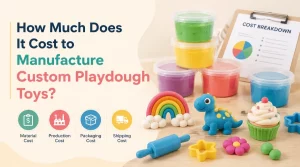
Estimate the cost of custom playdough toys with this B2B guide covering pricing, customization, certifications, and manufacturing decisions.

A burger comes out 🍔 #akia #fun #kidstoys #diy #clay #shorts
The pig starts sneezing clay 🤣🐷 #fun #diy #kidstoys #clay #akia