
Factory Price vs. Landed Cost: What Toy Buyers Need to Know
Why is the cheapest toy factory not always the best choice? Learn to compare factory prices, shipping fees, import duties, and landed costs.

A toy usually goes viral because it is easy to notice, easy to understand, and satisfying to watch within a few seconds. However, viral content is not based on luck alone. It often combines visual design, sensory feedback, simple play, and strong social sharing. At the same time, long-term success depends on more than online attention.
Most viral toys follow the same basic pattern. They quickly attract attention, keep people watching, and encourage them to share or recreate the experience. While every product is different, four factors appear again and again across successful short-form videos.

Visual appeal is usually the first trigger. TikTok and Instagram users often decide whether to keep watching in the first one or two seconds. Bright colors, clear shapes, and visible movement help a toy stand out in a fast-moving feed.
However, looks alone are rarely enough. A toy should also create satisfying sensory feedback. For example, kinetic sand cuts cleanly, slime stretches smoothly, and air dry clay changes shape step by step. These actions create a clear visual result that keeps viewers engaged.
Simple interaction is another key factor. Most viral toys do not require long instructions. Instead, people understand what to do almost immediately. This lowers the effort needed to join a trend or create similar content.
Finally, easy sharing increases the chance of wider exposure. If viewers can quickly copy the activity, record their own version, or add a creative twist, the same product can appear in thousands of different videos. User-generated content often extends the life of a trend beyond a single post.
A viral video shows that people enjoyed watching the content. It does not automatically mean they will continue using the product or buying similar toys over time. Online attention and market demand are related, but they are not the same.
Many toys receive millions of views because they create a surprising or satisfying moment. Yet interest may fall quickly once the novelty disappears. This pattern is common in products driven mainly by short-term social media trends.
Long-term products usually meet a broader set of needs. Besides being interesting on camera, they should deliver consistent play value, stable quality, and safe performance. For sensory toys, factors such as texture consistency, durability, and compliance with standards like ASTM F963, EN71, and CPSIA remain important after the viral moment has passed.
For this reason, it is useful to separate “viral potential” from “market potential.” A toy with strong visual impact may attract attention quickly. A toy with repeatable play experiences and reliable quality is more likely to maintain demand after the trend slows down.
Social media has changed the way people discover and evaluate toys. In the past, buyers often learned about products through stores, catalogs, or advertisements. Today, short videos can introduce a toy to millions of users within a short time. As a result, toy design must consider not only play value but also how the product performs in a digital environment.

Short-form video platforms such as TikTok and Instagram Reels have changed how people consume product information. Instead of reading long descriptions, users often watch a few seconds of content and decide whether a product is interesting.
Short videos create a very limited attention window. A toy needs to show its main feature quickly, especially through movement, color, texture, or transformation. For example, a slime product can immediately show stretching and texture changes, while kinetic sand can demonstrate cutting or molding effects.
This does not mean that every toy needs a complex visual effect. In many cases, simple actions work better because viewers can understand them without explanation. A clear and repeatable play action is easier for users to remember and share.
Social media platforms do not manually choose which toys become popular. Instead, recommendation systems usually analyze user behavior, such as watch time, comments, saves, shares, and repeat views. Content that creates stronger interaction is more likely to reach new audiences.
Toys that encourage active responses often have a higher chance of gaining visibility. For example, viewers may comment on color choices, share creative ideas, or watch a satisfying process several times. These behaviors send signals that the content is valuable to more users.
However, algorithms do not only measure popularity. They also consider whether users continue watching and interacting with the content. Therefore, a toy video should create a complete viewing experience, from the first visual impression to the final result.
Today, toy discovery is often influenced by a mix of creators, communities, and recommendation systems. Many users do not search for a specific toy first. Instead, they discover products while watching related content.

Creators play an important role because they show real use cases. A toy can become more understandable when people see how it is played, customized, or combined with other activities. This type of content often feels more natural than traditional advertising.
Organic sharing also helps products reach different user groups. A sensory toy may first attract children and parents, then spread to educators, hobby communities, or gift buyers. When a product can create different types of content, it has more opportunities to appear across various recommendation feeds.
For toy developers and manufacturers, this means product planning should include both physical play experience and digital presentation. A product that is easy to demonstrate, repeat, and share is more suitable for today’s social media-driven market.
On short-form video platforms, visual information is processed faster than written information. A toy usually needs to communicate its main feature within a few seconds. Therefore, product appearance, movement, and transformation play an important role in whether viewers stop scrolling and continue watching.
Color is one of the first elements people notice in a video. In toy content, bright colors and clear contrast can help products become easier to recognize, especially when displayed on small mobile screens. However, color selection should support the play experience rather than only attract attention.
Human vision responds quickly to differences in color, brightness, and shape. A toy with clear color separation is easier to understand at a glance. For example, colorful playdough sets or multi-color clay activities allow viewers to immediately see the creative possibilities.
However, too many colors can reduce clarity. A product with a simple and balanced color system is often easier for viewers to remember. The goal is not to use the most colors, but to create a clear visual message.

Movement is another important factor in viral toy videos. Static products may require more explanation, while products with visible actions can communicate their features naturally through video.
Sensory toys often perform well in videos because their textures create visible changes. Slime stretching, kinetic sand cutting, air dry clay molding, and playdough mixing all show a clear action-result process.
The key factor is not only movement itself but also consistency. A repeatable action creates reliable content. When users can record similar results every time, they are more likely to create and share their own videos.
Transformation is a common structure in short-form content because it creates curiosity. Viewers want to see the final result after a process begins. For toys, this can include changing shapes, mixing colors, or creating a finished model.
A clear transformation gives viewers a reason to continue watching. For example, a piece of clay becoming a small figure creates a simple story: starting point, process, and final result.
However, the transformation should be easy to follow. If the change is too complicated or takes too long, viewers may lose interest. Effective toy content usually shows a visible difference within a short period.
Product shape also affects how quickly viewers understand a toy. Simple and recognizable designs are easier to identify in videos, photos, and user-generated content.
Complex designs may contain more details, but they can be harder to understand quickly. On social media, users often make fast decisions while scrolling. A clear product shape helps them know what they are seeing without extra explanation.
For example, a basic container of colorful slime or a set of clearly separated clay colors can communicate the product purpose immediately. Simple design does not mean limited creativity. Instead, it creates a stronger visual foundation for different types of content.

Sensory satisfaction is one of the main reasons some toy videos receive repeated views. Unlike traditional product demonstrations, sensory toy content allows viewers to experience part of the play process through sight and sound. A satisfying texture, smooth movement, or clear result can make a video easier to watch and remember.
Sensory play refers to activities that involve one or more senses during interaction. In toy development, sensory features are usually designed around how a product feels, looks, sounds, and changes during play. Common examples include the texture of slime, the softness of playdough, or the flowing movement of kinetic sand.
Visual stimulation comes from what users can see, such as color changes, patterns, shapes, and movement. This is especially important for online content because viewers usually experience the toy through a screen before they touch the product.
Tactile stimulation relates to how a material feels during play. Soft, stretchy, smooth, or moldable textures create different experiences. Auditory stimulation can also play a role, such as the sound of cutting kinetic sand or pressing textured materials.
A well-designed sensory toy usually combines these elements in a balanced way. The goal is not to add as many effects as possible, but to create a clear and consistent play experience.
ASMR-like content has become common in online videos because certain sounds and movements can attract attention. While not every viewer responds in the same way, sensory-focused videos often use similar techniques to create a calm and satisfying viewing experience.
Repeated actions, such as stretching, folding, cutting, or mixing, can create predictable patterns that viewers enjoy watching. These actions are easy to understand and often produce visible or audible results.
For sensory toy products, the quality of the material is important. For example, slime that stretches evenly or kinetic sand that holds its shape better can create clearer video effects. Inconsistent textures may make the content less predictable and harder to reproduce.

A strong sensory toy experience often combines surprise with consistency. Viewers enjoy seeing a change happen, but they also expect the result to match their expectations. This balance helps create trust in the product experience.
For social media content, repeatability matters because many videos are recreated by different users. If a toy produces a similar result each time, creators can make more reliable content and viewers know what to expect.
For example, a clay set should maintain a workable texture, and a sensory material should perform consistently after normal use. Product stability is not only important for play quality but also affects how well a toy performs in user-generated videos.
A toy becomes easier to share when people can quickly understand how it works and imagine different ways to use it. On social media, users usually do not spend much time learning complex rules. Products with clear play patterns, creative options, and multiple content possibilities are more likely to be recreated and discussed.
Simple play patterns help viewers understand a toy without detailed instructions. When people see a short video, they should quickly recognize what the product is and what action they can take with it.
A clear play process reduces the learning barrier. For example, molding clay, cutting kinetic sand, stretching slime, or mixing playdough colors can be understood through visual demonstration alone.
This does not mean a toy needs to have only one function. Instead, the basic interaction should be easy to recognize. Additional creative options can be introduced after users understand the main activity.
Products that encourage participation often create more opportunities for user-generated content. Instead of only watching, users can join the activity, create their own version, or compare results with others.
Challenges, creative tasks, and open-ended activities can increase interaction. For example, users may create different clay models, mix new colors, or design their own sensory experiences.
The important factor is flexibility. A product should provide enough structure to guide users while still allowing personal creativity. If every user can produce a different result, the product has more possibilities for online content.

A product with several visual features can support different types of videos. This gives creators more choices and helps the toy remain relevant after the first trend period.
For example, a slime product can be shown through texture demonstrations, color mixing, stretching tests, or creative scenes. Air dry clay can be used for sculpting tutorials, transformation videos, or finished creations.
Multiple content angles also help different audiences connect with the same product. Parents may focus on creative play, while creators may focus on visual effects. A toy that supports different viewpoints has a higher chance of being shared across various communities.
Different sensory toy categories have different visual strengths on social media. The best-performing content usually comes from products that show clear actions, visible changes, and repeatable results. However, each toy type creates a different viewing experience, so content performance depends on the product features being demonstrated.
Overall, no single sensory toy category guarantees viral performance. Products that show clear movement, visible change, and repeatable results are generally easier to present on social media. The strongest content usually comes from matching the toy’s natural features with the right video format.
Viral exposure can quickly increase public attention toward a toy product. While visual appeal and creative content help attract viewers, product safety and quality determine whether the toy can maintain trust after gaining popularity. For children’s sensory toys, stable materials, reliable performance, and safety compliance are important parts of long-term product development.
When a toy becomes popular online, more people see it, discuss it, and evaluate it. This increased visibility means that both positive experiences and potential problems can spread quickly.

Social media allows information to travel rapidly. If users discover issues related to product quality or safety, these concerns can affect public perception in a short time. Therefore, manufacturers need to consider safety before a product reaches a wider audience.
For children’s sensory toys, important factors include material safety, age suitability, product durability, and clear usage instructions. A product should be designed and tested based on the requirements of the target market rather than only focusing on visual performance.
Sensory toys depend heavily on material performance. The way a product feels and behaves directly affects how it appears in videos. A toy that performs differently from one use to another may create inconsistent content results.
Repeatable results are important for user-generated content. For example, slime should maintain similar stretch and texture, kinetic sand should hold shapes consistently, and modeling materials should remain workable during normal use.
When creators can predict the result, they can produce clearer demonstrations and more reliable videos. Therefore, material stability is not only a product quality issue but also a factor that influences online content performance.
For children’s toys, safety standards provide a framework for evaluating product risks. Compliance does not guarantee that a product will become popular, but it helps ensure that products meet basic safety expectations in different markets.
In the United States, ASTM F963 is a widely used toy safety standard that covers areas such as mechanical safety, physical properties, and chemical requirements. The Consumer Product Safety Improvement Act (CPSIA) also sets requirements for children’s products, including limits on certain harmful substances.
In Europe, EN71 is a key toy safety standard that covers areas such as physical and mechanical properties, flammability, and chemical safety. Manufacturers producing sensory toys such as air dry clay, playdough, slime, and kinetic sand often use these standards as references during product development and testing.
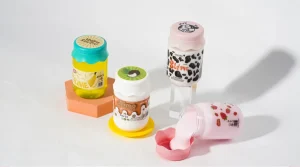
A successful toy product needs both strong market appeal and reliable safety performance. Social media may create the first wave of attention, but consistent quality helps determine whether that attention can develop into lasting market acceptance.
Many people believe that viral toy success depends on a single factor, such as appearance, price, or product complexity. However, social media performance is usually the result of multiple factors working together.
Bright colors can help a toy attract attention, but color alone does not create viral content. Many products use strong colors but fail to gain long-term engagement because they lack a clear play experience.
A successful toy usually combines visual appeal with other elements, such as movement, interaction, or transformation. For example, colorful slime may attract the first view, but its texture, stretch behavior, and user interaction determine whether people continue watching or sharing.
The key point is that color is an attention tool, not a complete viral strategy. A toy still needs a clear reason for users to interact with it.
High-cost materials do not automatically create better social media performance. Online audiences usually respond to visible experiences rather than production costs that cannot be seen in a video.
A simple material with strong visual or sensory effects may perform better than a more expensive product with a less obvious play pattern. For example, a well-designed sensory texture can create engaging content without requiring complex materials.
However, material quality still matters. Safe, stable, and consistent materials help ensure that the product performs well during repeated use and content creation.

Complex designs may appear impressive, but they can create barriers for viewers. On short-form platforms, people often decide within seconds whether they understand and enjoy a product.
A toy with simple rules and clear actions is usually easier to demonstrate and share. Users can quickly learn how to play and create their own versions without needing detailed instructions.
This does not mean toys should lack creativity. Instead, successful products often combine simple core actions with flexible creative options.
A viral moment can create high visibility, but popularity on social media does not always lead to lasting demand. Some products gain attention because of a temporary trend, seasonal interest, or a single popular video format.
Long-term success requires more than views. A sustainable toy should provide consistent play value, reliable quality, and a positive user experience after the first impression.
For sensory toys, factors such as material stability, safety testing, and repeat play possibilities often determine whether a product remains relevant after the initial online attention decreases. Viral exposure can open the door, but product quality determines how long the opportunity lasts.
Before developing or launching a toy product, it is useful to evaluate its potential from a social media perspective. Viral performance cannot be predicted with complete accuracy, but several product characteristics can be checked in advance. A practical evaluation should focus on visual communication, play experience, consistency, and user participation.

The first question is whether the toy can attract attention quickly. On short-form video platforms, users often scroll through many pieces of content in a short time. A product needs clear visual features to stand out.
A strong visual design allows viewers to understand the product category and main feature within seconds. Clear colors, simple shapes, and visible actions can help reduce confusion.
For example, viewers should quickly understand whether they are watching slime stretching, kinetic sand cutting, or clay modeling. If the product requires too much explanation before the main idea is clear, it may be harder to capture attention.
Sensory features are important for products such as air dry clay, playdough, slime, and kinetic sand. The way a toy looks and behaves during play directly affects how it appears in videos.
A good sensory experience usually comes from clear and repeatable actions. Stretching, cutting, molding, mixing, and flowing movements can create strong visual feedback.
However, sensory effects should match the actual product quality. A toy that looks interesting in one video but performs inconsistently in daily use may not maintain user interest.
Products with multiple ways to play often create more opportunities for user-generated content. Users are more likely to share a toy when they can add their own ideas.
A flexible toy can support different activities instead of only one fixed demonstration. For example, clay can be used for different models, playdough can support color experiments, and slime can create various texture-based videos.
Repeated creative possibilities help extend the content life of a product. Instead of producing one popular video style, users can create many different versions.

A product that receives high attention online also receives more public evaluation. Therefore, safety and stable performance should be considered during product development.
Consistency affects both user experience and online presentation. Sensory materials should maintain similar texture, appearance, and function during normal use.
For children’s toys, manufacturers should also consider relevant safety requirements, including standards such as ASTM F963, EN71, and CPSIA. Meeting these requirements helps support product reliability in different markets.
Shareability depends on whether people feel motivated to participate, recreate, or recommend an experience. A toy does not need to follow every trend, but it should create a clear reason for users to interact.
Products with simple actions and visible results are often easier for users to copy. When people can make their own version, compare results, or add personal creativity, the content has more opportunities to spread.
A practical evaluation should ask: “Can someone understand it quickly, enjoy the process, and create their own version?” If the answer is yes, the product has stronger potential for social media growth.

A viral toy is not created by one single feature. Successful social media products usually combine strong visual appeal, satisfying sensory experiences, simple play patterns, creative flexibility, and reliable quality. While platforms like TikTok and Instagram can increase product exposure quickly, long-term success still depends on safety, consistency, and real play value.
By evaluating these factors during product development, toy makers can create products that are not only attention-grabbing but also suitable for lasting market demand.
Why is the cheapest toy factory not always the best choice? Learn to compare factory prices, shipping fees, import duties, and landed costs.
A practical guide to toy manufacturing in China for US buyers, covering production processes, ASTM F963, CPSIA, quality control, costs, and logistics.
Learn how screen-free play creates opportunities for toy brands and why sensory products like playdough, clay, slime, and kinetic sand are a strong product fit.
Improve kids toy sales with packaging tips that communicate safety, benefits, and product experience for online shoppers.