Factory Price vs. Landed Cost: What Toy Buyers Need to Know
Why is the cheapest toy factory not always the best choice? Learn to compare factory prices, shipping fees, import duties, and landed costs.

The biggest kids toy packaging trends in 2026 are shifting from decoration-driven packaging to function-driven packaging. Brands are prioritizing packaging that improves shelf impact, reduces logistics cost, supports sustainability goals, and creates stronger play value.
The most commercially relevant packaging trends include:
For categories such as air dry clay, playdough, kinetic sand, slime, and educational sensory toys, packaging is increasingly becoming part of the product experience—not just a transport solution.
Packaging decisions now affect more than appearance.
For toy brands, packaging directly influences:
Packaging has become a product strategy decision rather than a final design task.
If packaging changes user experience or logistics performance, treat packaging development as an early-stage product decision.
Sustainability is becoming an operational requirement rather than a premium feature.
Common packaging updates include:
For children’s products, sustainability efforts must still maintain:
Products such as air dry clay and play compounds often require moisture control.
The goal is not eliminating packaging material—it is using only what adds functional value.

Choose the lowest-material solution that still protects product quality during shipping and storage.
One of the strongest developments in kids toys is play-extended packaging.
Examples include:
This approach increases perceived value without changing the core toy.
Parents evaluate value differently than children:
Packaging that supports both creates stronger purchase intent.

If packaging can create 10+ additional minutes of engagement, evaluate adding reusable play functions.
Toy brands increasingly design packaging systems instead of one-off boxes.
Examples:
Benefits include:
Build packaging systems that support future assortment growth.
Packaging graphics are becoming simpler.
Common updates include:
This does not mean less information.
It means organizing information more clearly.
If consumers cannot understand the product within three seconds, simplify packaging communication.

Brands increasingly optimize packaging for operational performance.
Packaging is now evaluated on:
Examples include:
Measure packaging success by total supply chain efficiency—not visual appearance alone.
Large packaging no longer automatically signals premium quality.
In 2026, many brands are moving toward:
Consumers increasingly compare:
experience per dollar instead of package size per dollar.
Ask:
Reduce physical volume before reducing product quantity.

Educational elements are becoming a larger part of packaging design.
Examples include:
For sensory toys, packaging increasingly supports:
Educational value helps justify purchasing decisions and supports stronger product positioning.
If educational messaging exists, show practical outcomes rather than broad claims.
Packaging requirements are becoming more complex across markets.
Packaging reviews increasingly include:
For children’s products sold internationally, packaging development should align with applicable standards and labeling requirements from the beginning.

✓ Product age grading
✓ Warning statements
✓ Traceability information
✓ Material identification
✓ Carton markings
Treat packaging compliance as part of product development—not post-production artwork.
Use this simplified framework:
Why is the cheapest toy factory not always the best choice? Learn to compare factory prices, shipping fees, import duties, and landed costs.

A practical guide to toy manufacturing in China for US buyers, covering production processes, ASTM F963, CPSIA, quality control, costs, and logistics.
Learn how screen-free play creates opportunities for toy brands and why sensory products like playdough, clay, slime, and kinetic sand are a strong product fit.
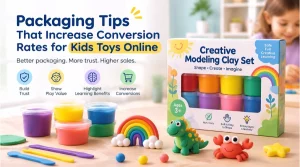
Improve kids toy sales with packaging tips that communicate safety, benefits, and product experience for online shoppers.