Factory Price vs. Landed Cost: What Toy Buyers Need to Know
Why is the cheapest toy factory not always the best choice? Learn to compare factory prices, shipping fees, import duties, and landed costs.

Many buyers assume MOQ is tied only to product manufacturing. In reality, packaging often determines the MOQ.
Lowest MOQ option.
Suitable for:
Decision logic:
If your priority is minimizing inventory risk, choose standard packaging first and validate demand before investing in customization.
Moderate MOQ.
Suitable for:
Additional MOQ may result from:
Decision logic:
If branding is more important than product differentiation, invest in packaging customization before requesting formula changes.

Highest MOQ.
Suitable for:
Factors increasing MOQ:
Decision logic:
Full customization is usually cost-effective only when expected sales volume can absorb higher inventory commitments.
Lead time is the total time from order confirmation to shipment readiness.
For toy buyers, lead time directly affects:
A short lead time can be just as valuable as a lower unit price.
Lead time generally consists of multiple stages.
Most sensory toy orders are completed within:
Actual timelines depend on order quantity, season, and customization complexity.
Understanding the causes helps buyers plan more accurately.
Custom packaging often takes longer than toy production itself.
Examples include:
Decision logic:
If launch timing is critical, confirm packaging specifications before production begins.
Lead times often increase before:
Decision logic:
Place orders several weeks earlier than normal during peak purchasing periods.
Repeated design modifications can delay production approval.
Common causes:
Decision logic:
Finalizing artwork early is one of the simplest ways to reduce lead time risk.
Custom packaging refers to packaging designed specifically for a buyer’s brand, retail channel, or marketing objective.
Packaging customization can include:
For educational and sensory toys, packaging is often a major contributor to perceived product value.

Not every buyer needs fully customized packaging.
The decision depends on the sales channel.
Recommended approach:
Decision logic:
If customers primarily discover products online, packaging should support brand recognition without significantly increasing cost.
Recommended approach:
Decision logic:
If products compete on store shelves, packaging becomes part of the sales process.
Recommended approach:
Decision logic:
Educational buyers often prioritize functionality, safety information, and learning outcomes over premium packaging effects.
Many sourcing problems occur because buyers evaluate these factors separately.
In practice, they are interconnected.
The most successful sourcing strategy is usually not the lowest MOQ or fastest lead time.
Instead, buyers should identify which factor creates the greatest business value.
When sourcing children’s sensory toys, compliance should be evaluated alongside MOQ and packaging decisions.
For products such as:
Buyers should verify compliance with applicable toy safety standards for their target markets.
Common requirements include:
Decision logic:
Compliance documentation should be confirmed before packaging artwork is finalized, since regulatory markings and warnings may need to appear on the packaging.
For new brands, lower MOQs are generally preferable because they reduce inventory risk and allow faster market validation.
Usually yes. Printed boxes, custom labels, and proprietary packaging materials often require minimum production quantities from packaging suppliers.
The most effective methods are:
It depends on business objectives.
Only if branding is a critical part of the launch strategy. Otherwise, many buyers start with standard packaging and upgrade after validating demand.

For toy buyers, MOQ, lead time, and custom packaging should be evaluated as a single sourcing decision rather than three separate factors.
Use the following framework:
The most cost-effective sourcing strategy is not necessarily the cheapest option. It is the option that aligns MOQ, production timeline, packaging requirements, and market objectives with your actual sales plan.
Why is the cheapest toy factory not always the best choice? Learn to compare factory prices, shipping fees, import duties, and landed costs.

A practical guide to toy manufacturing in China for US buyers, covering production processes, ASTM F963, CPSIA, quality control, costs, and logistics.
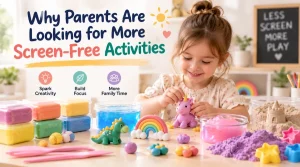
Learn how screen-free play creates opportunities for toy brands and why sensory products like playdough, clay, slime, and kinetic sand are a strong product fit.
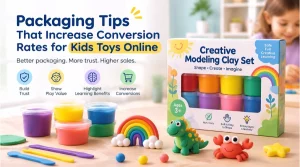
Improve kids toy sales with packaging tips that communicate safety, benefits, and product experience for online shoppers.