
What are fun things to make with air dry clay?
Looking for air dry clay ideas? Explore 10 fun projects, age-based recommendations, FAQs, and expert tips for kids, classrooms, and DIY kits.
#1 Toys Manufacturer in China. WhatsApp: +86 139-6690-0919. Email: [email protected]

#1 Toys Manufacturer in China. WhatsApp: +86 139-6690-0919. Email: [email protected]
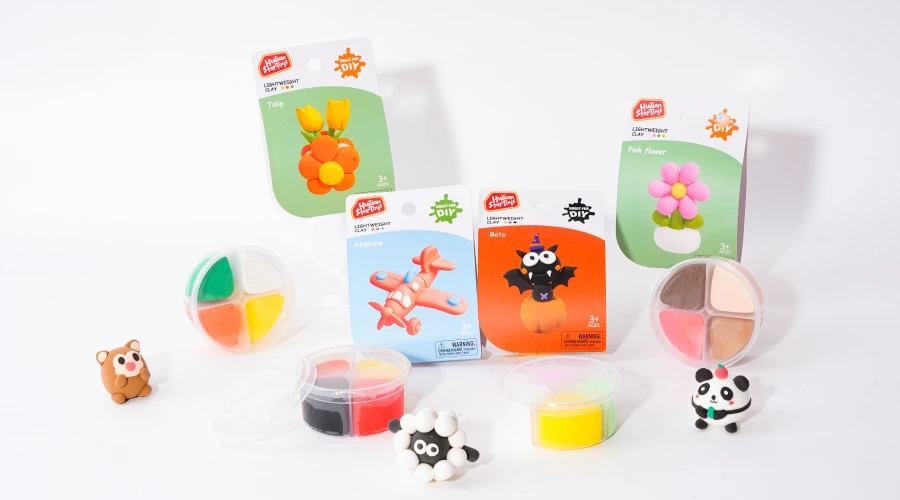
In 2026, toy brands can differentiate their air dry clay products by moving beyond basic modeling sets and developing themed craft kits, miniature creations, personalized accessories, sensory art activities, and educational building projects.
The strongest product concepts combine three elements: an engaging creative activity, a clear target customer, and a practical reason for buyers to choose the product. For toy brands, this means considering not only what children can make with air dry clay, but also how the kit can be packaged, customized, priced, and positioned in the market.
Below are five air dry clay product ideas for 2026, including their key components, target markets, customization opportunities, and product development considerations.
Air dry clay is a flexible material for children’s craft products because it supports hands-on creativity without requiring a kiln or specialized firing equipment. Children can shape, decorate, and display their creations after the clay dries according to the product’s instructions.
For toy brands, this material offers several product development advantages:
The key is to develop a complete play experience rather than simply placing several colors of clay into a box.
Miniature food and bakery kits allow children to create small clay versions of familiar foods, including cupcakes, donuts, ice cream, cookies, pizzas, fruit, and desserts.
A typical kit can include several colors of air dry clay, miniature molds, shaping tools, texture tools, and step-by-step project instructions. Children can combine different clay colors to create toppings, decorations, and small food details.
Food-inspired miniature crafts are easy for children to understand because they are based on familiar objects. They also provide clear visual results, making the finished creations suitable for display, pretend play, and gift-oriented packaging.
This concept also creates opportunities for product differentiation. Instead of offering a generic modeling set, brands can build collections around specific themes such as a bakery, ice cream shop, dessert café, or birthday party.
Product development consideration: Small decorative pieces can create choking hazards for young children. Brands should define the intended age grade and evaluate accessories, dimensions, and warnings against applicable toy safety requirements before production.
Best suited for: Gift shops, toy retailers, craft stores, and brands targeting children who enjoy pretend play and creative activities.
DIY jewelry kits turn air dry clay into a material for creating personalized accessories. Children can make beads, pendants, decorative charms, name tags, and small ornaments using different colors, shapes, and textures.
Depending on the design, the finished pieces can be used to create bracelets, necklaces, bag decorations, or other craft accessories with suitable components.
Personalization gives children more control over the final product. Rather than following one fixed model, they can choose colors, combine shapes, and create accessories that reflect their individual preferences.
This product direction also connects with the broader 2026 interest in expressive and customizable play. Toy brands can develop products that are creative activities as well as personalized items.
Product development consideration: Air dry clay beads and pendants need suitable drying time and sufficient strength for their intended use. Test hole dimensions, cord compatibility, breakage resistance, and finished-product durability before finalizing the design. Any jewelry findings or small components must also be evaluated for the target age group.
Best suited for: Toy brands, craft retailers, gift retailers, and private-label collections focused on personalization and creative self-expression.
Fantasy modeling kits encourage children to create their own characters, animals, and miniature worlds using air dry clay. Possible themes include dinosaurs, sea creatures, fairies, woodland animals, space explorers, and fantasy monsters.
A kit can include several clay colors, character molds, sculpting tools, scene accessories, and illustrated project instructions. More advanced versions can allow children to create multiple characters and assemble them into a small display scene.
Character-based products offer more opportunities for storytelling than a basic clay set. Children can create characters, assign them roles, and build their own imaginary environments.
For brands, this concept supports product series development. A dinosaur collection, for example, can be expanded into different species, habitats, and additional modeling projects. This creates a recognizable product family rather than a single standalone kit.
Product development consideration: Character designs should balance visual detail with ease of modeling. Too many small parts or complicated steps may make the activity unsuitable for younger users. Test whether the clay can hold the intended shapes and details after drying.
Best suited for: Toy brands developing themed collections, educational craft ranges, character-based products, and gift sets.
Nature-inspired clay kits focus on slower, hands-on creative activities. Children can make flowers, leaves, mushrooms, insects, small garden decorations, and miniature nature scenes.
Instead of emphasizing the number of finished objects, this product concept focuses on the modeling process: shaping, pressing textures, combining colors, and creating individual designs.
Creative activities that provide a screen-free experience are an important direction in the 2026 toy market. The Toy Association’s 2026 trend research identifies interest in tactile, low-tech play, while Spielwarenmesse highlights Creative Mindfulness as a key toy trend.
Air dry clay is suitable for exploring this direction because it allows children to work directly with a tactile material and create objects at their own pace.
Product development consideration: The formula should be easy to shape and suitable for the intended project size. Test workability, surface finish, drying behavior, and the ability to retain fine details. If the product is positioned as a calming activity, avoid making unsupported therapeutic or medical claims.
Best suited for: Educational toy brands, craft retailers, classroom activity suppliers, and brands targeting screen-free creative play.
STEM-inspired air dry clay kits combine modeling with basic construction challenges. Children can use clay to create bridges, towers, vehicles, geometric structures, simple machines, and other three-dimensional projects.
The kit can include air dry clay, connectors or structural accessories, modeling tools, shape templates, and challenge cards. Each activity can ask children to build an object that meets a simple design requirement.
This concept moves air dry clay beyond decorative crafts and into problem-solving activities. Children can experiment with shape, balance, structure, and spatial relationships while developing their own designs.
It also gives brands a way to position clay kits within educational and STEAM product ranges. The important distinction is that the kit should include an actual building or design challenge rather than simply using STEM as a marketing label.
Product development consideration: Air dry clay is not suitable for every structural application. Large or load-bearing designs may crack, deform, or require extended drying time. Keep challenges appropriate to the material’s strength and validate the finished projects before making performance claims.
Best suited for: STEM toy brands, educational suppliers, school activity programs, and retailers looking for creative learning products.
Not every product concept is suitable for every brand. The right choice depends on the target age group, retail channel, price point, product positioning, and manufacturing requirements.
| Product Idea | Main Play Value | Key Differentiation | Suitable Brand Positioning |
|---|---|---|---|
| Miniature Food and Bakery Kits | Modeling familiar objects and pretend play | Food themes, molds, and colorful details | Gift and craft collections |
| DIY Jewelry and Accessories | Personalization and accessory creation | Custom colors, shapes, and wearable designs | Creative lifestyle and craft ranges |
| Fantasy and Character Kits | Storytelling and imaginative modeling | Characters, themes, and expandable collections | Character-based and themed toy ranges |
| Nature-Inspired Clay Kits | Open-ended and tactile creative activities | Natural themes and creative prompts | Educational and screen-free play ranges |
| STEM Clay Building Kits | Construction and problem-solving | Design challenges and learning activities | STEM and classroom product ranges |
A practical development approach is to start with one clearly defined concept, produce a sample kit, test the activity with the intended age group under appropriate supervision, and then refine the formula, components, and packaging before mass production.
A successful private-label air dry clay kit requires coordination between the clay formula, accessories, packaging, and intended play experience. Buyers should review these elements together rather than treating them as separate purchasing decisions.
Different projects require different material properties. A miniature modeling kit may need clay that holds fine details, while a beginner craft kit may prioritize softness and easy shaping.
Important evaluation points include:
Accessories help turn basic clay into a complete craft experience. Brands can customize molds, cutters, texture stamps, sculpting tools, and themed components to support their product concept.
However, additional accessories increase material costs, packaging requirements, and assembly complexity. Each component should have a clear purpose in the play experience.
Packaging should protect the clay from premature drying and organize the kit components. Common options include individual clay pouches, reusable containers, compartment trays, printed boxes, and instruction inserts.
The best packaging format depends on the product’s number of components, retail presentation requirements, storage conditions, and target price point.
Children’s air dry clay kits must be evaluated against the applicable toy safety and chemical requirements in their destination markets. For products intended for the United States and European markets, buyers should consider relevant requirements under ASTM F963, CPSIA, and applicable EN 71 standards.
Compliance should be verified using documentation and testing appropriate to the actual product, materials, age grading, and market. Test reports for one formula or kit configuration should not automatically be assumed to cover every customized variation.
Before mass production, confirm the applicable testing scope, labeling, age grading, warnings, and required documentation with the manufacturer and qualified testing or compliance professionals.
Working with an OEM/ODM manufacturer allows toy brands to develop customized air dry clay kits without establishing their own production facilities. Depending on the manufacturer’s capabilities, buyers may be able to customize clay formulas, colors, molds, accessories, packaging, and complete kit configurations.
When evaluating a manufacturing partner, consider the following capabilities:
A capable manufacturer should be able to explain which customization options are practical, what may affect the minimum order quantity, and how each design decision influences production cost and lead time.
In 2026, air dry clay offers toy brands opportunities beyond traditional modeling sets. Miniature food kits, personalized jewelry projects, fantasy character collections, nature-inspired activities, and STEM building kits provide different ways to develop products for creative, educational, and gift-oriented markets.
The most suitable concept is not necessarily the one with the most accessories or the most complicated design. It is the one that delivers a clear play experience, matches the target customer, can be manufactured consistently, and meets the required product safety standards.
For toy brands planning a new private-label collection, starting with a focused concept and a tested sample is a practical way to evaluate product feasibility before moving into bulk production.
We are an educational sensory toy manufacturer based in Foshan, China, specializing in air dry clay, playdough, kinetic sand, slime, and related children’s creative products.
For toy brands, wholesalers, retailers, and startups targeting North American and European markets, we support product customization across clay colors, kit configurations, accessories, and packaging.
Contact our team to discuss your product concept, target market, expected order quantity, and packaging requirements. We can help evaluate the manufacturing feasibility and next steps for sample development.
Five product directions worth considering are miniature food kits, DIY jewelry kits, fantasy character modeling kits, nature-inspired creative kits, and STEM building kits. The best option depends on the target age group, retail channel, price point, and brand positioning.
Air dry clay can be suitable for children's craft kits when the formula, product design, age grading, and safety requirements are appropriate. It allows children to shape and decorate creations without kiln firing. The finished product should be evaluated for drying behavior and durability.
Common accessories include molds, cutters, sculpting tools, texture stamps, shaping templates, storage containers, instruction cards, and selected decorative components. The accessory selection should support the kit's main activity and intended age group.
Many OEM/ODM manufacturers offer customization options for clay colors, textures, packaging, and kit configurations. Available options depend on the manufacturer's production processes, formulation capabilities, minimum order quantities, and testing requirements.
Evaluate softness, workability, stickiness, detail retention, drying time, shape retention, finished strength, and storage performance. The formula should be tested against the actual projects included in the kit rather than selected based on texture alone.
Buyers should approve the final product sample, formula, colors, accessory list, packaging, product specifications, quality criteria, and applicable compliance documentation. They should also confirm the production schedule, minimum order quantity, and delivery requirements.
More Related...
Looking for air dry clay ideas? Explore 10 fun projects, age-based recommendations, FAQs, and expert tips for kids, classrooms, and DIY kits.
Booming…💗🌸 #akia #fun #diy #kidstoys #clay #shorts
Beautiful clay cake🎂🥳 #akia #fun #kidstoys #diy #clay
A cute dinosaur cartoon made from clay 🦕💗 #akia #fun #diy #kidstoys #clay

Our team will answer your inquiries within 48 hours.
Copyright © 2026 GuangDong AKIA Technology Co,. Ltd. All Rights Reserved