How Packaging Affects the Shelf Life of Air Dry Clay
Learn how packaging affects air dry clay shelf life, moisture retention, product quality, and shipping performance, with practical tips for toy brands.

Choosing between air dry clay and traditional modeling clay depends on the expected result of the activity. Air dry clay is designed for making creations that become solid after drying, while traditional modeling clay is designed for repeated shaping and reuse. The right choice depends on whether the goal is to keep the artwork or continue the modeling process.
The main difference is the way each material changes after use. Air dry clay contains water-based components that leave the material as moisture evaporates. After enough drying time, the clay becomes a firm object that can be kept as a finished craft.
Traditional modeling clay is made to stay flexible. It does not harden through normal air exposure, so children can reshape it many times. This makes it suitable for activities where the focus is on making, changing, and exploring different forms.
From a material science view, the key factor is permanence. Air dry clay changes from a soft material into a solid structure. Traditional modeling clay keeps its plasticity, which means it can be pressed, rolled, and reshaped without creating a permanent piece.

The choice should start with the purpose of the activity. If children need to create a model that can be displayed, stored, or used for a project, air dry clay is usually the better option. It works well for simple sculptures, handmade objects, and step-by-step craft activities.
However, if the activity focuses on practice, sensory play, or learning basic shapes, traditional modeling clay is often more suitable. Children can test ideas, make changes, and repeat the process without waiting for the material to dry.
A simple decision rule is:
The age of the child, activity time, and learning goal should also be considered. For example, a short classroom activity may need a reusable material, while a multi-day craft project may need a drying material.
Air dry clay is a type of modeling material that becomes hard when exposed to air. Unlike traditional modeling clay, it does not need heating or baking to set. Its working process is based on moisture loss, which allows the soft clay to gradually change into a solid form.
Air dry clay is usually made from water, natural or synthetic polymers, fillers, and other supporting materials. The exact formula may vary by manufacturer, but the main feature is that the material contains moisture that allows it to stay soft and easy to shape during use.
When fresh, air dry clay has a smooth and flexible texture. It can be rolled, pressed, cut, and shaped with simple tools. Good-quality air dry clay should have balanced flexibility: it should be soft enough for children to manipulate but firm enough to keep basic shapes.
The drying process begins when the water inside the clay slowly moves to the surface and evaporates into the air. As moisture decreases, the internal structure becomes more stable, and the clay gradually becomes harder.

Before drying, air dry clay is soft, moldable, and able to hold different shapes. Users can adjust the design, add details, or combine different pieces while the clay is still flexible. This stage is important for shaping and creative exploration.
During drying, water evaporation causes the clay structure to become more solid. The drying speed depends on factors such as thickness, room temperature, humidity, and airflow. Thicker pieces usually need more time because moisture must travel a longer distance before leaving the material.
After drying, air dry clay becomes a solid object with a stable shape. The final hardness and surface quality depend on the clay formula and drying conditions. A properly dried piece can be used for display, decoration, or further craft steps such as painting.
Air dry clay is commonly used in educational crafts because it supports step-by-step creative projects. Children can design an idea, shape the clay, wait for it to dry, and observe the final result. This process connects hands-on work with basic planning skills.
It is also used for small sculptures and decorations, such as animals, figures, ornaments, and simple models. Since the material can keep a permanent shape after drying, it is suitable for projects where the finished object needs to be saved.
In early learning activities, air dry clay can be used for fine motor skill practice. Actions such as pinching, rolling, pressing, and shaping require hand control and coordination. It is also suitable for longer creative projects where children work on one piece over multiple sessions.
Traditional modeling clay is a reusable material designed to stay soft and flexible during play. Unlike air dry clay, it does not rely on water evaporation to become a permanent object. Its main purpose is to support repeated shaping, creative exploration, and hands-on learning through continuous use.
Traditional modeling clay is usually made with waxes, oils, polymers, fillers, or similar materials that help maintain a soft and stable texture. Some types may slowly change over time, but they are generally designed not to harden during normal use.
Because it remains workable, traditional modeling clay can be stored and used again. Proper storage, such as keeping it in a closed container, helps reduce dust, drying, and changes in texture.

Traditional modeling clay supports open-ended creativity because there is no required final result. Children can create a shape, change it, and try a completely different idea within the same activity. This flexible process allows them to explore different possibilities.
It is also useful for repeated practice. For example, children learning basic shapes can make circles, lines, or simple models many times. Each attempt can be adjusted immediately, which helps them understand the relationship between actions and results.
Another reason it is widely used is that changes can happen instantly. If a child wants to add details, remove parts, or rebuild the model, the material allows quick adjustment without waiting for drying time.
Traditional modeling clay is often used in classrooms for short creative activities. Teachers can introduce basic concepts such as colors, shapes, numbers, and objects through hands-on modeling tasks.
It is also used for sensory exploration. The feeling of pressing, rolling, and shaping the clay gives children a direct understanding of texture and movement. These activities are often combined with simple instructions or free play.
In early childhood education, traditional modeling clay supports shape recognition and imaginative play. Children can create animals, food, characters, or objects based on their own ideas. Since the material can be changed again and again, it fits well with activities focused on exploration rather than creating a permanent product.

Air dry clay and traditional modeling clay may look similar at first, but they are designed for different types of creative activities. The main differences come from how the materials respond over time: one becomes a finished object after drying, while the other stays flexible for repeated use. The table below shows the key features that help compare them.
The best choice is not about which material is better. Instead, it depends on the purpose of the activity. A material that works well for one learning goal may not be the best option for another.
Material properties directly affect how children interact with a creative activity. Air dry clay introduces a process with different stages: planning, shaping, drying, and reviewing the final result. Because the creation becomes permanent, children often need to think ahead before making changes.
Traditional modeling clay creates a different experience. Since the material can be changed immediately, children can test ideas without worrying about mistakes. This supports trial-and-error learning and allows them to focus on the process of making.
For educators and parents, the key point is to match the material with the activity goal. If the goal is to complete a craft project, a drying material may be more suitable. If the goal is practice, exploration, or sensory learning, a reusable clay may provide more opportunities for interaction.
Both materials can support creativity, but they encourage different types of thinking. The choice should be based on whether the activity values a final product or the learning process itself.
Read More >> Eco-Friendly Air Dry Clay: Materials and Manufacturing Challenges
Both air dry clay and traditional modeling clay can support children’s development, but they provide different types of learning experiences. The better choice depends on the skill or activity goal. Air dry clay focuses more on planning and creating a finished piece, while traditional modeling clay focuses more on exploration and repeated practice.
Both types of clay require hand movements such as pinching, rolling, pressing, and shaping. These actions involve small muscles in the hands and fingers, which are important for activities that need hand control and coordination.
Air dry clay is useful for activities that involve careful shaping. Since the final object needs to keep its form after drying, children often use more controlled movements when building details. For example, they may gently press small parts into place or adjust the shape before the clay becomes firm.
Traditional modeling clay supports repeated movement practice. Children can roll the clay into different forms, press it flat, or reshape it many times. Because changes can be made quickly, children can repeat actions and improve their control through practice.

Air dry clay encourages children to think about the final result before they start. Since the material will become permanent after drying, children often need to consider the shape, size, and structure of their creation during the process.
For example, when making a simple animal model, children may decide which parts to create first and how to connect them. This creates a step-by-step problem-solving process where planning becomes an important part of the activity.
Traditional modeling clay supports a more flexible creative process. Children can make a shape, change it, and try another idea immediately. There is less pressure to keep the first design, so they can explore different solutions through trial and adjustment.
This type of play helps children understand that ideas can change during the creative process. Instead of focusing only on the final product, they learn through testing and improving their models.
Clay activities also provide sensory feedback through touch and movement. The way a material feels and responds can influence how children interact with it.
Air dry clay usually starts with a soft and smooth texture. As children work with it, they can feel how the material changes during drying. The increasing firmness gives feedback about time and material changes.
Traditional modeling clay provides a more consistent sensory experience because it stays soft and flexible. Children can feel the resistance when pressing or stretching the clay and learn how different movements change the shape.
The manipulation process is also different. Air dry clay often follows a create-and-finish process, while traditional modeling clay supports continuous touching, changing, and rebuilding. Both experiences can be valuable, but they support different learning needs.

The best clay choice depends on what the activity is designed to achieve. A short play session, a long-term craft project, and a classroom lesson may require different material features. By matching the clay type with the activity goal, teachers and caregivers can create a more suitable learning experience.
For short creative sessions, traditional modeling clay is often more suitable because it allows children to start, create, and finish an activity within a limited time. There is no need to wait for drying, so children can focus on shaping and exploring during the available play period.
Reusable modeling materials also allow quick changes. If children want to rebuild a model or try a new idea, they can adjust the clay immediately. This makes it a practical choice for free play, short lessons, and activities where the process is more important than the final product.
For younger children or beginner activities, the ability to repeat simple actions can also be helpful. Children can practice rolling, pressing, and shaping without needing to protect a finished piece.
For project-based learning, air dry clay may be a better choice because it supports a complete creative process. Children can move through several stages, including planning, shaping, drying, and reviewing the finished work.
The drying stage adds another learning element. Children can observe how a material changes from soft to solid over time. They can also learn that some projects require patience and preparation before the final result is completed.
Air dry clay is suitable for activities where children need to create a model with a clear purpose, such as a small sculpture, educational model, or craft project. Since the final piece can be kept, it also provides a record of the child’s work.
In classrooms, the choice between air dry clay and traditional modeling clay should consider more than just creativity. Teachers and caregivers need to evaluate factors such as cleanup, storage, activity time, and learning goals.
Cleanup is often easier to manage when the material matches the activity design. Traditional modeling clay can be collected and reused after class, while air dry clay requires more attention because unused material may dry if left exposed.
Storage needs are also different. Air dry clay should be sealed properly before use to prevent early drying. Traditional modeling clay should be stored in closed containers to maintain its texture and keep it clean.
Activity duration is another important factor. A short classroom exercise may work better with reusable clay, while a multi-session project may benefit from air dry clay. Most importantly, teachers should first define the learning objective and then select the material that best supports that goal.

When selecting clay products for children, safety and quality should be considered together. A suitable product should not only provide a good creative experience but also meet relevant safety requirements and maintain stable performance during use. Material safety, age suitability, and product quality are important factors for educators, caregivers, and buyers to review.
Children’s clay products should be evaluated according to applicable toy safety standards. These standards help control potential risks related to materials, physical properties, and product use.
For clay products, manufacturers and suppliers should use appropriate testing and quality control processes to confirm that materials meet the required standards for their target markets.
Age suitability is an important factor when choosing children’s clay products. Different ages have different abilities in handling materials, following instructions, and using tools safely. Product recommendations should consider the child’s development stage and the activity design.
Adult supervision is recommended, especially for younger children. Caregivers can help children use the material correctly, prevent misuse, and guide proper hygiene habits, such as washing hands after play.
Proper storage and handling also affect product safety and performance. Clay should be stored according to the product instructions to help maintain its texture and reduce contamination from dust or other materials. Tools and working surfaces should also be kept clean during and after use.

Texture consistency is one of the main quality factors for clay products. A stable texture allows children to shape the material more easily and provides a predictable creative experience. Clay that is too hard, too sticky, or uneven may affect usability.
Color stability is also important, especially for products designed for creative activities. Consistent colors help children achieve better results and reduce unwanted changes during storage or use.
Odor is another factor to consider. Children’s clay products should avoid strong or unusual smells, as this may affect the user experience. Suitable materials should meet safety requirements and quality expectations for children’s products.
Packaging protection helps maintain product condition before use. Good packaging can reduce exposure to air, moisture changes, and contamination. In addition, product durability should match the intended use, whether the clay is designed for repeated modeling or for creating finished crafts.
Choosing the right clay starts with understanding the purpose of the activity. Air dry clay and traditional modeling clay are not designed to replace each other. Instead, each material supports a different creative process. The key question is whether the activity focuses on keeping the final creation or exploring the making process.
Air dry clay is a suitable choice when the goal is to create a permanent object. After drying, the clay becomes a solid piece that can be displayed, stored, or used as part of a craft project.
It works well for structured activities where children follow several steps, such as planning a design, shaping the clay, waiting for it to dry, and reviewing the final result. This process helps introduce the idea that some creative projects need preparation and time.
Air dry clay is also a good option when the finished artwork is important. Whether creating a simple sculpture, model, or decoration, the dried piece allows children to keep a physical record of their work.
Choose air dry clay when you need:
Traditional modeling clay is better suited for activities that focus on continuous play and exploration. Since it remains soft and reusable, children can create different shapes, change their ideas, and try new designs during the same session.
It is also useful for repeated practice. Children can repeat basic actions such as rolling, pressing, and shaping to improve their hand control and understand how materials respond to different movements.
For open-ended exploration, traditional modeling clay provides more flexibility. There is no need to protect a final shape, so children can focus on experimenting and discovering new possibilities.

Choose traditional modeling clay when you need:
A few simple questions can help determine which clay is more suitable:
| Do you need the creation to last?
| Will the child repeat the activity?
| Is the goal sensory exploration or project completion?
The right choice depends on the learning goal, activity design, and expected result. By matching the clay type with the purpose of the activity, children can have a more suitable and effective creative experience.
Air dry clay and traditional modeling clay both support children’s creativity, but they are designed for different types of activities. The main difference is how the material behaves after use. Air dry clay focuses on creating a finished object, while traditional modeling clay focuses on continuous shaping and exploration.
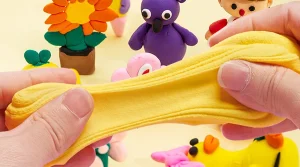
The basic choice can be summarized in a simple way:
Air dry clay is designed for projects where the final result matters. Children can shape an idea, allow the material to dry, and keep the finished creation. It is suitable for structured crafts, models, and activities with a clear outcome.
Traditional modeling clay is designed for flexible play. Children can make a shape, modify it, and try new ideas many times. It is suitable for repeated practice, sensory activities, and open-ended creative exploration.
Neither material is universally better. The right option depends on what the activity is trying to achieve.
When selecting clay, the first step is to define the learning goal. If the purpose is to complete a project and create a lasting object, air dry clay may be more appropriate. If the purpose is to explore materials, practice skills, or encourage free creativity, traditional modeling clay may be a better fit.
Teachers, caregivers, and product designers should also consider factors such as children’s age, activity duration, storage needs, and expected results. A well-matched material can make creative activities more suitable and easier to manage.
By understanding the differences between air dry clay and traditional modeling clay, users can choose the material that best supports the child’s development stage and the purpose of the activity.
Learn how packaging affects air dry clay shelf life, moisture retention, product quality, and shipping performance, with practical tips for toy brands.
Understand the science behind eco-friendly air dry clay, including material selection, production difficulties, and the future of sustainable toy materials.
Find out why parents and educators prefer DIY craft kits that encourage hands-on learning, independent creativity, and skill development.
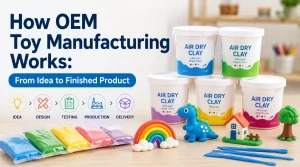
Understand how toy ideas become finished products through OEM manufacturing, with key steps, decision points, and compliance requirements.