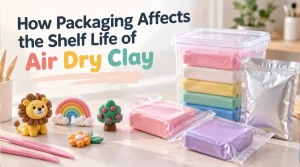
How Packaging Affects the Shelf Life of Air Dry Clay
Learn how packaging affects air dry clay shelf life, moisture retention, product quality, and shipping performance, with practical tips for toy brands.

Eco-friendly air dry clay is becoming an important topic in children’s toy materials because it connects creative play with material science and environmental awareness. To understand its value, we need to look at what it is, how it works, and why sustainable materials are gaining attention in toy manufacturing.
Eco-friendly air dry clay is a type of modeling material that hardens naturally when exposed to air. Unlike clay that needs firing at high temperatures, it uses a special mixture of binders, fillers, and water-based components to create a workable material. The term “eco-friendly” usually refers to the use of safer ingredients, lower environmental impact, or more responsible production methods.
From a material science view, air dry clay is not the same as natural ceramic clay. Traditional clay is mainly made of minerals and becomes strong after heating. Air dry clay, however, depends on internal chemical and physical changes during drying. As water leaves the material, the structure becomes harder and keeps its shape.
Traditional modeling clays often contain waxes, oils, or synthetic polymers that keep them soft for long periods. They are designed to be reused and may not harden easily. In contrast, air dry clay is created for projects where the final shape needs to remain stable after drying.

Another difference is the drying process. Traditional ceramic clay requires a kiln, which uses high temperatures to remove water and change the clay structure. Air dry clay does not need this step, making the production and use process different. However, because it dries through evaporation, factors like humidity, thickness, and air flow can affect the final result.
One important feature of air dry clay is its soft and flexible texture before drying. Children can shape, press, cut, and combine the material easily. This makes it suitable for basic creative activities that involve hand movement and simple design skills.
Another key property is controllable drying. A good air dry clay formula should dry evenly and reduce problems such as cracking or shrinking. Material balance is important because too much water may slow drying, while too little flexibility may make the clay break during shaping.
The use of sustainable materials in children’s toys reflects a wider change in product design. Today, manufacturers are paying more attention to the full life cycle of materials, from raw material selection to production and disposal. Eco-friendly air dry clay is one example of how traditional creative materials are being studied from a sustainability perspective.
However, sustainable material development is not only about replacing one ingredient with another. It requires careful testing of safety, performance, and environmental impact. A material used by children must meet both creative needs and strict quality requirements.
Many conventional toy materials are made from petroleum-based plastics or synthetic compounds. These materials can have environmental impacts because their production often requires fossil resources, and some types are difficult to recycle after use.
In addition, the environmental effect of a toy does not only come from the final product. The entire process, including raw material extraction, manufacturing energy use, packaging, and waste management, can influence its overall footprint.
Sustainable materials are receiving more attention because the toy industry is exploring ways to reduce environmental pressure while maintaining product safety. Material choices now involve questions about resource use, chemical safety, and long-term environmental effects.
For children’s creative products, this balance is especially important. A material must be safe to touch, easy to use, and stable during storage. At the same time, researchers and manufacturers continue to study how new materials can reduce environmental impact without reducing quality.

The quality of eco-friendly air dry clay depends on the careful selection and combination of different materials. Unlike simple mixtures, modern air dry clay formulas need to balance texture, drying behavior, safety, and environmental impact. Each ingredient has a specific role, and even small changes in the formula can affect how the clay feels and performs.
Many eco-friendly air dry clay formulas focus on using materials from renewable or naturally available sources. These materials can include plant-based components, minerals, and other safe fillers. However, natural does not always mean better by itself. Each material still needs scientific testing to ensure it works well in the final product.
A good formulation requires understanding how each ingredient interacts with others. For example, some materials improve softness, while others help maintain shape after drying. The challenge is creating a stable mixture that performs consistently during use.
Plant-based ingredients are often used as part of sustainable material research because they come from renewable resources. Some plant-derived materials can work as binders or texture modifiers, helping the clay stay together and remain easy to shape before drying.
However, plant-based materials may change depending on their source, moisture level, and processing method. Therefore, manufacturers need careful quality control to make sure the final clay has stable properties and does not change too much between batches.
Mineral components are commonly used in modeling materials because they can influence texture, structure, and weight. Fine mineral powders may help create a smoother surface and improve the clay’s ability to hold details during shaping.
The size and distribution of mineral particles are important factors. If particles are too large, the clay may feel rough. If they are too fine, the material may become too dense or difficult to shape. Finding the right balance is a key part of material development.
Besides the main ingredients, air dry clay often needs functional additives to control its working properties. These additives are not simply for improving appearance. They help manage moisture, drying speed, and material stability during storage and use.
For children’s creative materials, additives must be carefully selected. The goal is to support product performance while meeting safety requirements for regular handling.
Water plays an important role in air dry clay because it affects softness and workability. Moisture retention agents help slow down water loss, allowing children more time to shape the clay before it becomes harder.
At the same time, drying control is necessary because uneven moisture loss may cause cracks or deformation. A well-designed formula needs to allow gradual drying so the final object can keep its shape.
Binders help different ingredients stay connected and give the clay its basic structure. In eco-friendly formulations, researchers often study safer or renewable binder options that can provide enough strength without reducing flexibility.
Stabilizing components also help maintain the clay’s quality over time. They can reduce changes caused by temperature, humidity, or storage conditions. This is especially important because children’s materials need reliable performance from production to use.
Creating sustainable air dry clay is a process of balance. A material may have a low environmental impact, but it still needs to meet practical requirements such as softness, strength, and safety. A successful formula must consider both environmental goals and user experience.
This balance is one of the main challenges in material development. Changing one ingredient can improve one feature while creating problems in another area. For example, increasing hardness may reduce flexibility, while increasing softness may affect drying stability.
Before drying, air dry clay needs enough softness so children can shape it easily. After drying, it needs enough strength to maintain the created form. These two stages require different material behaviors, which makes formulation more complex.
Researchers and manufacturers study factors such as ingredient ratios, particle size, and moisture control to improve these properties. The aim is not to make the clay extremely hard or extremely soft, but to create a balanced material.

Safety is a basic requirement for children’s creative materials. Ingredients need to be evaluated for factors such as chemical stability and suitability for skin contact. At the same time, the material should still provide a comfortable and enjoyable creative experience.
A well-developed eco-friendly air dry clay should combine safe materials with good handling qualities. This means children can focus on creativity while the material meets the technical standards needed for responsible toy production.
Because air dry clay is designed for children’s hands, material safety is one of the most important parts of product development. A suitable formula must consider not only how the clay performs, but also how children interact with it during play. Safety evaluation usually includes ingredient review, physical testing, and long-term stability checks.
Children often touch creative materials for long periods, and younger children may also accidentally touch their face or mouth during activities. Therefore, air dry clay materials need careful selection of ingredients to reduce possible health risks.
Non-toxic materials do not simply mean that ingredients are natural. A material must also be tested for chemical safety, purity, and stability. Some substances may be harmless in one condition but become a concern if they contain unwanted impurities or are used incorrectly.
Children’s creative materials are usually evaluated under safety standards that focus on factors such as harmful substances, physical hazards, and product performance. These standards can vary by region, but they generally aim to limit exposure to unsafe chemicals.
Testing may include checking for restricted substances, evaluating material composition, and confirming that the product remains safe during normal use. For manufacturers, following these standards requires careful control of both raw materials and production processes.
Unsafe chemical components can create different risks depending on their type and concentration. For example, certain unwanted substances may cause skin irritation, allergic reactions, or other health concerns after repeated contact.
In addition, poor-quality materials may have problems such as strong odors, unstable texture, or changes during storage. This is why ingredient selection and quality control are important steps in producing safe children’s modeling materials.
Safety is not only about chemical composition. The physical experience of using air dry clay also matters. Children learn through touching, shaping, and observing materials, so the clay should have a suitable texture and predictable behavior.
A well-designed product considers how children interact with it from the first touch to the final dried result. Factors such as softness, smell, and surface feel can influence both safety and usability.
Air dry clay should be designed for regular hand contact. Materials need to be evaluated to reduce the chance of irritation, especially because children’s skin can be more sensitive than adults’ skin.
Allergy prevention is also related to ingredient control. Using carefully selected materials and maintaining clean production conditions can help reduce unexpected reactions caused by contaminants or unsuitable additives.
Texture is an important part of children’s creative activities. If clay is too sticky, too dry, or too hard, it may become difficult to shape. A balanced texture allows children to create freely while keeping the material stable.
Odor is another factor that affects user experience. A strong or unusual smell may indicate the presence of certain volatile substances or poor material control. Therefore, sensory testing is often included when evaluating creative materials.
Quality testing helps confirm that air dry clay remains safe and reliable from production to use. Testing is usually performed at different stages, including raw material inspection, production checks, and final product evaluation.
For children’s materials, testing is especially important because the product needs to meet both safety expectations and performance requirements. A material that is safe but difficult to use may not provide a good creative experience.
Chemical testing focuses on understanding what materials are present and whether any unwanted substances exist. Laboratories may analyze the formula, check ingredient purity, and evaluate whether the material meets required safety limits.
Material evaluation also includes physical checks, such as moisture content, drying behavior, and structural performance. These tests help confirm that the clay works as expected under normal conditions.

Air dry clay needs to remain stable before it reaches children. Storage conditions such as temperature and humidity can affect moisture levels and texture. Therefore, stability testing is used to study how the material changes over time.
During use, the clay should also maintain predictable performance. Testing helps identify problems such as early drying, texture changes, or cracking after storage. This process supports safer and more consistent children’s creative materials.
The production of eco-friendly air dry clay involves several carefully controlled steps, from preparing raw materials to final packaging. Although the process may seem simple, maintaining stable quality requires attention to material ratios, moisture control, and environmental factors. Each stage affects the final texture, safety, and performance of the clay.
The first stage of manufacturing is preparing and combining the raw materials. Different ingredients must be checked before mixing because small changes in material quality can affect the clay’s final properties. A stable formula depends on good preparation and careful control of each component.
During mixing, the goal is to create an even structure where all ingredients are distributed properly. If some areas contain more moisture or different material concentrations, the clay may have uneven texture or inconsistent drying behavior.
Accurate measurement is essential because each ingredient has a specific function. The amount of water, binder, filler, and other components can influence softness, flexibility, and drying speed. Even a small imbalance may change how the clay feels and performs.
For this reason, manufacturers use controlled measuring systems to maintain consistent formulas. Careful measurement also helps reduce production waste because fewer batches need to be adjusted or discarded due to quality problems.
Mixing technology plays an important role in creating smooth and uniform air dry clay. The process needs to combine materials evenly while avoiding problems such as air bubbles or uneven moisture distribution.
A consistent texture allows children to shape the clay more easily and helps the material dry more predictably. Modern production methods focus on controlling mixing time, speed, and conditions to improve material stability.
After mixing, the clay needs to be processed into a suitable form for use. At this stage, manufacturers must carefully manage the material structure because air dry clay depends heavily on moisture balance.
Unlike fired ceramic clay, air dry clay hardens through water evaporation. Therefore, controlling moisture during production is one of the most important technical steps.
The internal structure of air dry clay affects how it behaves during shaping and drying. A well-controlled structure allows the material to remain flexible before use while becoming stable after drying.
Manufacturing processes need to maintain the right balance between strength and softness. If the structure is too weak, the clay may lose shape. If it is too rigid, children may find it difficult to create detailed designs.
Cracking and shrinkage are common challenges in air dry materials. These problems often happen when moisture leaves the clay too quickly or unevenly. Thicker pieces may dry differently from thinner areas, causing stress inside the material.
To reduce these issues, production conditions such as moisture level, temperature, and material composition must be controlled carefully. A balanced formula helps the clay dry more evenly and maintain its shape.
Packaging is the final stage before air dry clay reaches users, but it also creates technical challenges. Because the material depends on moisture for its working quality, packaging must protect the clay from drying out too early.
At the same time, eco-friendly production also considers the environmental impact of packaging choices. The challenge is finding a balance between material protection and reducing unnecessary waste.
Air dry clay needs to keep the correct moisture level during storage. If the package allows too much moisture loss, the clay may become hard and difficult to shape before use.
Manufacturers need packaging systems that reduce air exposure while maintaining product quality over time. Storage testing is often used to check how the material performs under different conditions.
Sustainable packaging is becoming an important part of eco-friendly product design. However, packaging must still provide enough protection to prevent product damage and waste.
The development of lower-impact packaging requires considering factors such as material source, recyclability, and overall environmental effect. A responsible approach looks at the complete product life cycle, not only the clay itself.
Producing eco-friendly air dry clay is not only a process of choosing greener ingredients. Manufacturers also need to solve technical problems related to material performance, production stability, and safety. Sustainable materials can bring new possibilities, but they also create challenges that require careful research and testing.
Many traditional modeling materials use synthetic ingredients because they offer stable performance and predictable results. Replacing these materials with more sustainable options is a complex task because new materials must provide similar functions while meeting safety and environmental goals.
A sustainable ingredient may have good environmental characteristics but may not perform the same way as a traditional one. Therefore, material development requires continuous testing to find the right combination of ingredients.
Some alternative materials may have limitations in areas such as flexibility, durability, moisture control, or storage stability. For example, a natural ingredient may improve sustainability but may also change the texture or drying behavior of the clay.
Because of this, manufacturers need to study how different materials interact. The challenge is not simply adding more natural components, but creating a balanced formula that works well during both production and use.
Developing a new eco-friendly clay formula requires time and scientific evaluation. Researchers need to test different material combinations and study how they affect properties such as softness, strength, and drying performance.
Another challenge is ensuring that improvements in one area do not create problems in another. For example, increasing flexibility may affect drying speed, while improving hardness may reduce ease of shaping. Finding the right balance requires careful experimentation.
Natural materials can be more difficult to control compared with some synthetic ingredients. Their properties may change depending on their source, processing conditions, and storage environment. This creates challenges for maintaining the same quality in every production batch.
For children’s creative materials, consistency is especially important. The clay should have a similar texture, drying behavior, and safety level each time it is used.

Natural raw materials may have differences in moisture content, particle size, or chemical composition. These small variations can influence the final clay formula and affect product performance.
To manage these differences, manufacturers need strict inspection and preparation processes. Raw materials must be evaluated before use to reduce unexpected changes during production.
Producing air dry clay on a large scale requires more than a good formula. The manufacturing process must maintain the same conditions across many batches, including mixing, moisture control, and packaging.
Quality control systems help identify problems early. Testing different production stages allows manufacturers to monitor changes and maintain stable product performance.
One of the biggest challenges in eco-friendly air dry clay production is finding a balance between environmental goals and practical manufacturing needs. A sustainable material still needs to be safe, reliable, and suitable for large-scale production.
Improving sustainability often requires changes in materials, equipment, or processes. These changes need careful planning because they may affect production speed, energy use, and overall efficiency.
Reducing waste is an important goal in sustainable manufacturing. However, production systems must still maintain product quality and avoid creating more waste through failed batches or unstable materials.
Energy use is another factor to consider. Although air dry clay does not require high-temperature firing like ceramic clay, manufacturing still involves mixing, processing, storage, and transportation activities that consume resources.
Sustainable materials and improved production methods may require additional research and quality control. These factors can increase manufacturing complexity and create cost challenges.
However, lowering costs should not come at the expense of safety or material performance. A well-designed production system needs to balance resource use, product quality, and responsible manufacturing practices.
The environmental impact of air dry clay is not limited to the final product. It begins with raw material selection and continues through manufacturing, packaging, transportation, and disposal. A complete understanding of sustainability requires looking at the entire lifecycle of the material instead of focusing on only one stage.
For eco-friendly air dry clay, the main challenge is creating a product that uses responsible materials while still meeting safety and performance needs. Each step in the production chain can influence the overall environmental effect.
The first step toward a lower-impact material is choosing suitable raw materials. Sustainable sourcing means considering where materials come from, how they are processed, and whether their use can continue without causing unnecessary environmental pressure.
However, sourcing sustainable materials is not always simple. A material may appear environmentally friendly at one stage but create challenges during transportation, processing, or storage. Therefore, manufacturers need to evaluate materials from multiple perspectives.
Responsible resource management focuses on using materials efficiently and reducing unnecessary consumption. When selecting ingredients for air dry clay, factors such as availability, renewability, and processing requirements need to be considered.
Material selection also requires a balance between environmental goals and technical needs. A material must not only have a lower environmental impact but also provide the texture, stability, and safety required for children’s creative activities.
The environmental effect of a material is connected to its entire supply chain. Activities such as harvesting, processing, packaging, and transportation can all contribute to resource use and emissions.
For this reason, evaluating a material requires looking beyond the ingredient itself. A complete assessment considers how materials move from their original source to the final manufacturing stage.
Manufacturing processes can create waste through leftover materials, rejected batches, excess packaging, or inefficient production methods. Reducing waste is an important part of improving the sustainability of air dry clay production.
A well-managed production system aims to use materials efficiently while maintaining stable product quality. This requires careful planning, process control, and continuous improvement.
Waste management strategies may include improving production accuracy, reusing suitable materials, and reducing unnecessary losses during processing. Better control of mixing and forming steps can help reduce the amount of material that does not meet quality requirements.
At the same time, waste handling must consider safety. Materials from children’s products need proper evaluation before any reuse or disposal process is applied.
Resource efficiency means achieving better results while using fewer resources. In air dry clay production, this may involve improving equipment performance, optimizing ingredient use, and reducing energy consumption during manufacturing.
Small improvements in production processes can have a larger effect when applied across large-scale manufacturing. Efficiency is therefore an important part of long-term sustainable development.

Understanding sustainability requires looking at the full environmental footprint of air dry clay. This includes the materials used, the energy required during production, packaging choices, transportation, and the product’s end-of-life stage.
A lifecycle approach helps identify where environmental improvements can have the greatest effect. It also prevents focusing on one area while ignoring possible impacts in another.
Although air dry clay does not need kiln firing, manufacturing still requires energy for processing, mixing, and storage. Transportation also contributes to environmental impact because materials and finished products often move through multiple stages before reaching users.
Packaging is another important factor. It needs to protect the clay from moisture loss while also considering material use and waste generation. Finding the right balance between protection and sustainability remains a technical challenge.
Lifecycle thinking looks at a product as a complete system rather than a single object. For air dry clay, this means studying every stage from raw material selection to final disposal.
This approach helps researchers and manufacturers make better decisions about materials and processes. Sustainable toy materials are not created by one change alone, but through continuous improvement across the entire production lifecycle.
Improving eco-friendly air dry clay requires more than changing ingredients. The material must still provide stable performance during shaping, drying, and long-term storage. Researchers and manufacturers need to solve technical problems while keeping the material safe and environmentally responsible.
The main challenge is creating a balance between sustainability and function. A clay material that uses greener components must also meet practical requirements, such as proper drying behavior, suitable texture, and reliable strength after drying.
Drying is one of the most important stages in air dry clay performance. Unlike fired clay, air dry clay becomes solid as water slowly leaves the material. The drying process directly affects the final strength, surface quality, and shape stability.
A well-designed formula needs to control how moisture moves through the clay. If drying happens too quickly or too slowly, it may reduce the quality of the finished object.
Many factors can influence drying time, including clay thickness, room temperature, humidity, air movement, and material composition. A thin piece may dry quickly, while a thicker design may need much more time.
The ingredients also play an important role. Materials that hold moisture strongly may slow drying, while materials that release water too easily may increase the risk of cracks. Therefore, manufacturers need to carefully adjust the formula for balanced drying.
Cracks and deformation often happen when different parts of the clay dry at different speeds. As moisture leaves the material, the structure may shrink slightly, creating stress inside the clay.
To reduce these problems, the clay needs a stable internal structure. Proper ingredient ratios, moisture control, and even drying conditions help the final product maintain its original shape.

Children’s creative materials need to support imagination while remaining easy and comfortable to use. For air dry clay, this means the material should respond well to pressing, rolling, cutting, and shaping.
However, improving the creative experience must be balanced with technical requirements. A softer clay may be easier to shape but may have weaker stability, while a stronger clay may become harder to manipulate.
Texture is one of the key features that affects how children interact with air dry clay. A suitable texture should feel smooth, remain flexible during shaping, and hold small details when creating models.
Moldability depends on many factors, including particle structure, moisture level, and binder performance. Improving these areas requires careful material research rather than simply adding more softening components.
Children may use air dry clay for many types of activities, from simple shapes to more detailed crafts. This creates different performance requirements for the material.
A balanced clay formula should support various creative methods while maintaining stability after drying. This requires manufacturers to understand how material properties affect different types of use.
Future improvements in eco-friendly air dry clay will likely focus on new materials and better production methods. Researchers are studying ways to improve performance while reducing dependence on traditional resources.
The development of sustainable materials is an ongoing process. New ideas must be tested carefully to ensure they provide real improvements in safety, performance, and environmental impact.
Bio-based materials are receiving attention because they may offer alternatives to some traditional ingredients. Research areas include plant-derived polymers, natural fibers, and other renewable resources.
However, these materials still require detailed evaluation. Scientists need to study their stability, safety, and ability to perform consistently before they can become widely used in creative materials.
Future technology may improve air dry clay through better material combinations, smarter production methods, and improved moisture control systems. These changes could help create materials with more reliable performance.
At the same time, sustainable development will continue to focus on the relationship between material science and environmental responsibility. The goal is not only to create new materials but also to improve the complete process behind them.
Quality control is a key part of producing reliable eco-friendly air dry clay. A good material must not only contain suitable ingredients but also maintain stable performance during production, storage, and use. Testing helps identify problems early and ensures that the clay meets safety and quality expectations.
Because air dry clay is made from multiple components, even small changes in materials or processing conditions can affect the final product. Therefore, manufacturers need systematic testing methods to monitor both physical properties and safety factors.
Physical performance testing focuses on how the clay behaves before and after drying. These tests help evaluate whether the material can provide a consistent creative experience while maintaining structural stability.
Different properties are checked because air dry clay needs to perform well in several stages. It should be easy to shape before drying and strong enough to keep its form after becoming solid.
Flexibility testing examines how easily the clay can be bent, stretched, or shaped without breaking. This is important because children need a material that responds well during creative activities.
Strength testing focuses on the condition of the clay after drying. A properly developed material should maintain its structure and resist small impacts during normal handling. Drying behavior is also measured because uneven drying can lead to cracks, shrinkage, or changes in shape.
Air dry clay needs to remain stable during storage before use. Changes in temperature, humidity, or packaging conditions may affect moisture content and texture over time.
Long-term stability testing helps evaluate whether the clay keeps its original performance. These tests may include checking texture changes, drying speed, and overall material condition after different storage periods.

Safety testing is essential because air dry clay is a material designed for children. The evaluation process focuses on confirming that ingredients and finished products meet required safety expectations.
Safety control does not only happen at the final stage. It should continue throughout the production process, from raw material selection to finished product inspection.
Raw materials need to be checked before entering production. This helps ensure that ingredients meet quality requirements and do not contain unwanted substances.
During manufacturing, monitoring systems help maintain control over the formula. Changes in ingredient quality, mixing conditions, or production steps can influence the safety and performance of the final clay.
Reliable quality standards help create consistent products across different manufacturing periods. These standards may include requirements for material composition, physical performance, and safety evaluation.
Following clear testing procedures allows manufacturers to identify problems and improve production processes. This is especially important for children’s materials, where safety and reliability are closely connected.
Producing the same quality of air dry clay in every batch can be challenging. Natural materials may have small differences, and manufacturing conditions may change over time.
Consistency requires careful control of raw materials, equipment settings, and production methods. Without proper control, different batches may have noticeable differences in texture, moisture level, or drying performance.
Variations in clay quality can come from several sources. Differences in raw material properties, inaccurate measurements, mixing conditions, and storage environments can all affect the final result.
Even small changes may influence how the clay feels and performs. For this reason, manufacturers need to identify possible sources of variation and reduce them through better process control.
Improving reliability requires a combination of technology, testing, and process management. Regular inspections, accurate measurement systems, and controlled production conditions help maintain stable quality.
Continuous improvement is also important. By analyzing testing results and production data, manufacturers can adjust processes and create more consistent eco-friendly air dry clay with reliable performance.
The future of eco-friendly air dry clay will depend on advances in material science, sustainable design, and responsible manufacturing methods. As researchers continue to study safer and more efficient materials, the development of air dry clay is moving beyond simple ingredient changes toward a more complete approach.
Future improvements will not only focus on creating greener materials but also on improving performance, safety, and production methods. The challenge is to develop creative materials that meet children’s needs while reducing environmental impact.
The demand for sustainable children’s creative materials is encouraging more research into alternative resources and improved manufacturing processes. Instead of focusing only on traditional materials, scientists are exploring new ways to create safe and functional products.
However, sustainability involves many factors, including material sources, production methods, product lifespan, and waste management. A truly sustainable material requires consideration of the entire development process.
Renewable and biodegradable ingredients are receiving more attention because they may reduce dependence on limited resources. Researchers are studying plant-based materials and other alternatives that can provide useful properties for creative materials.
However, these ingredients must still meet technical requirements. They need to provide stable texture, safe handling, and reliable performance before they can be widely applied in air dry clay production.
Material science plays an important role in developing future creative materials. By studying the structure and behavior of different ingredients, researchers can design formulas with better balance between environmental goals and practical performance.
New technologies may help scientists understand how materials interact at a smaller level. This knowledge can support the development of safer, more stable, and more efficient air dry clay materials.

Sustainable product design is not only about choosing different materials. It also involves thinking about how a product is created, used, and managed after use.
For children’s creative materials, designers need to consider safety, usability, and environmental responsibility at the same time. These factors influence every stage, from material selection to final production.
Future air dry clay design may focus on creating materials that are easier to use while maintaining strong safety standards. A good creative material should support children’s imagination without creating unnecessary environmental concerns.
This requires cooperation between material researchers, manufacturers, and designers. By combining scientific knowledge with practical design, future products can become more balanced in performance and sustainability.
The children’s toy industry still faces challenges in developing sustainable materials. These include improving material performance, controlling production costs, and maintaining strict safety requirements.
Another challenge is avoiding simple solutions that only improve one part of the process. Sustainable development requires long-term thinking about resources, manufacturing, and product impact.
Green manufacturing technologies may provide new opportunities for improving eco-friendly air dry clay production. These technologies focus on using resources more efficiently, reducing waste, and improving production control.
As technology develops, manufacturers may find better ways to combine sustainable materials with reliable manufacturing systems. This could support the wider use of environmentally responsible creative materials.

Innovation in production methods can help reduce material waste and improve consistency. Better mixing systems, improved quality monitoring, and more efficient processes may help manufacturers create stable products with fewer resources.
At the same time, production improvements need to maintain safety and quality. Efficiency should support better manufacturing rather than replace careful material evaluation.
The future of eco-friendly air dry clay depends on continuous improvement in both materials and manufacturing. Sustainable creative materials are not created through one single change but through ongoing research and better decision-making.
As material science advances, air dry clay may become an example of how children’s products can combine creativity, safety, and environmental responsibility. The goal is to support creative play while building more sustainable approaches to material development.
Eco-friendly air dry clay represents the connection between creative play, material science, and sustainable development. From raw material selection to manufacturing and quality testing, every step requires careful balance between safety, performance, and environmental responsibility.
Although challenges remain in improving formulas, reducing waste, and maintaining consistency, ongoing research continues to create better solutions. The future of air dry clay depends on smarter materials and greener production methods that support safer and more responsible creative experiences for children.
Learn how packaging affects air dry clay shelf life, moisture retention, product quality, and shipping performance, with practical tips for toy brands.
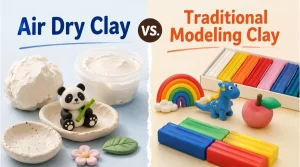
Choosing between air dry clay and modeling clay depends on the activity goal. Explore their features, uses, and selection tips in this complete guide.
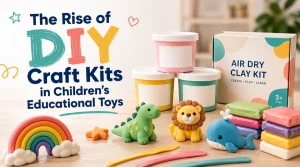
Find out why parents and educators prefer DIY craft kits that encourage hands-on learning, independent creativity, and skill development.
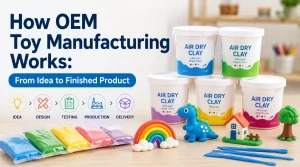
Understand how toy ideas become finished products through OEM manufacturing, with key steps, decision points, and compliance requirements.