How to Launch a Toy Brand on Shopify with OEM Support

Table of Contents

Short Answer:

The fastest and most scalable way to launch a toy brand on Shopify is to combine a validated product niche, a compliant OEM manufacturing partner, and a direct-to-consumer storefront. For educational sensory toys such as air dry clay, playdough, kinetic sand, and slime, the critical success factors are product safety compliance, low minimum order quantities (MOQs), private label customization, and a repeatable customer acquisition strategy.

For most new toy brands, the recommended sequence is:

  1. Validate demand before inventory investment.
  2. Select an OEM manufacturer with international toy safety certifications.
  3. Develop private-label products and packaging.
  4. Build a Shopify store optimized for conversion.
  5. Launch with a focused product catalog.
  6. Scale through content marketing, social media, and repeat purchases.

Why Shopify Is a Strong Platform for New Toy Brands

Shopify allows toy startups to launch quickly without building custom e-commerce infrastructure.

Shopify is a good fit if:

  • You want full ownership of your brand.
  • You plan to sell directly to parents, educators, or gift buyers.
  • You need flexible product customization.
  • You want to expand internationally.

Shopify may not be ideal if:

  • Your strategy depends entirely on marketplace traffic.
  • You have no budget for marketing.
  • You only intend to sell wholesale.

For brands focused on sensory and educational toys, Shopify provides greater control over branding, customer relationships, and recurring purchases than most marketplaces.

Step 1: Validate Product Demand Before Manufacturing

Many toy startups fail because they manufacture products before confirming market demand.

Recommended validation process

Question Validation Method
Is there demand? Search trends, social media engagement, marketplace research
Who is buying? Parents, teachers, therapists, homeschool communities
Why are they buying? Learning, sensory play, creativity, gifting
What problem is solved? Fine motor skills, creativity, stress relief, educational play

Example product opportunities

  • Air dry clay activity kits
  • Educational playdough sets
  • Sensory kinetic sand kits
  • DIY slime kits
  • Classroom activity packs
  • Seasonal craft kits

Decision Rule

If customers can clearly explain why they need the product, demand is usually stronger than products purchased purely for entertainment.

Educational and sensory toys often outperform novelty toys because they address specific developmental or learning objectives.

Step 2: Choose an OEM Toy Manufacturer

After validating demand, the next step is selecting a manufacturing partner.

What OEM manufacturing means

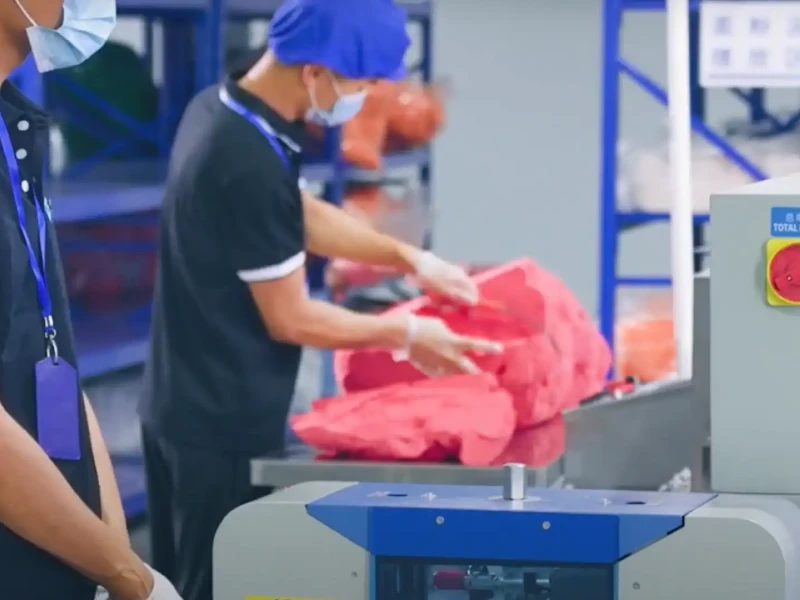
OEM (Original Equipment Manufacturing) allows a factory to produce products according to your brand specifications, including:

  • Product formulation
  • Colors
  • Packaging
  • Branding
  • Labels
  • Instruction manuals

This enables businesses to build proprietary brands without owning production facilities.

Key Criteria for Selecting an OEM Toy Manufacturer

1. Safety Compliance

For children’s products, compliance is non-negotiable.

Look for manufacturers whose products comply with:

  • ASTM F963 (United States)
  • EN71 (European Union)
  • CPSIA (United States)

Decision Rule

If a manufacturer cannot provide recent compliance documentation, eliminate them from consideration immediately.

Price advantages never outweigh compliance risks.

2. Product Specialization

Manufacturers with category-specific expertise typically produce more consistent products.

For sensory toy brands, relevant expertise includes:

  • Air dry clay
  • Playdough
  • Kinetic sand
  • Slime
  • DIY craft materials
  • Educational activity kits

Decision Rule

Choose specialists over general toy factories whenever possible.

Category experience usually reduces development time and quality issues.
3. Customization Capability

Strong OEM partners should support:

  • Custom colors
  • Custom scents
  • Custom packaging
  • Private labels
  • Educational inserts
  • Gift-ready formats

Customization creates differentiation and reduces direct price competition.

4. MOQ Flexibility

For new Shopify brands, excessive MOQs create inventory risk.

Recommended approach:

Business Stage Suggested MOQ Strategy
Startup Low MOQ testing
Growing Brand Moderate MOQ
Established Brand Large-volume production
Decision Rule Start with the smallest order size that allows acceptable margins. Inventory flexibility is often more valuable than lower unit cost during early growth.

Step 3: Develop a Private Label Toy Line

Avoid launching with too many products.

Recommended launch catalog

A focused catalog generally performs better than a large one. Example:
Product Type SKU Count
Air Dry Clay Kits 2-3
Playdough Sets 2-3
Kinetic Sand Kits 1-2
Slime Kits 1-2

Total:

6–10 SKUs

This range is usually sufficient for testing customer demand while keeping inventory manageable.

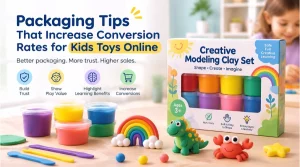
Packaging Matters More Than Many Founders Expect

Parents often evaluate toy quality before opening the package.

Packaging should clearly communicate:

  • Age range
  • Educational benefits
  • Safety compliance
  • Usage instructions
  • Brand identity

Decision Rule

If the educational value is not visible within five seconds, redesign the packaging.

Consumers make purchasing decisions quickly.

Step 4: Build a Shopify Store Designed for Conversion

Many new brands focus heavily on product development but neglect conversion optimization.

Essential Shopify Pages

Homepage

Must answer:

  • What is the product?
  • Who is it for?
  • Why is it valuable?

Product Pages

Include:

  • Product benefits
  • Educational outcomes
  • Age recommendations
  • Safety information
  • Product specifications
  • FAQs

About Page

Keep the story concise and credibility-focused.

Contact Page

Include:

  • Email
  • Business address
  • Response expectations

Product Page Structure

A high-converting toy product page generally follows:

  1. Product images
  2. Core benefit statement
  3. Key features
  4. Educational benefits
  5. Safety information
  6. Reviews
  7. FAQ
  8. Purchase CTA

Decision Rule

Lead with benefits before specifications.

Parents purchase outcomes, not materials alone.
Step 5: Launch With a Content-Driven Marketing Strategy

Educational toy brands perform particularly well with content marketing.

Content Categories

Educational Content

Examples:

  • Fine motor skill activities
  • Preschool learning ideas
  • Sensory play guides
  • STEM activity tutorials

Product Demonstrations

Show:

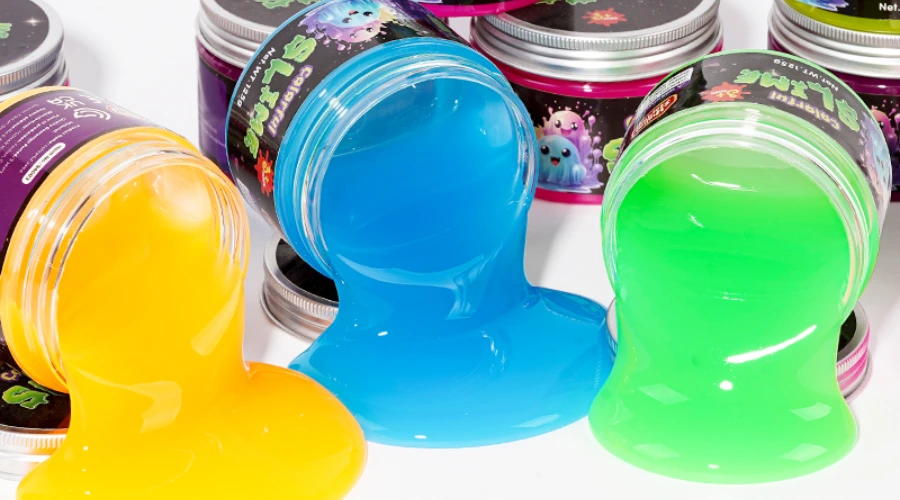
  • Texture
  • Stretchability
  • Molding capability
  • Creative outcomes

Parent Resources

Examples:

  • Screen-free activity ideas
  • Rainy day activities
  • Classroom projects

Why Content Outperforms Pure Advertising

Parents often research before purchasing educational products.

Helpful content creates:

  • Trust
  • Brand authority
  • Organic traffic
  • Higher conversion rates

Decision Rule

If content teaches first and sells second, conversion rates typically improve.

Step 6: Scale Through Repeat Purchases

The strongest toy brands are not built on one-time purchases.

Repeat Purchase Opportunities

For sensory toy brands:

  • New color collections
  • Seasonal editions
  • Refill packs
  • Classroom bundles
  • Subscription kits

Example Customer Lifecycle

Purchase Stage Product
First Order Starter Kit
Second Order Expansion Set
Third Order Seasonal Collection
Ongoing Refills and Bundles

This approach increases customer lifetime value while reducing acquisition costs.

Common Mistakes When Launching a Toy Brand

Mistake 1: Prioritizing Low Cost Over Compliance

Lower manufacturing costs cannot compensate for product safety risks.

Mistake 2: Launching Too Many SKUs

A small, focused catalog is easier to manage and optimize.

Mistake 3: Copying Existing Brands

Differentiation should come from:

  • Educational positioning
  • Packaging
  • Bundling
  • Customer experience

Mistake 4: Ignoring Customer Feedback

Early reviews often reveal the fastest path to product improvement.

Mistake 5: Scaling Inventory Too Quickly

Increase production only after confirming consistent demand.

Conclusion

Launching a toy brand on Shopify is primarily a process of reducing risk before scaling investment.

The recommended framework is:

  1. Validate demand.
  2. Partner with a compliant OEM manufacturer.
  3. Create differentiated private-label products.
  4. Build a conversion-focused Shopify store.
  5. Publish educational content consistently.
  6. Scale through repeat-purchase products and customer retention.

For educational sensory toys such as air dry clay, playdough, kinetic sand, and slime, brands that prioritize compliance, product differentiation, and educational value typically build more sustainable long-term growth than brands competing solely on price.

Frequently Asked Questions

Yes. OEM manufacturing allows brands to create private-label products without operating production facilities.

For major international markets, manufacturers should be able to support compliance with:

  • ASTM F963
  • EN71
  • CPSIA

Requirements vary by market and product category.

Most new Shopify toy brands should begin with approximately 6–10 SKUs to simplify inventory management and market testing.

Timelines vary depending on customization requirements, packaging development, sample approval, and production scheduling.

Download Catalogue

Where You Can Find Us

More Related...

Play Dough

View Products

HEY! HOW CAN WE HELP YOU?

Our team will answer your inquiries within 48 hours.

Copyright © 2026 GuangDong AKIA Technology Co,. Ltd. All Rights Reserved

Scroll to Top

Contact Form