
What is the best sand for sensory play?
A practical guide to sensory sand types, safety checks, age recommendations, and how to choose the right material for children’s play.

Kinetic sand looks like regular sand, but it moves differently. It flows through your fingers, sticks to itself, and never dries out. But why? The secret lies in chemistry and physics.
Kinetic sand looks and feels like regular sand but behaves differently. It sticks to itself, flows smoothly, and holds its shape without drying out. This unique quality makes it popular for sensory play and scientific study. But what exactly is kinetic sand, and how does it differ from other materials?
Kinetic sand is made of fine-grain natural sand coated with a small amount of silicone oil or polymer. This coating changes how the grains interact, making the sand moldable yet free-flowing. Unlike beach sand, which scatters, kinetic sand clumps together while remaining soft.
A simple test highlights the difference. If you scoop up dry sand, it slips through your fingers. But kinetic sand holds its shape, then slowly oozes apart. This controlled movement results from weak molecular bonds between the coated grains.
Kinetic sand shares similarities with playdough and slime but behaves differently. Playdough is firm and stretches without crumbling. Slime is elastic and sticky. Kinetic sand, however, flows yet stays dry, making it easier to handle.
Another key difference is how these materials respond to pressure. Playdough flattens when pressed, slime stretches, but kinetic sand resists slightly before breaking apart in slow motion. This gives it a unique, almost hypnotic quality.
Whether used for play or research, kinetic sand is more than a toy—it’s a material that challenges our understanding of movement and texture.

Kinetic sand doesn’t behave like ordinary sand. It flows, stretches, and holds its shape, almost like a living substance. This movement isn’t magic—it’s chemistry and physics working together. The secret lies in its silicone-based coating and unique molecular interactions.
Each grain of kinetic sand is covered in a thin layer of silicone oil or polymer. This coating changes how the grains interact, preventing them from sticking to surfaces while allowing them to bond with each other.
The key property here is hydrophobicity. Unlike beach sand, which absorbs water, kinetic sand repels it. The polymer coating keeps moisture out and ensures the grains slide smoothly over one another, creating the illusion of fluid movement.
Imagine pouring kinetic sand into a pile. Instead of forming loose mounds, the grains flow together, almost like wet sand. But unlike wet sand, it never dries out. The polymer locks in flexibility while keeping the grains separate.
If you press kinetic sand, it holds its shape. But if you touch it, your hands stay clean. This is due to weak molecular forces called Van der Waals forces. These forces cause the sand grains to attract one another but not other surfaces.
Surface tension plays a role too. Because the polymer coating resists moisture and friction, the grains don’t stick to skin. Instead, they cling together, making kinetic sand easy to shape but mess-free to handle.
This balance of cohesion and flexibility gives kinetic sand its signature movement—solid yet fluid, structured yet ever-shifting. It’s a material that defies expectations, bending the rules of both solid and liquid behavior.
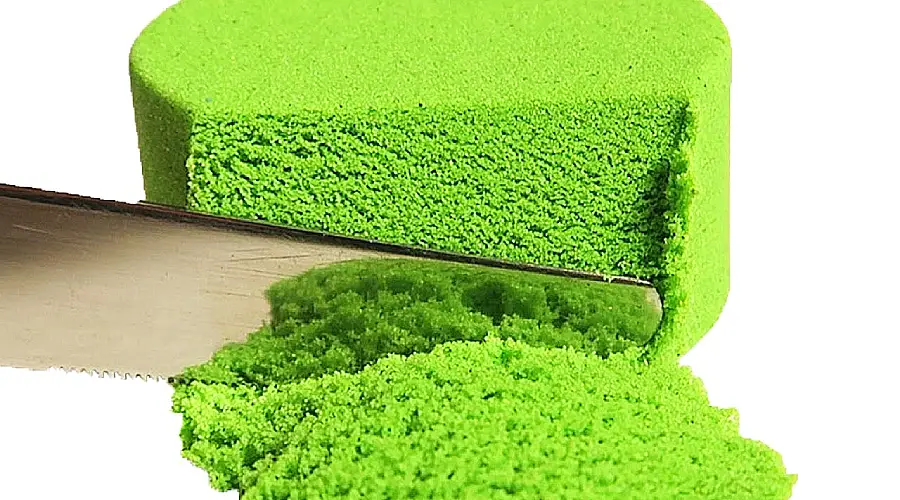
Kinetic sand is more than just regular sand with a special coating. It has unique physical and chemical properties that make it behave in unexpected ways. It flows like a liquid but holds its shape like a solid. It feels moist but never dries out. These characteristics are the result of both material science and physics.
Most people think of substances as either solid, liquid, or gas. But kinetic sand doesn’t fit neatly into any of these categories. Like other non-Newtonian materials, it changes its behavior depending on the force applied.
Press it gently, and it flows like a soft, shifting mass. But squeeze it hard, and it becomes more rigid, holding its shape. This is similar to cornstarch and water mixtures, often called “oobleck.” Both materials resist sudden pressure but remain fluid under slow movements.
Unlike oobleck, however, kinetic sand doesn’t rely on water to maintain this effect. Its polymer coating creates a network that allows controlled movement between grains, giving it both structure and flexibility.
Kinetic sand feels like wet beach sand, but it never dries out. That’s because it doesn’t actually contain water. Instead, its polymer coating mimics the effects of moisture, allowing the grains to slide smoothly over one another.
Regular sand dries out when water evaporates, making it crumbly and loose. But kinetic sand’s hydrophobic properties prevent this. The polymer coating repels moisture, keeping it stable over time.
Even in dry environments, kinetic sand retains its soft, moldable texture. This makes it different from clay, which hardens as it loses moisture, and playdough, which can dry out if left uncovered. Kinetic sand remains consistent, no matter the humidity or temperature.
Kinetic sand is more than just a toy. Its unique texture and properties make it useful in education, therapy, and stress relief. It engages both the mind and the hands, making it a versatile tool in various settings.
>> Sensory Playtime: Innovative Ways to Enjoy Kinetic Sand
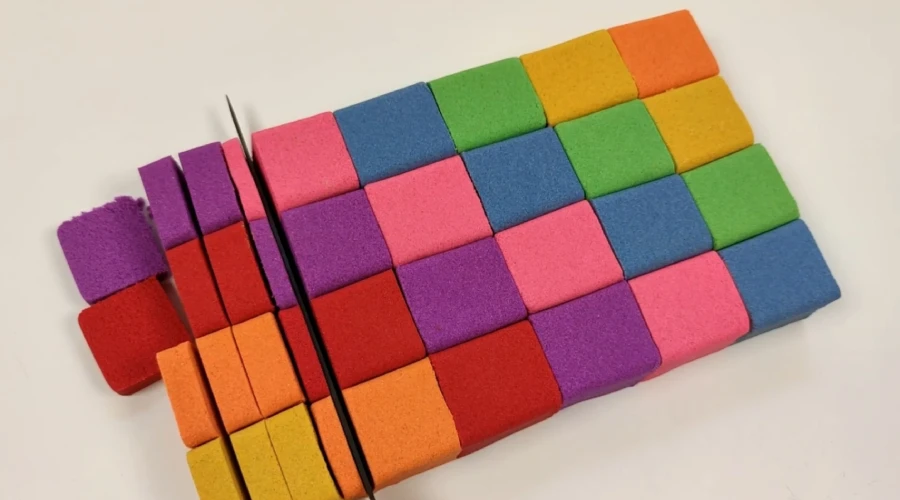
For young children, kinetic sand is a great way to build fine motor skills. Scooping, molding, and cutting the sand strengthen small hand muscles, which are important for writing and other daily tasks. The soft resistance of the sand adds just enough challenge to keep little hands engaged.
Beyond motor skills, kinetic sand introduces kids to basic physics and material science. They can observe how the sand flows, holds its shape, and behaves under different pressures. These simple experiments help children understand concepts like friction, cohesion, and force in a hands-on way.
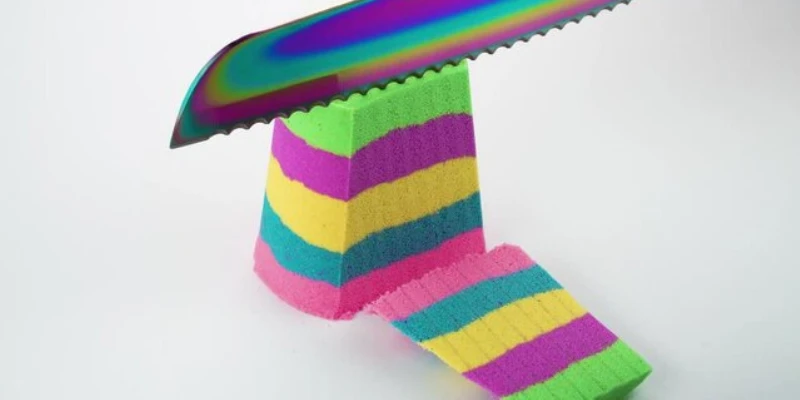
Teachers and parents also use kinetic sand for sensory play. The smooth yet grainy texture stimulates touch receptors, providing a calming and engaging experience. Unlike traditional sand, it sticks together without making a mess, making it ideal for indoor learning.
Occupational therapists use kinetic sand for sensory therapy. Children with sensory processing challenges often struggle with certain textures. The soft, moldable feel of kinetic sand allows them to explore new sensations in a safe and controlled way.
For adults, kinetic sand can serve as a stress-relief tool. The slow, rhythmic motions of squeezing and shaping the sand have a meditative effect. Some therapists recommend it for anxiety management, much like stress balls or fidget toys.
Its non-messy nature makes it easy to use in offices, therapy rooms, or even at home. Whether for relaxation or rehabilitation, kinetic sand offers a simple yet effective way to engage the senses and mind.
Kinetic sand is designed to last, but improper storage or handling can change its texture. Dust, moisture, and temperature shifts can affect how it flows. Keeping it clean and storing it correctly will help maintain its unique properties.
Since kinetic sand sticks to itself, it’s good at staying clean. But small bits of dust, lint, or pet hair can still get mixed in over time. To prevent this, always use it on a smooth, dry surface. A plastic tray or a clean tabletop works best.
If debris gets into the sand, try rolling a ball of kinetic sand over it. The sand will naturally pick up loose particles. For larger contaminants, manually remove them. Washing is not recommended, as water can interfere with the sand’s coating and make it clump.
Keeping kinetic sand in an airtight container helps maintain its texture. Exposure to open air won’t dry it out completely, but over time, dust and humidity can alter its feel. Sealing it in a ziplock bag or plastic container prevents this.
Temperature also matters. Extreme heat can make the polymer coating too soft, causing the sand to feel sticky. Cold temperatures, on the other hand, can make it firmer. Storing it at room temperature keeps it in the best condition.
>> Unveiling the Truth: Is Kinetic Sand Toxic for Kids
Kinetic sand has been around for years, but many people still misunderstand how it works. Some think it dries out like playdough, while others worry about its safety.
Unlike playdough, kinetic sand doesn’t rely on moisture to stay soft. Its texture comes from a polymer coating, which keeps the sand flowing without needing water. Even if left out in the open, it won’t dry up or harden like other modeling materials.
However, if kinetic sand starts feeling too firm or crumbly, it may have collected dust or been exposed to extreme temperatures. To fix this, try kneading it for a few minutes to redistribute the coating. If that doesn’t help, a small amount of warm air (like from your hands) can make it more flexible again.
Many parents worry about the safety of kinetic sand, but it’s made from non-toxic ingredients. The sand itself is natural, and the binding agent is a safe, synthetic polymer. Most brands follow strict safety standards, such as ASTM and EN71, ensuring it’s suitable for children.
That said, while kinetic sand isn’t harmful, it’s not meant to be eaten. Young children should always be supervised during play to prevent accidental ingestion. Keeping it away from water and food areas also helps maintain its cleanliness.
Kinetic sand isn’t just for play—it’s a great material for science experiments. Its unique properties make it perfect for testing physics concepts at home or in the classroom.
Kinetic sand behaves differently from dry sand because of its polymer coating. One way to test this is by pressing it into a mold and watching how it holds its shape. Try comparing it to regular sand—does one collapse faster than the other?
Another fun experiment is observing how kinetic sand flows under pressure. Let it slowly fall from your hand and compare it to how water pours. Then, press it into a ball and see if it stays together. These simple tests show why kinetic sand acts more like a solid in some cases and a liquid in others.

Many people try to recreate kinetic sand at home using regular sand, cornstarch, and dish soap. A basic recipe involves mixing fine sand with a small amount of slime or glue-based solution to mimic the polymer effect.
However, homemade versions rarely match the texture of commercial kinetic sand. Store-bought kinetic sand uses a specific type of polymer that keeps it flowing smoothly. While DIY versions can be fun to experiment with, they tend to dry out faster and may not behave the same way under pressure.
Kinetic sand is a fascinating material that combines the properties of both solids and liquids. Its unique flow and texture are due to its silicone coating and polymer composition. Whether used for play or science experiments, it offers endless opportunities to explore physics in an engaging way.
A practical guide to sensory sand types, safety checks, age recommendations, and how to choose the right material for children’s play.
Explore whether kinetic sand helps with anxiety, including sensory benefits, calming effects, and practical tips for safe play.
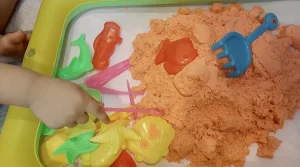
Key differences between kinetic sand and normal sand, including texture, safety, and sensory benefits for children’s play and learning.
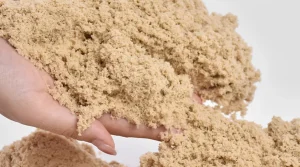
Explore what sensory sand is made of, why children love it, and how its unique materials enhance learning, creativity, and fine motor skills.