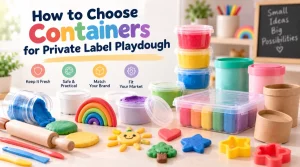
How to Choose Containers for Private Label Playdough
Choosing playdough packaging? Explore key factors for private label containers, including airtightness, size, materials, branding, logistics, and cost.
#1 Toys Manufacturer in China. WhatsApp: +86 139-6690-0919. Email: [email protected]

#1 Toys Manufacturer in China. WhatsApp: +86 139-6690-0919. Email: [email protected]

Holiday-themed playdough kits offer toy brands an opportunity to create seasonal products with clear themes, gift-oriented packaging, and customizable play experiences. For brands planning their holiday collections, five practical concepts include Christmas bakery kits, Halloween monster-making kits, Easter garden kits, Thanksgiving harvest kits, and Valentine’s Day friendship kits.
The best concept depends on the target age group, retail channel, target price, and production requirements. Rather than simply changing the packaging of a standard playdough set, brands should develop each kit around a specific activity, coordinated colors, suitable accessories, and a recognizable seasonal theme.
Product concept: A festive playdough set that allows children to create pretend Christmas cookies, gingerbread characters, cupcakes, and other holiday bakery items.
Christmas bakery kits are suitable for gift-oriented product collections because the theme naturally supports multiple colors, decorative accessories, and imaginative role-play activities. The concept can also be adapted into different price points by changing the number of dough colors and included tools.
Brands can develop different versions based on their retail positioning:
Development consideration: Decorative accessories should be selected according to the target age group and applicable toy safety requirements. Avoid unnecessary small components in products intended for younger children.
Product concept: A themed playdough set for creating monsters, pumpkins, ghosts, bats, and other Halloween-inspired characters.
Halloween kits work well when the product focuses on creative character building rather than relying only on seasonal colors. A combination of modeling tools, character molds, and different dough textures can give children several ways to create and customize their own Halloween figures.
There are several ways to differentiate this concept:
Development consideration: Halloween products often rely on distinctive visual details. Brands should check whether the molds and stamps can produce recognizable shapes with the selected dough formula. Very detailed molds may not work well with dough that is too firm or sticky.
Product concept: A spring-themed playdough kit featuring Easter eggs, bunnies, flowers, carrots, and garden-inspired modeling activities.
Easter garden kits offer a flexible product direction because they combine seasonal gifting with nature-inspired creative play. The concept can be positioned as an Easter gift, a spring craft activity, or part of a broader garden-themed toy collection.
Brands can choose between two main product directions:
Development consideration: If a brand wants the kit to remain relevant after the Easter holiday, a spring garden concept may offer broader seasonal positioning. The decision should reflect the retailer’s selling calendar and whether the product is intended for a short promotional period or a longer spring collection.
Product concept: A harvest-themed playdough kit that lets children create pumpkins, apples, corn, leaves, and other autumn-inspired objects.
Thanksgiving-themed products can be positioned around harvest, food, and nature-based creative activities. Compared with highly character-driven seasonal kits, this concept offers a more educational direction and can fit into autumn craft collections.
Development consideration: A Thanksgiving-specific product has a relatively narrow seasonal sales window in North America. If the brand also targets European markets or wants a longer selling period, an autumn harvest theme may be more flexible than a product centered exclusively on Thanksgiving.
Product concept: A gift-oriented playdough kit featuring hearts, flowers, friendship symbols, and personalized creative activities.
Valentine’s Day kits can be developed for gifting, classroom activities, and small seasonal retail promotions. Their strongest product feature is the opportunity for personalization: children can make heart shapes, flowers, friendship tokens, and other simple creations.
Development consideration: For classroom or group-use products, the number of portions and tools per kit is particularly important. Brands should calculate the quantity required per child instead of selecting components based only on the overall box size.
The five concepts serve different product and retail objectives. The following comparison can help buyers narrow down their options before requesting samples or quotations.
| Kit Concept | Main Theme | Key Differentiator | Potential Retail Positioning |
|---|---|---|---|
| Christmas Bakery | Festive food and baking | Multiple colors and bakery accessories | Holiday gifts and seasonal toy collections |
| Halloween Monsters | Characters and imaginative play | Monster molds and facial details | Halloween promotions and themed toy sets |
| Easter Garden | Spring and nature | Pastel colors and garden-themed tools | Easter gifts and spring collections |
| Thanksgiving Harvest | Food and autumn nature | Harvest shapes and educational activities | Autumn crafts and seasonal promotions |
| Valentine’s Friendship | Gifting and personalization | Heart shapes and friendship activities | Gift shops and classroom activities |
Not every seasonal concept is suitable for every toy brand. Before moving into product development, buyers should evaluate the following five factors.
Start by identifying the countries and retail channels where the product will be sold. Christmas and Halloween may be suitable for broad seasonal collections in North America, while Easter and spring-themed products can serve a different retail calendar. Thanksgiving-focused products should be evaluated according to the target market rather than assumed to have equal relevance in every country.
Age grading affects the dough formula, accessory selection, activity complexity, packaging information, and safety assessment. Younger children generally need simpler activities and appropriately designed components, while older children may be able to use more detailed molds and multi-step instructions.
The retail price determines how many dough colors, tools, molds, and accessories can be included. A practical development approach is to establish the target retail price first, estimate the required retail and distribution margins, and then work backward to define the product’s target manufacturing cost.
A seasonal kit should offer more than a holiday-themed box. Buyers should consider whether the concept has a recognizable activity, useful accessories, coordinated colors, and enough creative possibilities to justify its price. If two concepts use almost identical components, changing the theme alone may not create sufficient product differentiation.
Holiday products have fixed selling windows. Brands should plan concept approval, sample development, packaging confirmation, compliance evaluation, bulk production, and shipping in advance. A delayed shipment can reduce the commercial value of a seasonal collection even when the product itself meets the original specifications.
For brands developing private-label seasonal toys, customization should cover the complete kit rather than only the playdough color. Common customization options include:
OEM development is generally suitable when the buyer already has a defined product specification or design. ODM development is more appropriate when the buyer needs support with product concepts, kit structure, accessory selection, or design refinement. The exact division of responsibilities should be confirmed before sampling.
Seasonal packaging does not reduce the safety and quality requirements applicable to children’s toys. Before bulk production, buyers should confirm that the complete product configuration is suitable for the intended age group and destination market.
Key evaluation areas include:
For products entering the United States and European markets, relevant requirements may include ASTM F963, applicable CPSIA requirements, and applicable EN 71 standards. The exact requirements depend on the product, materials, intended age group, and destination market. Buyers should verify the relevant testing and documentation rather than relying on a general statement of compliance.
Before approving a bulk order, toy brands and importers should confirm the following details with their manufacturing partner:
Approving these details before mass production helps reduce specification changes, packaging errors, and seasonal delivery risks.
A successful holiday playdough kit combines a relevant seasonal theme with practical activity design, appropriate accessories, competitive cost positioning, and reliable production planning. For toy brands, wholesalers, and retailers, the most suitable concept is the one that matches the target market and can be delivered within the seasonal sales window.
As an educational sensory toy manufacturer based in Foshan, China, we support OEM/ODM development for playdough, air dry clay, kinetic sand, slime, and related children’s products. Our customization options include product colors, formulas, molds, accessories, kit configurations, and private-label packaging.
Planning a seasonal playdough collection? Share your target market, preferred holiday theme, estimated order quantity, and packaging requirements to discuss product development, MOQ, sampling, and production arrangements.
OEM development generally follows the buyer's product specifications and approved design. ODM development involves more input from the manufacturer, such as concept development, kit configuration, and design recommendations. Responsibilities should be agreed upon before production.
Brands should allow time for concept planning, sample development, revisions, compliance evaluation, packaging approval, bulk production, and international shipping. The required lead time depends on product complexity, tooling needs, order quantity, and destination.
Requirements depend on the destination market and product configuration. Relevant considerations may include ASTM F963 and applicable CPSIA requirements for the United States, as well as applicable EN 71 standards for Europe. Buyers should request product-specific test reports and supporting documentation.
Some manufacturers offer lower MOQ options for selected products or configurations. However, the actual MOQ may vary according to custom colors, molds, packaging, raw materials, and production requirements. Buyers should confirm the MOQ for each proposed design.
More Related...
Choosing playdough packaging? Explore key factors for private label containers, including airtightness, size, materials, branding, logistics, and cost.
Estimate the cost of custom playdough toys with this B2B guide covering pricing, customization, certifications, and manufacturing decisions.
A practical guide to private label playdough customization, covering packaging choices, color development, scent options, and safety considerations.
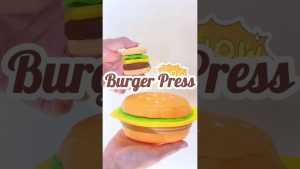
A burger comes out 🍔 #akia #fun #kidstoys #diy #clay #shorts

Our team will answer your inquiries within 48 hours.
Copyright © 2026 GuangDong AKIA Technology Co,. Ltd. All Rights Reserved