
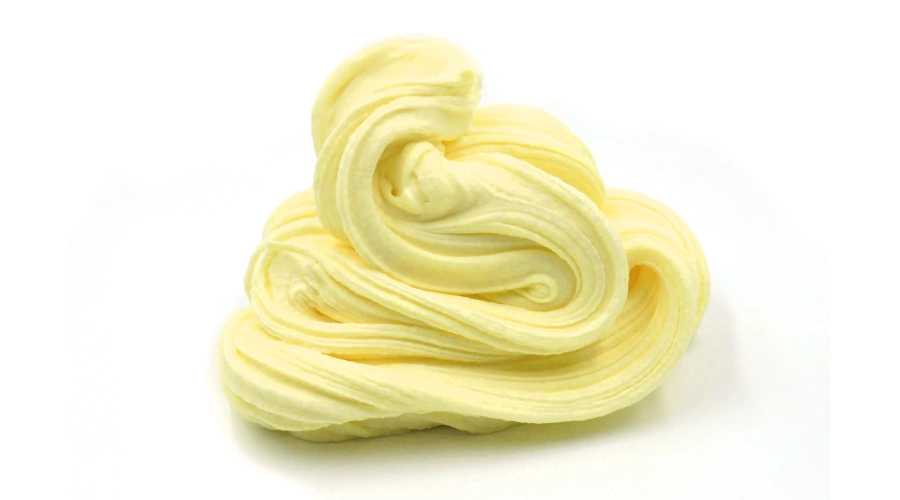
Butter slime is a type of toy slime known for its smooth, spreadable texture that sets it apart from more traditional stretchy slimes. It’s made from a polymer base combined with softening agents, creating a tactile material that can be pulled, flattened, and molded.
Basic Definition and Characteristics
Butter slime is essentially a cross-linked polymer with added softening components that reduce stickiness and increase spreadability. Unlike ordinary slime, it is less elastic and more malleable. This makes it behave more like a soft dough than a rubber band, yet it retains enough stretch to deform and reform repeatedly.
Its texture comes from a careful balance of water, polymer chains, and optional additives like clay or soft fillers. The result is a material that holds its shape temporarily but can flow under gentle pressure, giving it the “buttery” sensation that inspired its name. This texture is a direct outcome of polymer physics rather than any real dairy product.
How It Differs from Regular Slime
Regular slime is typically stickier, more elastic, and often less structured. It stretches and rebounds but may tear or snap unpredictably. Butter slime, on the other hand, spreads smoothly and holds slight ridges or folds when flattened. This difference arises from the inclusion of softening agents, like certain cosmetic or cosmetic-grade clays, which alter the polymer network’s internal friction.
Another key distinction is handling. Regular slime can stick to hands and surfaces, while butter slime is engineered to be less tacky. This makes it easier to shape and push around, and it often behaves more like a putty in response to force rather than purely stretching like traditional slime.
Common Textures and Colors
Butter slime usually has a soft, matte finish that enhances its smooth, “buttery” feel. It can range from creamy pastels to bright, vivid tones depending on pigments added during production. Its texture is consistently spreadable, and it often shows a slight fluffiness if air is incorporated, though it remains denser than fluffy slime varieties.
Colors are more than aesthetic; they affect how kids perceive the material’s texture. Light shades often highlight folds and ridges, while darker tones can mask minor surface imperfections. Some formulas even include mild glitters or metallic sheens, which slightly alter the tactile feedback and visual appeal without significantly changing the material’s handling properties.

The Origins of the Name “Butter Slime”
The term “butter slime” comes from how the material feels and behaves rather than what it contains. Its soft, smooth, and spreadable texture resembles softened butter, which led to the name in early toy and DIY communities.
Visual and Tactile Inspiration
Butter slime’s look—often creamy and matte—and its smooth, almost silky hand-feel resemble softened butter. This visual and tactile combination made the name intuitive. Unlike clear or glitter slime, butter slime is dense enough to hold small folds and peaks, which enhances the “buttery” impression.
The texture is engineered scientifically: softening agents, like cosmetic clays, reduce polymer stickiness and allow the material to flatten under light pressure. These characteristics mirror the physical properties of soft solids, which deform gradually under stress instead of snapping back immediately.
Early Popularity in Toy Communities
Butter slime gained traction initially through online forums and video-sharing platforms where enthusiasts demonstrated new textures. Children and hobbyists were drawn to the visually appealing and satisfying folding motions. Videos showing the slow spread of butter slime reinforced the name while creating a consistent community reference.
The early adoption was less about branding and more about descriptive clarity. Parents and educators recognized the distinct texture immediately, making it easier to differentiate from classic slime, crunchy slime, or fluffy slime, which behave in clearly different ways.
Influence of Social Media and Trends
Social media accelerated the term’s adoption. Short-form videos highlighted the smooth spreads, folds, and occasional glossy sheen of butter slime. As these videos circulated, the name became linked to specific handling expectations: dense yet soft, malleable but cohesive.
The trend also encouraged experimentation with colors, textures, and additives while maintaining the core buttery feel. This shows how a simple tactile property can drive naming conventions and cultural recognition, turning a scientific property into a widely understood term in child play.
Key Ingredients That Make Butter Slime Unique
Butter slime’s unique texture comes from the combination of a standard slime base with carefully chosen additives. Each component affects how the slime stretches, spreads, and holds its shape.
Slime Base and Activators
The foundation of butter slime is a polymer-based slime, typically a polyvinyl alcohol (PVA) solution or similar water-soluble polymer. Activators, such as borate compounds, induce cross-linking between polymer chains, transforming the liquid polymer into a semi-solid network.
This cross-linked network is essential for the structural integrity of butter slime. It provides the elasticity and mild cohesion necessary for stretching and folding without breaking apart too easily. Unlike standard slime, the polymer network in butter slime is adjusted with lower cross-link density to enhance spreadability rather than pure stretchiness.
Additives for Smooth, Spreadable Texture
Smoothness in butter slime is achieved through softening additives. Common examples include silicone-based compounds, glycerin, or cosmetic-grade oils that reduce surface friction. These additives allow the polymer chains to slide past one another more easily, giving the slime a silky, buttery feel.
Other ingredients, like foaming agents or minor thickeners, can subtly alter the flow properties. By controlling viscosity and friction, these additives enable butter slime to hold gentle folds and flatten gradually, creating the characteristic spreadable texture without making it overly sticky or runny.
Role of Clays or Softening Agents
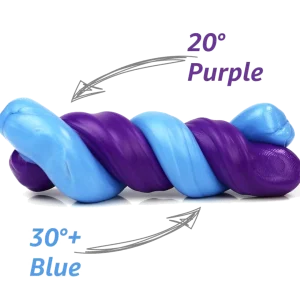
Clays, such as soft cosmetic clays or bentonite, are a hallmark of butter slime. They interact physically with the polymer network, increasing density and cohesion while maintaining softness. This gives butter slime its signature matte finish and slightly heavy feel.
Clays also enhance tactile feedback. When pressed or folded, they provide subtle resistance, allowing children to see ridges and folds form without tearing the slime.
Scientifically, this effect comes from particle-polymer interactions that modify the internal friction and elasticity, demonstrating how simple materials can be engineered for a specific sensory experience.
The Science Behind the Texture
Butter slime is not just fun—it’s an example of everyday polymer science in action. Its texture results from the precise interaction of polymer chains with additives like clays or softening agents.
How Polymers and Additives Interact
The polymer chains in butter slime form a semi-crosslinked network through activators, creating a flexible structure. Additives like softening agents or clays interact with these chains, reducing internal friction and enhancing pliability.
This means the slime can deform under gentle pressure, flatten out, and then slowly recover its shape. The additives essentially lubricate the polymer chains, allowing them to slide past each other more easily. Without these additives, the slime would be stickier, more elastic, and less spreadable.
Stretchiness, Spreadability, and “Buttery” Feel
Butter slime achieves its signature feel through a balance of elasticity and malleability. It is less stretchy than traditional slime but more spreadable, which gives it the smooth, soft sensation that reminds users of softened butter.
The “buttery” quality comes from the combination of moderate cohesion, low surface friction, and slight density from clay or fillers. When pressed or folded, the slime flows gently, forming ridges and layers instead of snapping or bouncing back. This tactile feedback is part of what makes it satisfying to manipulate.
Differences Between Butter Slime and Fluffy Slime
Fluffy slime is often lighter, airier, and springier due to the inclusion of foaming agents or whipped polymers. It stretches easily and rebounds quickly, but it doesn’t hold folds or spread smoothly like butter slime.
In contrast, butter slime’s density and clay content provide controlled resistance, making it slower to deform and giving it a more tactile, sculptable quality. Essentially, fluffy slime emphasizes bounce and elasticity, while butter slime emphasizes smooth, spreadable flow, demonstrating how small changes in polymer networks and additives create distinct sensory experiences.

Sensory Appeal: Why Kids Love Butter Slime
Butter slime captivates children not just because it looks fun, but because it engages multiple senses simultaneously. Its soft, spreadable texture, vibrant colors, and gentle sound provide a rich sensory experience. From a scientific perspective, this play supports tactile exploration, visual tracking, and even auditory feedback, which all contribute to its popularity.
Tactile Stimulation and Fine Motor Skills
Manipulating butter slime provides hands-on tactile input. Children squeeze, stretch, fold, and flatten it, which engages finger muscles and enhances coordination. Unlike more elastic slimes, butter slime offers controlled resistance, making movements predictable and satisfying.
This type of sensory play also supports fine motor development. The pressure and dexterity required to fold and spread the slime help children refine hand strength and precision. Studies in pediatric occupational therapy note that manipulating soft, malleable materials can improve grip and bilateral coordination in young children (Case-Smith & O’Brien, OT Practice, 2015).
Visual and Auditory Satisfaction
Butter slime offers visual cues that reinforce engagement. Its matte finish, folds, and occasional glitter or shimmer make each manipulation interesting. Children can see ridges and layers form, which provides immediate visual feedback.
Auditory feedback is another subtle factor. Light squishing or soft spreading produces gentle sounds that add to the sensory experience. These combined cues create a loop of tactile, visual, and auditory stimulation, which can hold attention longer than toys that engage only one sense.
Psychological Benefits of Slime Play
Playing with butter slime can also have calming and focusing effects. The repetitive motions of stretching, folding, and flattening may reduce stress and promote mindfulness. Children often enter a state of flow, where concentration is sustained through hands-on engagement.
From a cognitive standpoint, slime play encourages experimentation. Kids explore cause-and-effect relationships: how pressure changes the shape, how folds form, or how adding layers changes texture. This simple scientific observation supports curiosity, problem-solving, and creative expression in a low-risk environment.
Safety Considerations When Playing
Even though butter slime is made for fun, safety is an important consideration. Children interact with it using their hands, and sometimes near their face or mouth.
Ingredient Awareness and Allergens
Butter slime is generally made from polymers, activators, clays, softening agents, and coloring compounds. While these are typically non-toxic, some children may be sensitive to certain ingredients, such as fragrances, dyes, or specific preservatives.
Parents should read labels carefully and observe for signs of skin irritation, redness, or rashes. Pediatric dermatology research shows that minor contact dermatitis can occur even from “kid-safe” materials if the child has a history of allergies or sensitive skin (Jacob et al., Dermatitis, 2021). Being aware of ingredients helps prevent unnecessary reactions.
Avoiding Ingestion and Eye Contact
Butter slime is not edible. Its smooth, spreadable nature can tempt children to lick it, especially if it has pleasant colors or mild scents. Accidental ingestion should be minimized by supervising young children and teaching safe handling habits.
Eye contact is another common risk. Soft clays or additives can irritate the eyes if slime accidentally gets in them. Supervision during play, gentle reminders, and keeping slime away from the face reduce the chance of discomfort or irritation.
Hygiene and Storage Tips
Proper hygiene keeps butter slime safe for repeated use. Hands should be clean before and after play to limit bacteria transfer. Tools like spatulas or personal containers can prevent cross-contamination if multiple children are playing.
Storage is equally important. Airtight containers prevent drying and limit microbial growth. Water-based slimes are especially prone to mold or bacteria if left exposed. Monitoring texture and smell can indicate when the slime is no longer safe to use.
Creative Uses of Butter Slime in Play and Learning
Butter slime isn’t just a toy—it’s also a versatile tool for creative and educational play. Its unique texture allows children to explore artistic expression, experiment with materials, and engage in sensory-rich activities. These experiences combine fun with subtle skill-building, making it both entertaining and instructive.
Art and Sensory Activities
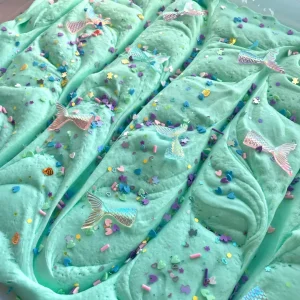
Children can use butter slime as a medium for artistic exploration. Its spreadable texture allows them to create shapes, patterns, or layered designs that hold briefly before reforming. This tactile process provides a hands-on way to explore color, form, and spatial relationships.
In sensory activities, manipulating butter slime supports sensory integration by combining touch, sight, and sometimes sound. Rolling, flattening, or folding the slime encourages children to notice differences in resistance, density, and flow, which can enhance sensory awareness and hand-eye coordination.
Educational Experiments With Texture and Stretch
Butter slime offers opportunities for simple science experiments. Children can test how far it stretches, how it flattens under weight, or how adding small amounts of water or powder changes its texture. These playful experiments introduce concepts like viscosity, elasticity, and polymer behavior.
Such experiments are not only educational but also reinforce observational skills. Kids learn to predict outcomes, note changes, and understand cause-and-effect relationships. Even without formal instruction, these hands-on activities align with early science education principles for young learners.
Group and Solo Play Ideas
Butter slime is flexible for both solo and group play. Solo sessions let children focus on personal exploration, creativity, and tactile engagement at their own pace. They can experiment quietly with shapes and textures without external pressure.
In group play, children can share slime safely in individual portions or work together on collaborative creations. This encourages teamwork, negotiation, and turn-taking. Group sessions also allow kids to learn from each other’s techniques, reinforcing both social and sensory learning skills while maintaining a safe and engaging environment.
Maintaining Butter Slime for Longevity
Proper care can extend the usable life of butter slime, keeping its smooth, spreadable texture intact. Maintenance focuses on preventing drying, preserving softness, and identifying when the slime is no longer suitable for play.
Preventing Drying and Cracking
Butter slime can lose moisture over time, causing it to dry, stiffen, or develop cracks. Minimizing air exposure and limiting prolonged handling without breaks helps maintain its softness. Occasionally kneading the slime can redistribute moisture and prevent surface cracking.

Keeping the slime pliable is not just about texture—it also reduces the risk of fragments breaking off during play. A well-maintained slime retains the “buttery” feel, allowing folds and ridges to form naturally without tearing.
Storage Containers and Temperature Considerations
Airtight containers are essential for maintaining butter slime. Containers should fully seal to prevent evaporation and protect the slime from dust or microbial contamination. Clear containers can help monitor texture changes over time.
Temperature also matters. Extreme heat can make the slime overly soft or sticky, while cold can make it hard and less pliable. Room temperature storage is usually ideal. Avoid storing near heaters, direct sunlight, or in refrigerators unless the formula specifies otherwise.
Signs It’s Time to Replace the Slime
Despite careful storage, butter slime will eventually degrade. Common signs include a noticeable odor, separation of additives, excessive stickiness, or the growth of mold or discoloration.
When these changes occur, the slime should be discarded to ensure safe play. Regularly inspecting the slime for texture, smell, and color helps parents maintain hygiene and avoid potential irritation or contamination, keeping sensory play safe and enjoyable.
Conclusion
Butter slime is a unique, spreadable polymer toy that captivates kids through touch, sight, and sound. Understanding its ingredients, texture, and safe handling helps parents support fun, creative, and sensory-rich play. With proper care and supervision, children can enjoy butter slime safely while exploring its science and art.

How Many Types of Slime Are There? Explore Squishy Science
Explore the surprising world of slime varieties, their textures, and the science behind them in this kid-friendly educational breakdown.