
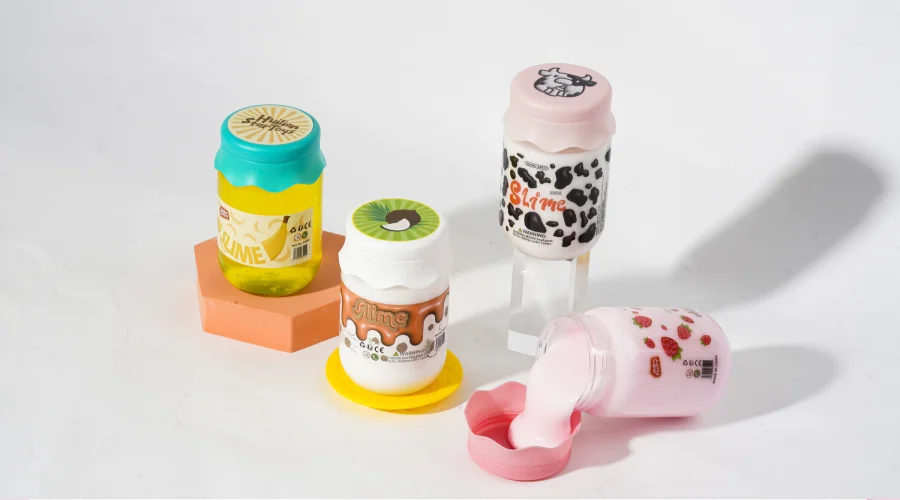
Slime is a soft and stretchy material made from a polymer network that can flow slowly, bounce, or stretch into long strings. It sits somewhere between a liquid and a solid and is known as a non-Newtonian fluid.
Kids often enjoy touching, pulling, folding, and watching slime move because it responds to tiny changes in pressure. The mix of texture, gentle resistance, and odd motion makes it feel almost alive, and that sense of discovery draws children into play and learning.
Sensory Play and Tactile Feedback
Many children enjoy kneading slime because it pushes back in small but noticeable ways. When squeezed or rolled, it stretches before it breaks. When left alone, it slowly spreads out. These changes give tactile cues that the brain can track in real time.
In early childhood research, materials with varied sensory feedback can support attention and exploration during play (See: Gibson, 2015, Developmental Psychology). Slime happens to provide a wide range of responses without needing complex tools or instructions.
Kids also like surprising details. For example, a seven-year-old might stretch a strand high above her head and wait to see if it snaps or droops. Another child may fold the slime to trap air bubbles and listen for tiny pops. Slime’s texture invites these small experiments, almost like a living puzzle.

Slime as an Early Chemistry Experience
Slime is created when long polymer chains link together and form a loose network. These chains can slide past each other, yet still stick enough to hold shape. This makes slime a good entry point into topics like viscosity, elasticity, and polymer science.
In class settings, teachers sometimes use slime to show that chemical reactions do not always produce heat, color, or gas. Instead, a reaction can change how a material feels and moves. This is often more memorable to kids because they can touch the result rather than watch it from a distance.
Children may not know the word polymer, but they notice patterns quickly. One child may observe that adding more thickener makes the slime stretch less, while another notices it becomes harder to pull apart. These tiny trials can spark curiosity, much like a lightweight lab disguised as play.
Basic Chemistry Behind Slime Texture and Consistency
Slime behaves differently from everyday liquids because its polymer chains form a loose, flexible network. This network controls how thick, stretchy, or sticky the slime feels. Small changes in formula can shift its consistency from soft and slow to firm and bouncy.
Polymers and Cross-Linking Explained
Polymers are long chains made of repeating units. When these chains slide freely, they behave like thick syrup. When a cross-linker connects parts of these chains, the material gains structure. Slime sits somewhere in the middle, allowing motion without falling apart.
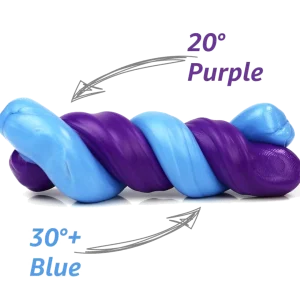
Different levels of cross-linking change how a slime performs. A lightly linked network stretches farther before it breaks, while a densely linked network feels firm and snaps quickly when pulled. Many classroom demonstrations use slime to introduce ideas like elasticity and viscosity without advanced math.
Kids often test this on their own. One child might pull as slow as possible to make a long strand, while another child gives a quick tug and watches it tear. Their experiments mimic small-scale rheology tests, even if they do not know the term.
Safety and Non-Toxic Material Considerations
Most modern slime formulations are designed to be non-toxic and safe for skin contact. Regulations in many regions limit the types and amounts of chemicals allowed for children’s products. These rules are often based on toxicity data, dermal exposure limits, and ingestion risk. Safety assessments may include irritation tests and migration studies to ensure materials stay in the slime instead of moving onto skin.
Even so, caregivers are encouraged to monitor play, mainly because slime is soft and tempting to taste. Some children also rub their eyes during play, so mild rinsing habits and hand-washing help avoid irritation. Researchers in early childhood fields note that safety guidelines work best when paired with simple routines rather than fear-based messaging, which keeps play both safe and joyful.
Classic Stretchy Slime Types and Their Characteristics
Classic stretchy slimes form the core of most slime categories. They rely on flexible polymer chains that can move without losing structure. Kids can stretch them into long strands, twist them into coils, or fold them over and over without the material falling apart.
Standard Slime (The Baseline Texture)
Standard slime sits in a comfortable middle zone. It is smooth, stretchy, and easy to shape without being too liquid or too stiff. When pulled slowly, it elongates before breaking. When pressed, it spreads out at a moderate rate. These behaviors make it a useful reference for discussing more specialized slime types.
Researchers in material science sometimes use similar polymer networks when teaching about viscoelasticity in beginner labs because the reaction is easy to observe and the resulting material shows both solid-like and liquid-like responses under stress.
Standard slime also shows predictable failure points. If pulled fast, it tears more cleanly. If rolled between hands, it forms long cylinders. This balance between flow and strength makes standard slime a simple entry point for kids who are new to slime-based play.
Thick Slime vs. Thin Slime Differences
Thick slime feels denser and holds its shape longer. It resists fast pulling and tends to stretch slowly. Kids sometimes describe it as chewy because it takes more force to shape. Its viscosity gives it a strong “slow-motion” effect when left on a table.
Thin slime moves faster. It spreads into puddles and tends to drip from fingers. It pulls into long strings under gravity and breaks more easily when stretched. Thin slime behaves closer to a syrup-like material with light elasticity rather than a dough-like one.
These differences come from adjustments in polymer concentration and network density. The more cross-linking and thicker the medium, the slower the material flows. Less cross-linking gives the material more liquid-like mobility and less structure.
The Science Behind Stretch and Tear Behavior
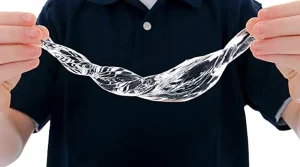
Stretch behavior depends on how polymer chains align during movement. When pulled slowly, chains have time to slide and line up, allowing longer extension. When pulled quickly, they cannot rearrange in time, so the material snaps or tears.
Material scientists call this time-dependent property “rate sensitivity.” Similar concepts appear in rubber, putty, and other soft polymers used in classrooms. These examples help students see how stress and strain affect soft materials without advanced equipment.
Kids often perform these tests without thinking about it. One child may try to stretch a slime rope to reach across the table, while another yanks it to break it cleanly. Both actions are basic mechanical tests disguised as play.
Fluffy Slime Variants and Air-Infused Textures
Fluffy slime includes textures that feel light, soft, and slightly springy due to trapped air. These slimes move slower under pressure and tend to rise back into rounded shapes when left alone.
Compared to classic stretchy types, these forms rely more on air distribution than polymer strength. Kids often compare fluffy slimes by how “cloud-like” or “puffy” they feel, even if the differences are mainly structural rather than chemical.
Light and Puffy Slime Types
Light and puffy slime types use small pockets of air to increase bulk without increasing mass. This makes them feel gentle and cushiony. When pressed, the material compresses and then relaxes, giving a soft rebound that kids find amusing.
The added thickness also slows down flow. Instead of spreading into a puddle, these slimes sit taller and keep rounded edges for longer periods. This change is similar to how whipped cream behaves differently from liquid cream due to aeration rather than chemical transformation.
Some teachers use light and puffy slimes in sensory centers because they introduce tactile contrasts without requiring advanced instructions. The softness encourages slow play, which can help kids notice subtle changes in pressure and rebound.
Why Air Bubbles Change the Sensory Experience
Air bubbles act like tiny cushions inside the slime. When squeezed, they compress and release, creating mild popping sounds or gentle crackles. This adds a second sensory pathway beyond touch, which many children enjoy.
From a materials standpoint, bubbles interrupt polymer continuity. This reduces density and spreads stress across larger areas. As a result, aerated slimes stretch less but feel smoother during compression. The overall experience becomes less about stretch and more about softness and sound.
Clear and Translucent Slime Types
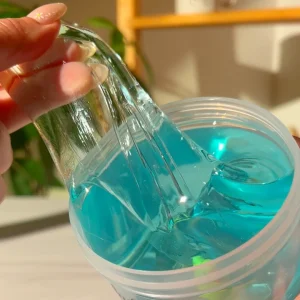
Clear and translucent slimes highlight light transmission and visual effects. Kids often stare through them or hold them up to windows to test clarity. These forms emphasize visual qualities over softness, making the slime feel more like a lens than a toy.
Optical Clarity and Light Transmission
Clear slime allows light to pass through with minimal scattering. This gives it a glassy appearance and makes objects behind it appear distorted in interesting ways. When stretched thin, it functions almost like a flexible pane that shifts shape under stress.
The clarity comes from well-aligned polymer networks and fewer suspended particles. Any trapped bubbles or dust cause cloudiness because they disrupt light paths. Kids often notice this quickly when comparing freshly made clear slime to versions that have been handled for a while.
Additive Interaction With Clear Bases
Clear bases accept additives such as glitter or pigments in a way that preserves light transmission. These additives float or suspend within the slime and act like embedded objects. Kids often tilt the slime to watch the particles drift and settle, a simple example of flow and particle dispersion interacting inside a soft medium.
When additives have reflective surfaces, they scatter or reflect light instead of blocking it. This makes the slime appear illuminated without changing the base transparency. It also shows how small changes in particle size and reflectivity alter visual effects.
Butter Slime and Spreadable Slime Textures
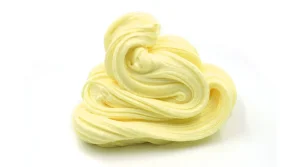
Butter slime stands out because it spreads smoothly across flat surfaces and holds soft shapes for short periods. Instead of focusing on stretch or bounce, these slimes highlight slow flow and matte texture. Kids often compare them to soft clay or smooth dough, though the underlying material behavior is still polymer-based rather than mineral or flour-based.
Soft, Matte, and Spreadable Touch Qualities
Butter slime has a matte finish that makes it look dry even when it is not. When pushed with fingers or a small spatula, it spreads in thin sheets and folds without ripping. This behavior is more about lateral movement than tensile stretch, so kids explore it by smearing rather than pulling.
The matte surface reduces shine, making the slime look calm and stable. In sensory play research, matte textures are sometimes preferred by children who are sensitive to bright reflections or glossy materials. The spreadable nature also slows down actions, which can change how kids pace their play.

Polymer Density Differences From Standard Slime
Butter slimes usually incorporate a thicker polymer matrix than standard stretchy slimes. This increased density reduces flow and enhances form stability. Instead of sagging into puddles, the slime keeps its shape long enough to be molded or carved.
Higher density also redistributes force. When stretched, the network resists pull and breaks sooner. When compressed, it absorbs pressure and forms neat edges. These traits show how adjusting polymer concentration and additives can shift a material’s mechanical response without changing its core chemistry.
Crunchy, Beaded, and Sensory-Enhanced Slime Types
Not all slime types focus on smoothness. Some forms add sensory contrast through sound, texture, or embedded objects. These slimes offer both tactile and auditory feedback, making them popular in classrooms and play groups. The added materials alter how force moves through the slime and how the slime responds to squeezing, rolling, and folding.
Bead-Infused Slime for Auditory Feedback
Bead-infused slimes include small, rigid objects embedded within the polymer network. When squeezed, the beads push against each other and create light clicking sounds. This adds an auditory layer that many kids describe as fun or “satisfying.”
The beads also change mechanical behavior. They interrupt polymer continuity, forcing the slime to flow around them. This reduces stretch but increases structural resistance, making the slime feel thicker and busier under pressure. The result is a hybrid material that mixes soft and hard responses during use.
Crunch Slime and Structural Integrity Factors
Crunch slime uses larger or more rigid fillers that produce louder sounds. When pressed or folded, the fillers shift and collide, creating distinct crackles. Unlike beads, these structures resist compression strongly, so the slime must absorb more force before yielding.
This extra force influences how the material breaks or stretches. Kids may notice that crunchy slime snaps sooner or refuses to form long strands. These failure behaviors relate to how embedded solid objects limit polymer alignment and create stress points during tension.
Sensory Integration in Play-Based Learning
Sensory-enhanced slimes provide multiple modes of feedback—touch, sound, and sometimes visual effects. These layered cues can help children focus on specific sensations or explore how materials react to different actions.
Researchers in early childhood studies note that sensory play can support attention, experimentation, and comparison skills during unstructured play. Slime offers a flexible medium for these observations because results are immediate and do not require adult explanation.
Foam-Based Slime Types
Foam-based slimes include lightweight fillers that create volume and change how the slime reacts under force. These slimes feel airy and textured, and they tend to rebound when pressed.
Kids often compare them by how much “squeeze feedback” they provide. While they do not stretch as far as classic slimes, they offer unique tactile contrast that highlights how solids and soft materials interact within one system.
Micro-Foam vs. Large-Bead Foam Slime
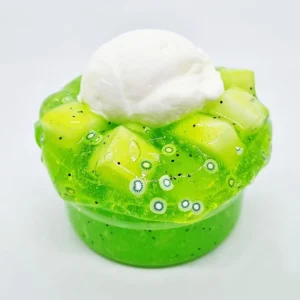
Micro-foam slime includes very small foam pieces that distribute evenly through the polymer network. This gives the slime a fine-grain texture and allows smoother compression. When squeezed, the foam particles deform slightly and then re-expand, giving a soft bounce.
Large-bead foam slime uses bigger foam pieces that resist compression more strongly. This creates a louder crunch and requires more force to shape. Because the beads occupy more volume, the slime cannot stretch far and tends to break at stress points where the bead clusters interrupt polymer alignment.
Compression, Bounce, and Resilience
Foam particles store energy during compression and release it when the force stops. This gives foam-based slime a bounce that children find interesting. The level of bounce depends on both foam density and bead elasticity. Materials that compress deeply without permanent deformation produce the most resilience.
The foam also distributes stress across the slime, altering how it flows. Instead of stretching in long ribbons, foam slimes deform in chunks. This behavior resembles how composite materials respond in engineering tests, where fillers add strength or shape memory to soft matrices.
Magnetic and Conductive Slime Types
Certain slimes incorporate particles that interact with external forces such as magnets or electricity. These forms are popular in STEM programs because they connect play with physics and circuitry. While less common in everyday play, they offer unusual behaviors that make kids curious about invisible forces.
How Magnetic Particles Change Behavior
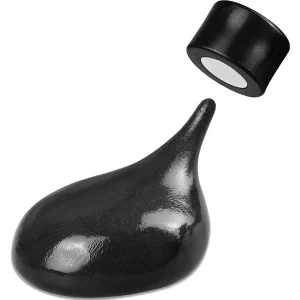
Magnetic slime includes iron-containing particles that respond to magnetic fields. When a magnet is placed near the material, the slime flows toward it or forms peaks as the particles realign. Kids often describe this as the slime “chasing” the magnet, though the effect is simply particle attraction within a semi-solid matrix.
The magnetic particles also increase density and decrease stretch. Because the particles act as rigid fillers, the slime breaks sooner under tension and flows slower under gravity. This interaction provides a small-scale example of how field-responsive materials behave in soft robotics research.
Conductive Slime and STEM Applications
Conductive slime contains materials that allow electric current to move through the network. While not as conductive as metal, it is conductive enough for simple circuits. Students may connect LEDs or small buzzers to observe how electricity travels through different paths.
Conductive slime often demonstrates how resistance changes with shape. When stretched, the slime becomes thinner and offers more resistance, reducing the circuit output. When compressed, it thickens and reduces resistance. This gives kids a visible and tactile way to test circuit behavior.
Thermochromic and Color-Changing Slime Types
Some slimes change color when exposed to heat, cold, or different types of light. These effects do not change stretch or texture but add a visual layer that responds to environmental cues.
Temperature-Based Color Transformation
Thermochromic slime uses pigments that shift structure when heated or cooled. These structural changes alter how the pigments absorb and reflect light, which makes the slime appear to change color. Warm areas may look brighter or lighter, while cool areas deepen in tone.
Kids often discover temperature patterns by accident. One child might leave a handprint behind after pressing, while another may blow on the slime and watch the colors move. These tiny experiments mimic how thermochromic inks are tested in labs to study phase transitions and pigment structure.
UV-Reactive and Photochromic Slime Behavior
Photochromic slime responds to ultraviolet (UV) light. When taken outside or placed under a UV lamp, pigments activate and shift color. Indoors, the effect may fade as the pigments revert to their original state once the energy source is removed.
This behavior introduces basic photochemistry concepts. The pigments absorb UV photons, undergo a structural change, and release energy when returning to their resting state. Kids describe this as the slime “charging up,” which is not scientifically precise but conveys the idea in kid-friendly language.
Glow-in-the-Dark and Phosphorescent Slime Types
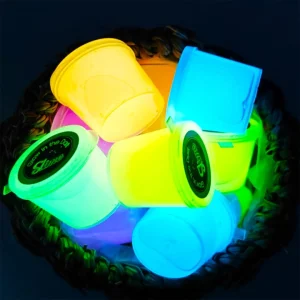
Glow-in-the-dark slime emits light after being exposed to a bright source. Kids often use flashlights or sunny windows to “charge” it before turning off the lights. This type of slime focuses more on visual curiosity than stretch or crunch. The delayed release of light offers a memorable way to explore how energy is stored and released over time.
Energy Absorption and Light Release Mechanisms
Phosphorescent pigments absorb photons and store the energy temporarily. After the light source is removed, the pigments release the energy slowly as visible light. This delayed emission separates phosphorescence from fluorescence, where emission stops almost immediately once the light is gone.
Slime serves as a soft carrier for these pigments. The polymer network does not interfere with the phosphorescent process, so kids can stretch and fold the glowing material without reducing the effect. This makes the glow feel interactive rather than static.
Visual Engagement for Nighttime Play
Glow-in-the-dark slime is often enjoyed in dim rooms because contrast enhances visibility. Children trace lines, make shapes, or shine lights on the slime to draw patterns that fade over time. The gradual dimming encourages slow observation rather than fast play.
Nighttime environments also introduce spatial curiosity. Kids may place the slime on walls or transparent trays to watch how the glow changes with thickness. Even without formal explanation, they are testing light absorption, thickness effects, and decay rates through unstructured exploration.
Stretch vs. Snap — How Different Slimes Behave Under Stress
Slimes respond differently when pulled or compressed, depending on elasticity, viscosity, and internal structure. Some stretch long before breaking, while others snap with little warning.
Elasticity, Viscosity, and Shear-Thinning
Elasticity measures how far a slime can stretch before it breaks. Slimes with longer polymer chains and moderate cross-linking stretch further, giving long ribbons when pulled. Viscosity controls how the material flows under stress. Some slimes are thick and slow-moving; others are thin and pour easily.
Shear-thinning is a property where slime becomes less viscous under force. Pull quickly, and the slime may flow like syrup; pull slowly, and it resists movement. Kids experiment with speed intuitively, learning differences in material behavior without knowing the formal terms.
Why Some Slimes Break Instead of Stretch
Slime breaks when polymer chains cannot realign quickly enough to absorb applied force. Dense fillers, high cross-linking, or rigid additives increase snapping likelihood. Pulling fast emphasizes this effect because chains do not have time to slide past one another.
Children notice this when comparing standard, bead, or butter slimes. One child may stretch a ribbon slowly, while another jerks it and sees it tear. These mini-experiments reflect real mechanical testing concepts, like stress and strain, in a playful context.
Sensory and Developmental Benefits of Slime Play
Slime engages multiple senses simultaneously—touch, sight, and sometimes sound. This multisensory interaction supports motor learning, focus, and early experimentation with cause-and-effect.
Even brief play provides children with opportunities to explore materials, test ideas, and practice hand coordination.
Fine Motor Skills and Hand Strength
Manipulating slime strengthens small hand muscles. Squeezing, rolling, folding, and pinching build dexterity and coordination. In early childhood studies, repeated tactile play can support later handwriting and tool use (Case-Smith & O’Brien, 2014).
Stretching and compressing slime also develops proprioception—the sense of how fingers and hands move in space. Children naturally explore different pressures to see how the material reacts, combining strength and finesse.
Sensory Regulation and Focus Support
Slime offers a calming sensory experience for some children. Its predictable resistance, smooth flow, or gentle pop sounds can help regulate attention and arousal levels. Teachers often use tactile materials in short sessions to support focus before or after more structured tasks.
Children also learn subtle cause-and-effect. Folding slime creates patterns, popping bubbles makes sound, and stretching changes shape. These repeated observations enhance problem-solving and observational skills in playful, low-pressure contexts.
Safety Considerations When Kids Play With Slime
Even non-toxic slimes require basic safety awareness. Caregivers and educators should combine supervision with practical habits like hand-washing, monitoring for allergic reactions, and avoiding ingestion or eye contact.
Age Guidelines and Supervision Tips
Many slime products are recommended for children over three years old due to small parts or choking hazards. Close supervision helps prevent accidental swallowing and encourages appropriate handling. Older children may be given more autonomy, but guidelines still suggest monitoring new slime types for unexpected textures or additives.
Supervised exploration also supports learning. Children can experiment safely with stretch, bounce, and texture while caregivers provide guidance or intervene if hazards arise.
Material Sensitivities and Clean-Up Notes
Some children may have mild skin reactions to certain ingredients, even when labeled non-toxic. Observing hands after play and limiting contact time can reduce irritation. Cleaning surfaces promptly prevents staining, and washing hands removes residual slime particles.
Using trays or washable mats for slime play reduces mess. Encouraging children to participate in clean-up also teaches responsibility and respect for shared spaces while maintaining the sensory experience.
Conclusion
Slime comes in many forms—stretchy, fluffy, butter, crunchy, magnetic, color-changing, and more. Each type behaves differently because of polymer structure, additives, and air or particle inclusion.
Exploring these variations teaches kids about elasticity, flow, sensory feedback, and cause-and-effect. Play combined with supervision and safe practices ensures that slime remains both fun and educational.

Why Do They Call It Butter Slime? What Behind This Popular Toy
A parent-friendly guide explaining why butter slime is named so, how it differs from regular slime, and why kids find it irresistible.