
What Are Some Sensory Activities for Kids? 30+ Powerful Ways
Looking for sensory activities for kids? Explore engaging ideas with slime, playdough, kinetic sand, and air dry clay that support learning and creativity.

Montessori philosophy emphasizes child-centered learning and hands-on exploration. Parents often ask whether materials like montessori playdough fit this approach.
The approach combines freedom with guidance. Children choose activities while teachers observe, allowing for individual pacing. Play-based learning, including sensory materials like playdough, complements core Montessori principles by engaging attention and supporting practical life skills.
Montessori education is built on respect for the child, independence, and self-directed learning. Classrooms are designed to encourage exploration in a controlled environment. Every material, from blocks to montessori playdough, has a specific role in developing skills and concentration.
Children are encouraged to choose their work, complete it, and care for their space. This method values quiet focus and repeated practice. By integrating materials like playdough thoughtfully, Montessori classrooms allow creative expression without distracting from the overall learning objectives.
Hands-on activities are central to Montessori learning. Manipulatives, tactile materials, and montessori playdough help children connect movement with cognition. Research in early childhood education supports the idea that sensory engagement strengthens fine motor skills and problem-solving abilities (Ginsburg, 2007).
Practical experience allows children to explore texture, shape, and spatial relationships. Teachers observe how kids interact with materials and introduce guidance when needed. This approach encourages careful attention, curiosity, and a deeper understanding of abstract concepts through direct experience.

Many parents wonder if montessori playdough is part of a true Montessori classroom. While not all schools include it, some incorporate it thoughtfully to complement hands-on learning.
Montessori classrooms focus on purposeful engagement. When playdough is used, it is treated as a tool for exploration and skill development rather than simple entertainment. This aligns with the method’s emphasis on learning through doing.
Montessori classrooms contain a wide range of tactile and manipulative materials, such as wooden beads, stacking frames, and sorting trays. Some schools add montessori playdough to extend sensory experiences and refine fine motor skills.
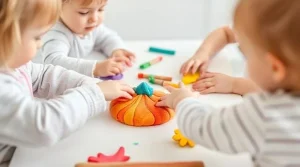
Playdough is often used in small, structured activities. Teachers may guide children in rolling, cutting, or shaping to encourage hand-eye coordination, creativity, and concentration. The material is integrated with care to maintain the classroom’s calm, orderly environment.
Traditional play often emphasizes fun, imagination, and social interaction without strict objectives. In contrast, Montessori activities, including those with playdough, have defined purposes that support development in motor skills, focus, and practical life.
Children in Montessori classrooms may engage with montessori playdough for short, focused sessions rather than extended free play. The difference lies in intention: each activity is observed, guided, and connected to a broader learning goal rather than being purely recreational.
Montessori-inspired classrooms sometimes include playdough to support purposeful, hands-on learning. While it is not a required material, montessori playdough can enhance certain developmental skills when used mindfully. Its value lies in structured engagement rather than free-form entertainment.

The use of tactile materials complements other Montessori tools, helping children connect movement with thought. Observing how children manipulate playdough provides insight into their focus, coordination, and problem-solving abilities.
Manipulating montessori playdough strengthens fingers, wrists, and hands. Rolling, pinching, and cutting help develop the muscles needed for writing, buttoning clothes, and other practical tasks. Research in early childhood development emphasizes that hands-on materials support motor planning and dexterity (Case-Smith & O’Brien, 2014).
Teachers often structure playdough activities to match skill levels. Simple exercises, like rolling small balls or flattening sheets, build foundational strength while encouraging concentration and careful movement.
Montessori playdough also engages the senses. Children explore texture, shape, and sometimes color, connecting tactile experience with cognitive learning. This sensory exploration aligns with Montessori principles of learning through direct experience.
Activities are guided to balance creativity with focus. For example, children may model simple shapes or objects, which supports imaginative thinking without deviating from the learning goal. In this way, playdough becomes a tool for both sensory engagement and purposeful creativity.
Montessori classrooms sometimes use alternatives to playdough to provide variety in sensory and fine motor experiences. Materials like air dry clay, kinetic sand, and slime can complement montessori playdough while supporting hands-on learning in a structured, purposeful way.
These alternatives allow children to explore texture, shape, and movement while practicing focus and coordination. Each material has unique properties that can target specific developmental skills without straying from Montessori principles.
Air dry clay offers a firmer, more durable option than traditional montessori playdough. Children can shape, mold, and refine details over longer periods, which supports patience, hand strength, and fine motor control.
Teachers often provide simple prompts or tools to guide sculpting. This structured approach encourages careful observation and problem-solving while allowing for creative expression in a controlled environment.
Kinetic sand provides a unique sensory experience because it flows like wet sand but is easy to shape. In Montessori settings, it can be used for pouring, molding, and building activities that develop coordination and hand awareness.
The tactile quality allows children to explore cause-and-effect relationships and spatial reasoning. Kinetic sand is often used in trays with defined areas to maintain the Montessori principle of order and focused work.
Slime introduces a stretchy, malleable texture that engages both touch and concentration. In Montessori-inspired classrooms, slime can be used in short, guided activities to explore stretching, folding, and shaping.
Teachers supervise carefully to ensure hygiene and proper handling. Slime activities combine sensory input with small muscle work, reinforcing concepts of texture, elasticity, and patience, all while supporting structured hands-on learning.

Montessori teachers use play materials like montessori playdough thoughtfully to support learning goals. The focus is on structured, purposeful engagement rather than free-for-all play. Materials are chosen and presented to complement developmental skills and classroom routines.
Teachers observe children carefully, introducing guidance only when needed. This mindful integration ensures that tactile materials enhance focus, independence, and practical learning, rather than creating distractions or chaotic play.
In Montessori classrooms, structured play involves activities with clear goals, such as rolling, cutting, or shaping playdough to develop fine motor skills. Teachers provide prompts or tools to guide these exercises while allowing children to work at their own pace.
Open-ended play, by contrast, is less common in traditional Montessori settings. While imagination is encouraged, every activity—including montessori playdough—is framed to reinforce skill-building, concentration, or sensory exploration, aligning with the method’s principles.
Montessori classrooms are designed for order and accessibility. Materials like playdough, clay, or kinetic sand are presented in small trays or containers within reach, with only the items needed for the activity available.
This preparation encourages children to engage with materials purposefully. By limiting distractions and organizing the workspace, teachers create conditions for focused, hands-on learning that supports skill development, independence, and mindful exploration.

Choosing the right materials for different ages ensures that tactile activities are safe, engaging, and developmentally appropriate. Montessori playdough and its alternatives can be adapted for toddlers, preschoolers, and early elementary children to match their motor skills and attention spans.
Teachers and parents should consider texture, firmness, and supervision level when selecting materials. Thoughtful choices help children explore safely while promoting learning objectives such as fine motor development and sensory engagement.
For toddlers, soft and non-toxic montessori playdough is ideal. The material should be easy to manipulate without posing choking risks. Small amounts are used under adult supervision to prevent ingestion or excessive mess.
Alternatives like kinetic sand or soft clay can also be introduced in very short, guided sessions. Safety considerations include monitoring hand-to-mouth behavior, avoiding small accessories, and ensuring the workspace is clean and organized.
Preschool and early elementary children can handle slightly firmer materials and more complex tasks. Montessori playdough, air dry clay, or slime can be used for rolling, cutting, molding shapes, or creating simple models.
Activities can be extended with tools like rollers, cutters, or stamps to challenge fine motor skills. Teachers and parents provide minimal guidance, allowing children to explore independently while reinforcing concentration, creativity, and precision.
While montessori playdough can support skill development, challenges can arise if materials are not used thoughtfully. Teachers must balance engagement with order, ensuring that tactile activities reinforce learning goals without creating distractions or excessive mess.
Mindful supervision and clear expectations help maintain a productive environment. By observing how children interact with playdough and other sensory materials, teachers can adjust activities to maximize developmental benefits.

Playdough can be messy, which may distract children from focused work. Montessori teachers often limit materials to small portions and use trays or mats to contain the activity.
This approach allows children to explore textures and shapes safely, while minimizing cleanup and preventing frustration. Maintaining order supports the classroom’s overall calm and structure, essential principles in Montessori education.
Montessori playdough should have a purpose beyond entertainment. Activities are designed to enhance fine motor skills, hand-eye coordination, or sensory awareness. Teachers guide children to use materials intentionally rather than as a purely recreational activity.
Observing children helps educators identify when an activity is skill-focused or becoming playful for its own sake. Adjustments, prompts, or alternative materials ensure that each session aligns with developmental goals, maintaining the balance between learning and enjoyment.
Parents can extend Montessori principles beyond the classroom by providing structured, hands-on materials like montessori playdough. The goal is to create an environment that encourages exploration while supporting skill development and independence.
Setting clear routines, providing accessible materials, and observing children without excessive intervention helps maintain a calm and purposeful learning space. This mirrors the Montessori classroom approach at home.

Choose a small, contained area for playdough activities. Use trays or mats to define boundaries and reduce mess. Materials should be within reach so children can access them independently, while adult supervision ensures safety.
Organize tools like rollers, cutters, or stamps in a simple, orderly way. A prepared environment helps children focus on the activity, supports fine motor skill practice, and teaches respect for materials and workspace.
Encourage children to choose tasks and explore montessori playdough at their own pace. Avoid giving step-by-step instructions unless necessary; instead, provide gentle guidance or examples.
Independent exploration allows children to develop decision-making skills, concentration, and creativity. Parents can observe quietly, offering support only when needed, fostering confidence and self-directed learning consistent with Montessori principles.
Experts in early childhood education highlight the careful role of tactile materials in Montessori classrooms. Montessori playdough and similar sensory tools are valued when integrated purposefully, supporting fine motor skills, focus, and hands-on learning.
Educators stress that the key is intention: materials should be chosen to complement developmental goals rather than simply entertain. Observing how children interact with these tools helps guide effective usage.
Montessori educators often note that sensory materials like playdough, clay, or kinetic sand provide controlled, meaningful engagement. Teachers emphasize short, structured sessions that allow children to practice skills while maintaining concentration.
According to several classroom observations, children respond positively when activities are purposeful. Educators report that montessori playdough can help with hand strength, coordination, and careful exploration, supporting broader developmental objectives.

Research in early childhood development supports the educational value of tactile materials. Studies show that manipulating playdough and similar substances enhances fine motor skills, hand-eye coordination, and cognitive connections (Case-Smith & O’Brien, 2014).
Sensory exploration with clay, slime, or kinetic sand also encourages problem-solving and creativity. When used mindfully in Montessori-inspired settings, these materials foster engagement, concentration, and skill development without overwhelming children or deviating from structured learning goals.
Montessori playdough and similar tactile materials support purposeful, hands-on learning when used mindfully. They enhance fine motor skills, sensory exploration, and focus while aligning with Montessori principles of independence and structured play.
Looking for sensory activities for kids? Explore engaging ideas with slime, playdough, kinetic sand, and air dry clay that support learning and creativity.

Confused about tariffs on Chinese toys? This article breaks down current rules, exemptions, and how toy imports are affected.
Learn which toys help children with ADHD stay engaged, manage energy, and develop focus, social skills, and creativity.
Art and craft in education inspire creativity, fine motor skills, and teamwork, using fun tools like air dry clay, slime, and sensory sand.