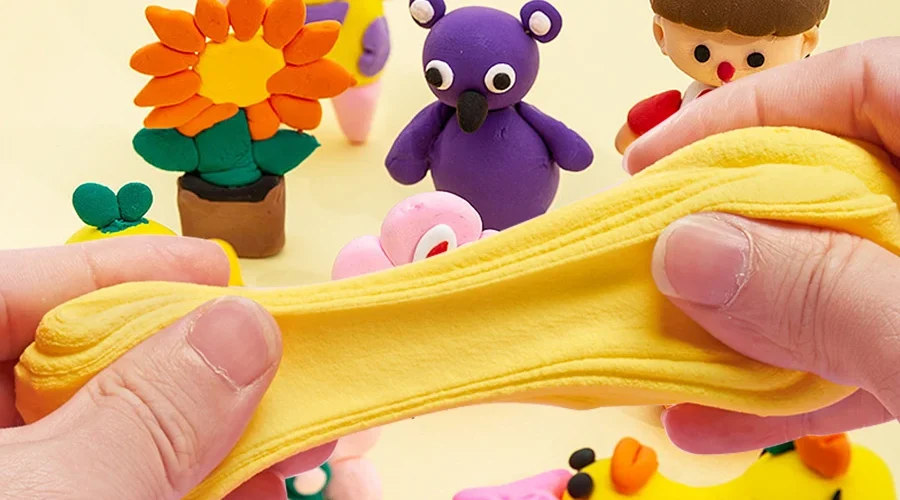
We know that air-drying clay dries at room temperature, so kids love using it to make handmade crafts. However, many people don’t know how long it takes for air drying clay to dry completely. We often receive such questions.
Undried clay is soft, allowing children to stretch, knead and squeeze it countless times. People use this super-light clay to create a variety of shapes and models. And only by waiting for the clay to dry and harden, you can display such crafts for a longer time.
Now we will analyze in detail how air-drying clay dries.
Understanding the Drying Process
As a lightweight material, air-dry clay is actually not soil. Therefore, you will find that it dries and hardens without using an oven or kiln.
What is Air Dry Clay?
Traditional clay is a type of soil that has long existed in nature. After adding water, shaping and firing at high temperatures, people turn it into practical and beautiful products in life.
Soil is heavy. Obviously, super-light air-dry clay cannot be soil. You can pick up its packaging and look at the ingredient list identified on it.
Just using light PVA and pure water, we can make air dry clay.
You may not know what PVA is. But you must be aware of the substance water. You read that right, air-drying clay contains water, which is why it can dry at room temperature—water evaporates when exposed to air.
Now, let’s get to know PVA. This is a synthetic resin whose full name is polyvinyl alcohol. You can think of it as plastic – but not all plastic is bad.
As a water-soluble material, PVA is not only lightweight, but also environmentally friendly, non-toxic and child-friendly. Therefore, many people call it super-light clay, which is much lighter than the traditional clay.
Since PVA is soluble, manufacturers will add some water when making clay toys to make them soft and flexible. On the other hand, when the water in air-dry clay evaporates, it becomes dry and hard.
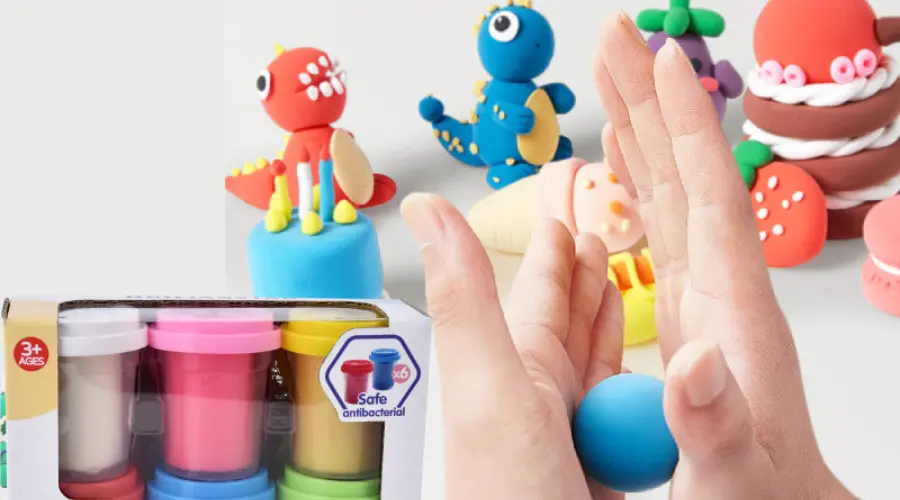
Factors Influencing Drying Time
Obviously, the drying time of air-dried clay relate to the evaporation of water. The faster the water in the clay evaporates, the shorter the drying time will obviously be.
Humidity and Temperature
The higher the air humidity, the more water in the environment becomes saturated, which in turn inhibits water evaporation. Often, air-drying clay is difficult to dry on rainy days or in a humid room.
The higher the temperature, on the other hand, the shorter the time it takes for air-dried clay to dry. Clay is more likely to dry out during the hot summer days. But in cold winters, clay takes longer to dry.
Composition of the Clay
Although the ingredients of air-dry clay are PVA and water, manufacturers produce clays with different proportions of ingredients. When the content of water in the clay composition is higher, drying takes longer.
Also, some lightweight clays contain oils. This composition prolongs the play time, but at the same time, it dries out with difficulty.
Thickness of the Craft
Larger and thicker crafts will take longer to dry. Because it contains more water. On the other hand, thick clay has a small surface in contact with the air, making the water inside difficult to evaporate.
Sometimes the surface of the clay craft has dried and hardened, while the interior is still soft. This can easily cause the craft to crack. Therefore, we do not recommend making clay crafts too thick.
Typical Drying Times
Normally, air-dry clay will dry within 24-48 hours. However, it may take more than 72 hours to achieve full dryness, if you place the clay in humid weather or areas.
And in hot places, you may expect it to dry completely within 24 hours.
Testing and Monitoring Drying
While waiting for it to dry, you may be wondering, how do we tell when air-drying clay is dry?
Visual Inspection
An easy way is to look. In fact, the surface gloss of air-dry clay will decrease as it dries. But this cannot give you an accurate judgment.
By watching and keeping an eye on how the clay dries, we can often find flaws on the surface of a craft early and fix them. Such as cracking, which is the most likely problem to occur during drying. The earlier we catch a problem, the easier it is for us to fix it.
Touch Test
When touching the surface of the craft, you will know whether it is drying out. Undried clay is soft, so you need to be careful when touching it to avoid leaving fingerprints.
If you put clay somewhere with good airflow, the surface can dry out in just a few hours. At this time, its surface is smooth and your touch will not hurt it easily
Weight Measurement
As the clay dries, there is no doubt that it becomes lighter. You can weigh it every once in a while to determine how much water it has evaporated.
When the quality of the handicraft does not change, you can be sure that it is completely dry.
Speeding Up the Drying Process
Although air-dry clay dries easier than in the past, some friends still wish it could dry faster. We can shorten the time it takes for clay to dry depending on the things that affect it.
Thin vs. Thick Craft
Thick clay is more difficult to dry than thin clay. Therefore, before you make your craft, avoid creating thick pieces. Small, thin clay crafts dry more easily.
However, if you have made a thick craft, you can only use other methods to speed up drying.
Increasing Air Circulation
Place your clay craft on a ventilated shelf and it will dry faster. Flowing air can remove moisture from air-drying clay and improve evaporation.
Additionally, fans are a common tool for increasing air moving, which you can use to shorten the drying time of clay.
Using Heat Sources
High temperatures apparently promote evaporation of water. Therefore, some people will think of putting air-dried clay in the oven to heat it. This is a dangerous action, especially for children. Because the temperature of the oven is high, it is easy to burn the skin.
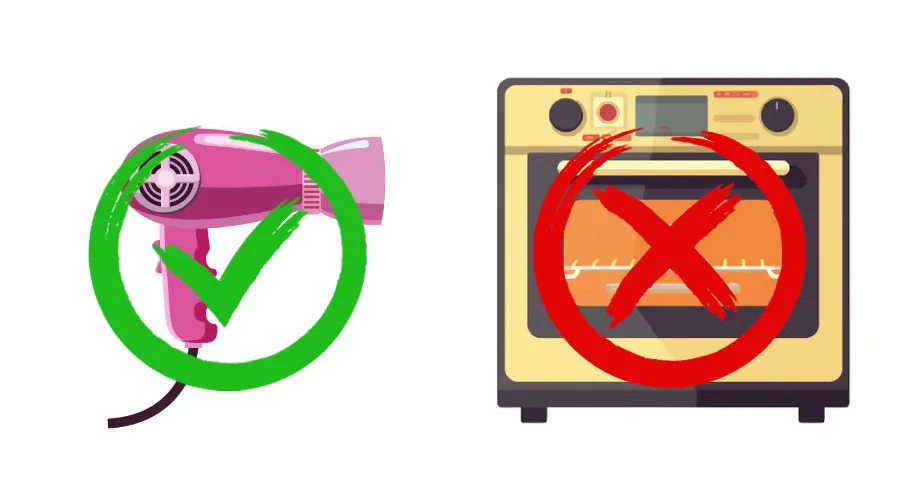
The correct way is to use a hair dryer. This heating source is gentle and less likely to cause injury when used. On the other hand, the hair dryer can also increase air flow and promote evaporation of water in the clay.
We recommend you use a hair dryer instead of an oven to speed up the drying of air-dry clay.
Avoiding Common Drying Issues
Like fired pottery in the past, air-drying clay can present annoying problems as it dries. To avoid these problems, we need to understand why they occur.
Cracking
We know that the drying of clay is from the outside to the inside. Obviously, exterior surfaces exposed to air are more likely to dry out first. And the inside of clay is closed, making the water difficult to evaporate, so it takes longer to dry.
The hardened clay will shrink slightly as the surface of the clay craft dries. Often caused by heating in the oven, the tension makes the clay crack. However, crafts that are air-dried slowly will nearly not crack since the water can evaporate evenly.
Also, parts of the clay craft that are too thin may crack when it dries.
Warping
As opposed to drying, wet air-drying clay is soft and cannot retain shape. Usually, the main cause of clay warping is too much water.
Earlier we mentioned the component of air-dry clay – PVA. This material is soluble in water. When the air humidity is high, the water in the clay cannot evaporate properly. In addition, PVA will also take the opportunity to absorb moisture in the air, making the clay wet and soft.
Therefore, avoiding moisture when storing or displaying clay can prevent it from warping.
Uneven Drying
In fact, uneven drying of air-dried clay may lead to deformation.
Easy understanding. Clay hardens when it dries, while the undried parts remain soft. The hardened clay will shrink slightly inward, squeezing the softer parts out.
Therefore, sometimes you will find slight deformation of the craft after drying.
Avoiding uneven drying requires some patience. Usually, you should place the air-drying clay in a ventilated and cool place. And after 24-48 hours of even air drying, it can form a perfect work.
Conclusion and Tips for Success
For air-dry clay crafts to dry and harden perfectly, you have to wait at least 24 hours.
In case of cold winter or wet rainy season, you may wait 48-72 hours. Of course, you’d better put the crafts on a ventilated and cool shelf, the wind can help you take away the moisture in the clay.
Summary of Key Points
- Typical drying time for air-dry clay requires at least 24 hours.
- The drying of air-dried clay is the evaporation of the water in it. Factors that affect water evaporation also affect clay drying.
- Humidity and cold will prolong the drying time of the clay.
- Put the air-dry clay in a ventilated and cool place to ensure it dries normally.
- Small or thin clay crafts are easier to dry. However, thick clay takes longer to dry.
Tips for Optimal Drying
Raise the temperature and lower the humidity, you can speed up the drying process of air-dry clay. Using a fan and hair dryer can effectively speed up the drying of the clay surface while avoiding cracking and warping.
Be careful not to place the air-drying clay in the oven or over a candle to heat it. This may hurt you or the kids. On the other hand, high temperatures make the clay dry unevenly, causing an imperfect piece of work.
Finally, you should avoid placing air-drying clay in wet areas, such as the bathroom or balcony. If you expect storing them for a long time, avoiding water and moisture are essential.
Share Experiences
Our friend, Katherine, has many air-dry clay crafts in her classroom. Some cute bunnies, delicious cakes, delightful succulents and more.
Katherine told us that she and the children use fans to speed up the drying of the clay after creating. It only took one afternoon for the clay crafts to dry and harden.
“Children were so happy that they created their first work with their hands,” said Katherine. “Their eyes looked forward to the clay drying so brightly that I will never forget it.”
Also, Katherine reminds us not to let the children put the air-dried clay into the oven just for the sake of speed. One of her friend’s kid burned the back of the hand because of this. “Heating air-drying clay in the oven is a stupid idea!” she said.
Frequently Asked Questions
Here are some frequently asked questions about air drying clay drying, hope it helps.
Can I Speed Up the Drying Process?
Place air-dry clay crafts on a ventilated and cool shelf where they can dry quickly. In addition, you can use a fan or hair dryer to speed up the drying.
What Should I Do if My Clay Doesn’t Dry?
Pay attention to check the air humidity and temperature. Wet and cold will make the clay difficult to dry. Also, check with the store to see if the clay you buy allows air drying.
For air-drying clay, you can use a fan or hair dryer to speed drying. Larger and thicker crafts may take longer to dry.
How Long Does Air Dry Clay Last Once Dry?
Typically air-dry clay dries hard and you can store them permanently.
However, please note that air-dry clay is not waterproof. So, place the clay crafts in a sealed waterproof box, you can display them for a long time. Putting a clear acrylic finish on top of the clay will also make it last longer.
Talk to us if you have ideas about how long air drying clay should take to dry. Feel free to contact us and you will know more about our clay toys.