Factory Price vs. Landed Cost: What Toy Buyers Need to Know
Why is the cheapest toy factory not always the best choice? Learn to compare factory prices, shipping fees, import duties, and landed costs.
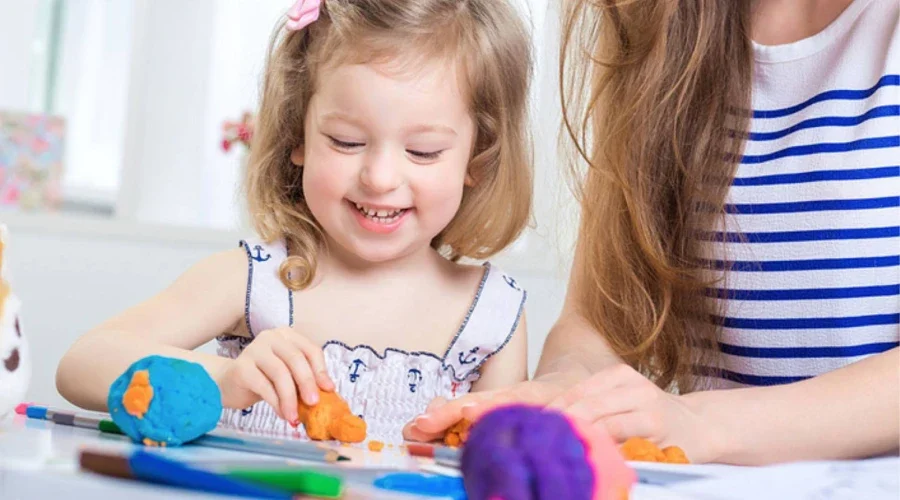
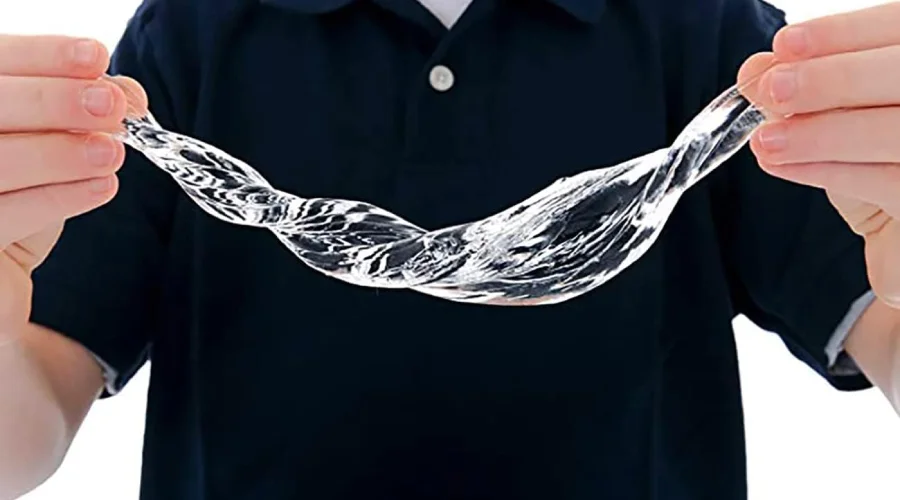
Sensory toys are objects designed to engage one or more of the senses—touch, sight, sound, smell, or even balance. They can be as simple as playdough pressed between small hands or as messy as slime stretching across a table. Each texture, sound, or movement gives the brain new information to process.
In recent years, parents, teachers, and caregivers have shown growing interest in these kinds of toys. Research in child development highlights that early sensory experiences are strongly linked to brain growth and learning pathways (Shonkoff & Phillips, From Neurons to Neighborhoods, 2000). That’s why classrooms often keep bins of clay, sand trays, or water beads.
Sensory toys are more than colorful objects. They are designed to give children controlled ways to explore texture, sound, light, or movement. From playdough that squishes softly to clay that dries into new shapes, these toys offer small but powerful moments of discovery.
A sensory toy is any item that stimulates one or more of the senses. It could be a soft ball with bumps, slime that stretches, or sand that slips through fingers. These toys invite children to poke, squeeze, or shake, and each action sends signals to the brain.
Take, for example, a child rolling clay into a snake. The simple motion teaches about pressure and shape. Another child might swirl glitter in a tube, watching patterns form and fade. Both are sensory toys, though they look very different.
Childhood is a time of constant learning through the body. Studies in neuroscience show that early sensory experiences help form strong neural connections that support memory and attention later in life (Gopnik et al., The Scientist in the Crib, 1999).
Imagine a group of kids playing with slime. One notices the stretch, another comments on the sound, and a third just enjoys the cool feel. Each reaction shows how the senses guide understanding of the world. Sensory play builds a foundation before formal lessons even begin.
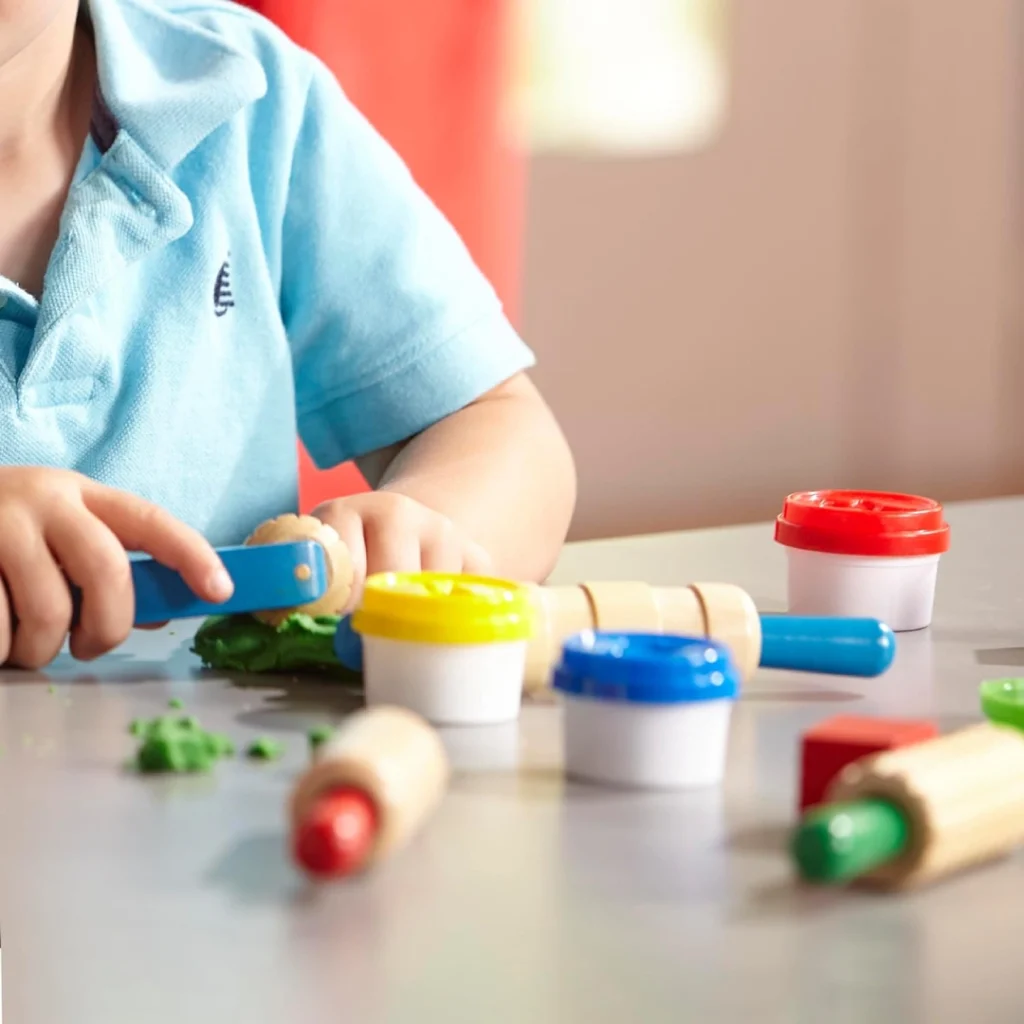
Children’s bodies are always in motion, and sensory play gives that movement a purpose. Whether it’s pinching playdough, stacking blocks, or balancing on a beam, each action strengthens the link between mind and body.
Hand–eye coordination develops when what children see is matched with what their hands do. A child scooping kinetic sand with a small shovel, for example, must guide the tool carefully to avoid spills. The eyes track the task, and the hands respond in real time.
Researchers note that repeated activities requiring precision—like threading beads or rolling clay into even shapes—help fine-tune these skills (Case-Smith, Occupational Therapy for Children, 2015). These moments may seem small, but they build steady control.
Muscle control grows through both large and small actions. Running with a parachute toy strengthens core stability, while squeezing slime or pressing stamps into playdough refines finger strength. Each type of movement supports a different layer of development.
Children often repeat these activities without being asked. A child might roll clay into balls again and again, not out of boredom but because the motion itself is practice. Over time, such repetition builds dexterity, stamina, and coordination.
Stacking blocks challenges both focus and stability. Each block placed without falling requires patience and control. Playdough adds another layer, letting children push, pinch, and cut shapes with tools. Balance toys—like stepping stones or wobble boards—bring in the whole body, demanding careful posture.
One parent once shared that her son, who often struggled with focus, could spend long stretches stacking blocks as high as possible. For him, it was both a challenge and a calming ritual. Stories like these show how ordinary play supports hidden layers of motor growth.
The mind grows through play, often in ways children don’t notice. Sensory toys present puzzles, choices, and new outcomes. From building with clay to sorting colored sand, each step pushes the brain to connect ideas and make sense of patterns.
Every sensory toy carries a small challenge. A child stacking cups must figure out which size fits on top. Another kneads playdough to form shapes that will not collapse. These tiny “problems” invite trial and error, a key process in early learning.
Studies show that play involving experimentation builds flexible thinking and adaptive skills (Pellegrini, The Role of Play in Human Development, 2009). When a block tower falls, the lesson isn’t failure—it’s how to rebuild with a stronger base.

Clay animals, slime “potions,” or sandcastles all reflect imagination at work. Sensory toys rarely have one correct answer, leaving room for children to invent stories or create new forms. A blob of playdough can become food in a pretend kitchen or a spaceship on an alien planet.
In many classrooms, teachers use open-ended materials like modeling clay to spark storytelling. A group of children may build different creatures, then share how they live. The toy becomes a stage, while the imagination drives the script.
Patterns, measurements, and cause-and-effect often appear naturally in sensory play. Pouring sand teaches volume, while mixing colors in slime offers a first taste of chemistry. Even simple stacking toys mirror concepts of balance and gravity.
A preschool teacher once noted that her students learned more about weight and stability from building block towers than from a worksheet. This kind of discovery lays the groundwork for later interest in science, math, and engineering.
>> STEM Learning with Playdough and Kinetic Sand
Language grows out of experiences, and sensory toys give children plenty to talk about. Whether they are squeezing slime, shaping playdough, or scooping sand, the sights and feelings spark new words and conversations.
When a child plays with clay, they may describe it as “squishy,” “soft,” or “sticky.” Each word labels a sensory detail. These labels slowly add up, building a richer vocabulary. Parents and teachers often notice children repeating new words after exploring textures or sounds.
Researchers have shown that linking language with direct experience strengthens memory and comprehension (Vygotsky, Mind in Society, 1978). A toy, in this way, becomes a bridge between sensation and speech.
Expressive language is about sharing ideas, while receptive language is about understanding others. Sensory play supports both. A child may say, “Look, I made a snake!” while rolling clay, and another child may respond by copying or adding their own version.
These exchanges create natural opportunities to practice listening and speaking. Unlike formal lessons, the dialogue grows out of curiosity, making it both engaging and memorable.
Many sensory toys work best in groups. A sandbox, for instance, brings children together as they dig tunnels or build castles. They must share tools, explain their ideas, and listen to one another. Each step strengthens social communication.
I once visited a kindergarten where children gathered around a large slime tub. They laughed, compared shapes, and asked questions like, “Can yours stretch farther than mine?” What began as simple play quickly turned into a lively group conversation.
Children often experience big feelings that they cannot always explain in words. Sensory toys give them a safe way to release or redirect that energy. The simple act of squeezing, stretching, or watching can bring balance to emotions that feel overwhelming.
Soft textures and slow movements often have a soothing effect. Rolling playdough, running fingers through sand, or watching glitter settle in a tube gives the mind something steady to focus on. These small, rhythmic actions help children find calm in busy environments.
A study on classroom behavior showed that sensory breaks using tactile tools improved calmness and reduced disruptive activity (Case-Smith et al., American Journal of Occupational Therapy, 2011). The evidence suggests that play can be more than fun—it can regulate.
For some children, loud sounds or crowded places feel overwhelming. Having a familiar sensory toy—like a stress ball or a piece of clay—can act as a buffer. The pressure or texture grounds their attention and lowers stress.
I once observed a child in a daycare who became anxious during group singing time. The teacher quietly handed him a small container of kinetic sand. Instead of leaving the room, he stayed and calmly ran the sand through his fingers until the activity ended.
Beyond momentary calm, sensory toys can teach children how to manage emotions on their own. When a child learns that squeezing slime or pressing playdough helps them feel better, they begin to build strategies for self-regulation.
Over time, these practices turn into habits. A child may reach for clay when upset, much like an adult might take a deep breath. It is not about removing emotions but learning safe, simple ways to work through them.
For children with special needs, play can take on an even greater role. Sensory toys offer ways to explore the world without pressure, helping them engage at their own pace. The textures, sounds, and motions become bridges between comfort and learning.
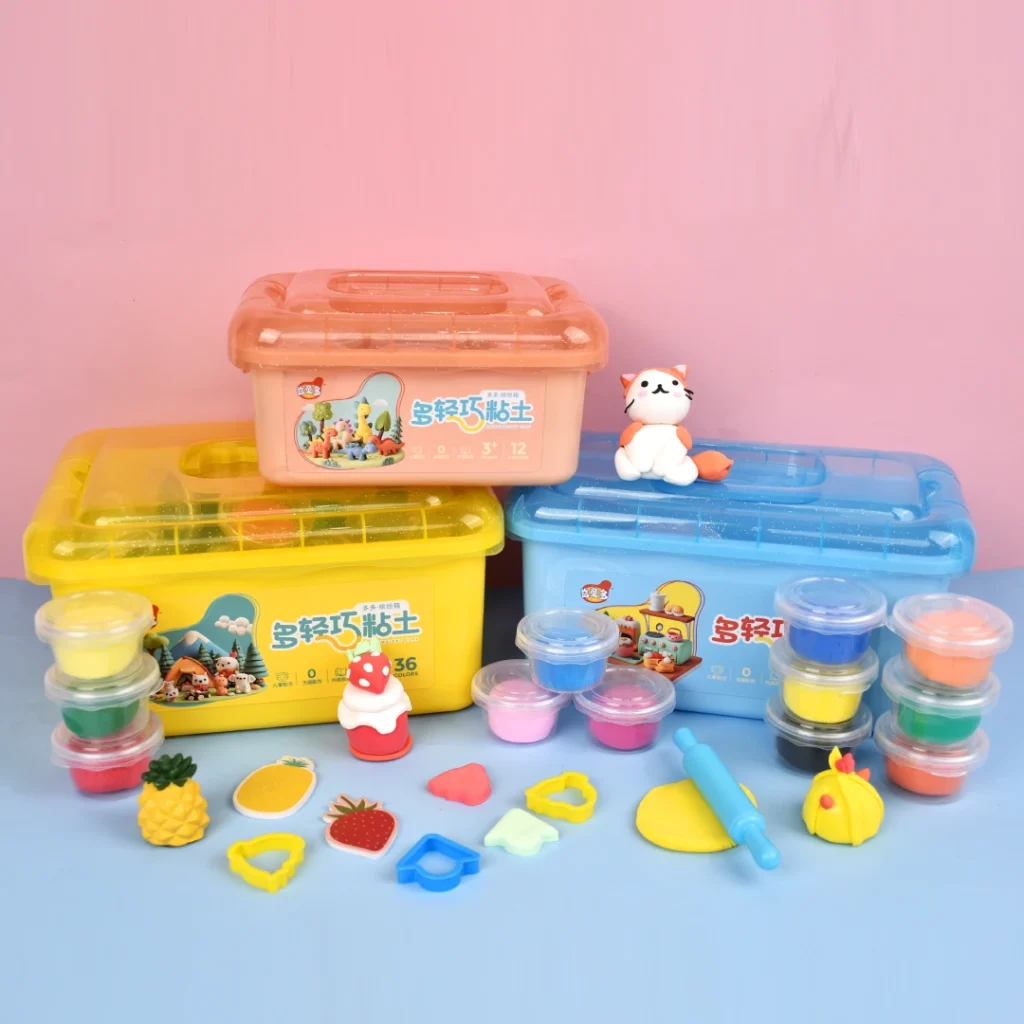
Many children with autism find certain sensory inputs overwhelming while seeking out others. Sensory toys provide controlled, safe experiences. A child might calm by kneading playdough or focus while watching glitter drift in a tube. These small actions can help with transitions or daily routines.
Research has shown that structured sensory play can support attention and reduce repetitive stress behaviors in children with ASD (Tomchek & Koenig, American Journal of Occupational Therapy, 2016). This does not replace therapy but serves as a useful complement.
Children with SPD may struggle to filter sounds, textures, or movement. Sensory toys give them a way to practice and adapt. For example, playing with slime or textured balls lets them test reactions in a predictable setting. Slowly, this builds tolerance and comfort.
I once met a young girl who disliked sticky textures at mealtime. With patient practice using modeling clay, she became more comfortable touching soft and sticky materials, which later helped her try new foods. Play created a gentle pathway forward.
Sensory toys also bring children with and without special needs together. In a sandbox or at a water table, every child has a role. They dig, pour, and build side by side. The toys level the field, making social play more natural.
Teachers often note that inclusive sensory activities promote empathy. When children collaborate on building a clay village or balancing blocks, they learn to respect differences while sharing the same playful space.
Play is rarely a solitary act. Sensory toys naturally draw children together, creating chances to practice teamwork and communication. In group play, they learn the subtle rules of social life—waiting, sharing, listening, and responding.
A sandbox, a tub of slime, or a set of stacking blocks often becomes a shared space. Children must wait for tools, divide materials, or work toward a common goal. This constant negotiation builds patience and respect for others’ turns.
One teacher described how her students built a clay “bakery” together. Each child took turns shaping bread, cakes, or pies, while others waited to use the same molds. The bakery project became less about clay and more about teamwork.
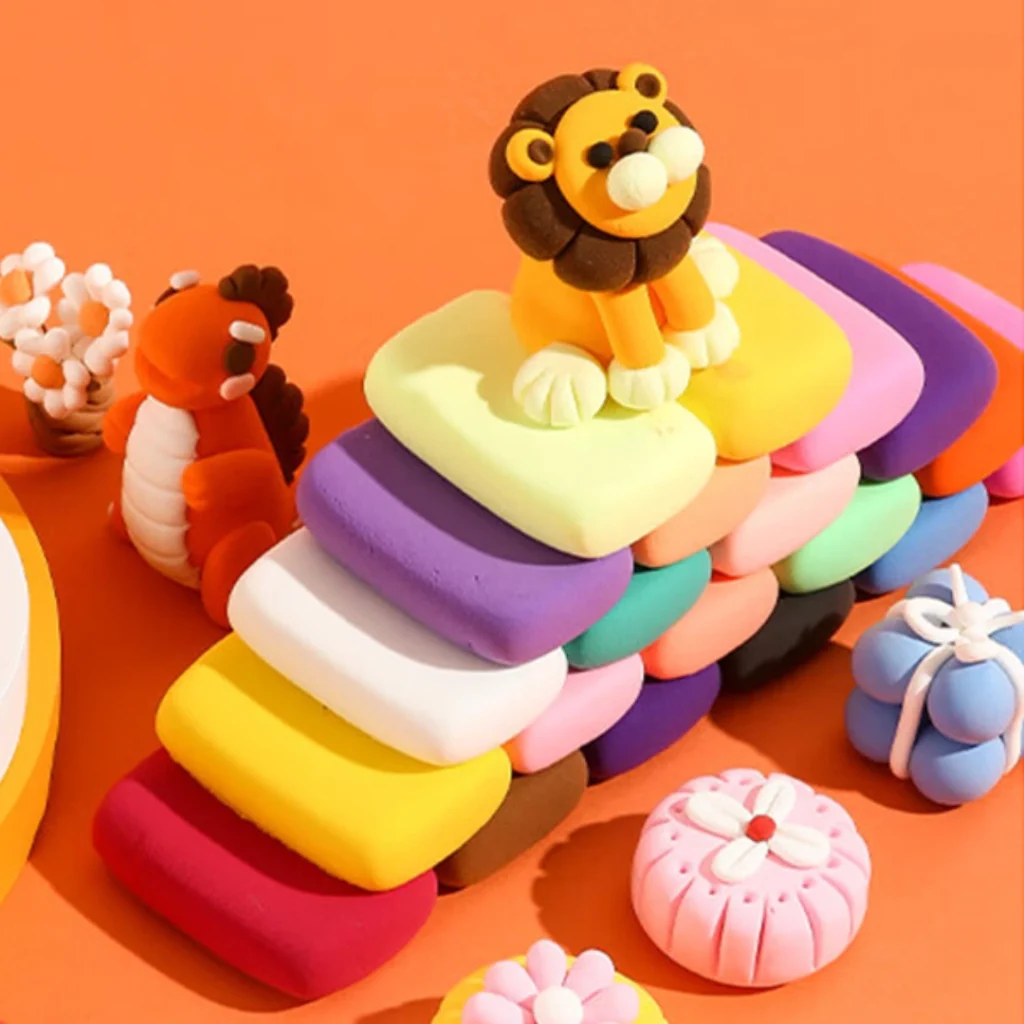
When children create together, they also notice how others feel. A child may comfort a peer whose block tower falls, or they might adjust play to include a friend who dislikes sticky textures. These small acts are the seeds of empathy.
Research shows that cooperative play fosters prosocial behaviors such as helping and sharing (Ladd, Journal of Educational Psychology, 1999). Sensory toys make this process natural by encouraging children to work side by side.
Sensory play also teaches children where personal boundaries lie. A child may not want another’s hands in their slime, and saying so helps them set limits. Learning to listen to these cues builds respect and awareness in group play.
Balance toys are a good example—children must coordinate movements without bumping into one another. The shared challenge requires awareness of space, safety, and cooperation, all while keeping the play fun.
>> Are Sensory Toys Only for Autism? Unlocking Their Benefits
Children often struggle to maintain attention, especially in new or stimulating environments. Sensory toys provide structured yet flexible experiences that guide focus naturally. Through repeated interaction, these toys help train concentration and persistence.
Sensory input—whether tactile, visual, or auditory—activates the brain in ways that can improve attention. Playing with slime, rolling clay, or sifting sand requires sustained observation and deliberate movement. These activities engage both motor and cognitive systems simultaneously.
Research in occupational therapy suggests that children who regularly use sensory tools show improved focus in later tasks (Miller et al., American Journal of Occupational Therapy, 2007). The key is balancing stimulation with predictability to support attention without overwhelming the child.
Focused sensory play can make the transition to formal learning smoother. Children who practice sorting, measuring, or building with sensory materials are better prepared for group lessons and structured activities. They enter the classroom with hands-on experience in concentration and task completion.
For example, a child who spends time stacking blocks to a precise height is practicing patience and observation—skills that translate directly to sitting through a story or following multi-step instructions.
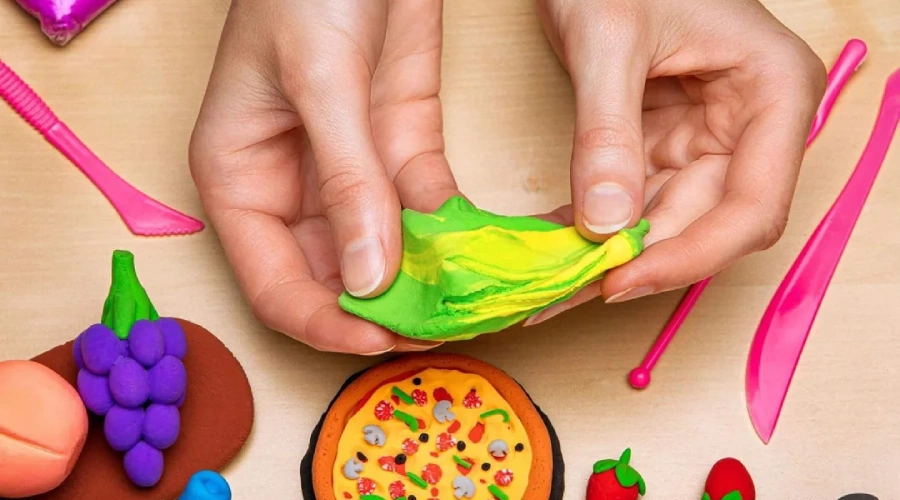
Simple sensory activities can make a big difference. A tub of kinetic sand with hidden objects encourages children to look carefully and plan motions. Stretching slime or molding clay for shapes develops persistence. Even a small puzzle with textured pieces helps sustain focus over several minutes.
In one preschool, teachers noticed that children who played with tactile toys for 10–15 minutes before lessons showed better listening skills and fewer distractions during storytime. These short, intentional sessions reinforce the link between sensory input and attention.
Not all toys work the same way. Sensory toys are unique because they focus on experience rather than a single goal. While traditional toys or educational games often have fixed rules or outcomes, sensory play encourages exploration, discovery, and experimentation.
Educational games are usually structured, with specific objectives like counting, matching, or spelling. Traditional toys, such as dolls or action figures, often support imaginative play but may not engage multiple senses at once. Sensory toys, in contrast, combine texture, movement, and sometimes sound or visual stimulation, giving children rich feedback as they manipulate objects.
For example, a puzzle may teach problem-solving, but playing with clay or sand introduces tactile feedback while children plan shapes or structures. Each approach supports learning, but sensory toys uniquely integrate motor, cognitive, and emotional systems.
Sensory toys don’t replace educational games or traditional toys—they complement them. They prepare children for focused learning, encourage creative thinking, and provide opportunities to practice social skills in low-pressure settings.
In classrooms, teachers often pair sensory bins with counting exercises or storytelling. Children might measure sand to learn numbers or create clay animals to inspire narrative writing. By combining approaches, children benefit from both structured guidance and open-ended exploration.

Sensory toys are valuable tools, but safety must always come first. Selecting appropriate toys, checking materials, and guiding play ensure children gain benefits without unnecessary risks. Proper supervision also helps children explore confidently.
Not all sensory toys suit every age. Small parts can be a choking hazard for toddlers, while very simple toys may bore older children. Parents and educators should look for toys labeled with age ranges and consider each child’s developmental level.
For instance, a toddler can safely explore large textured blocks or soft clay, while preschoolers may handle slime or modeling clay with tools. Matching the toy to the child’s skills ensures a safe and engaging experience.
Materials matter. Non-toxic, hypoallergenic, and BPA-free toys are essential. For items like slime, playdough, or clay, checking for safe chemical composition is critical. Textures should be firm enough to avoid accidental swallowing but soft enough to manipulate safely.
Some sensory toys contain small beads or glitter. Supervising how children use these items reduces the risk of ingestion or mess. Teachers often rotate toys to maintain hygiene and monitor wear and tear.
Even age-appropriate and safe toys need adult guidance. Supervising allows children to experiment, learn, and interact without accidents. Adults can suggest new ways to use a toy, encourage sharing, and help children notice details they might otherwise miss.
In group settings, supervision also ensures fair turns and reduces conflicts. A simple rule like “one scoop at a time” for kinetic sand teaches patience while keeping the environment safe and enjoyable.
Sensory toys guide children through learning with hands-on experiences. From motor skills and focus to social and emotional growth, these tools connect play with brain development, making exploration both safe and meaningful.
Why is the cheapest toy factory not always the best choice? Learn to compare factory prices, shipping fees, import duties, and landed costs.

A practical guide to toy manufacturing in China for US buyers, covering production processes, ASTM F963, CPSIA, quality control, costs, and logistics.
Learn how screen-free play creates opportunities for toy brands and why sensory products like playdough, clay, slime, and kinetic sand are a strong product fit.
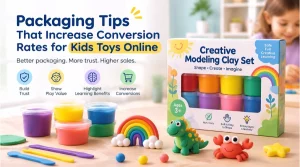
Improve kids toy sales with packaging tips that communicate safety, benefits, and product experience for online shoppers.