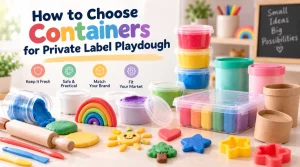
How to Choose Containers for Private Label Playdough
Choosing playdough packaging? Explore key factors for private label containers, including airtightness, size, materials, branding, logistics, and cost.

Playdough is one of the most famous play materials among children three years and older. As a rule, this toy is not intended for eating, but such paste can easily be made in a home kitchen, which is great for kids.
Below are some edible play dough recipes with critical ingredients and step-by-step instructions that you can prepare with your kids.
We can find the base ingredients for playdough in the kitchen. For example, flour, salt, and water make up the basic structure, while oil helps make it flexible. Cream of tartar adds elasticity, and food coloring provides vibrant hues.
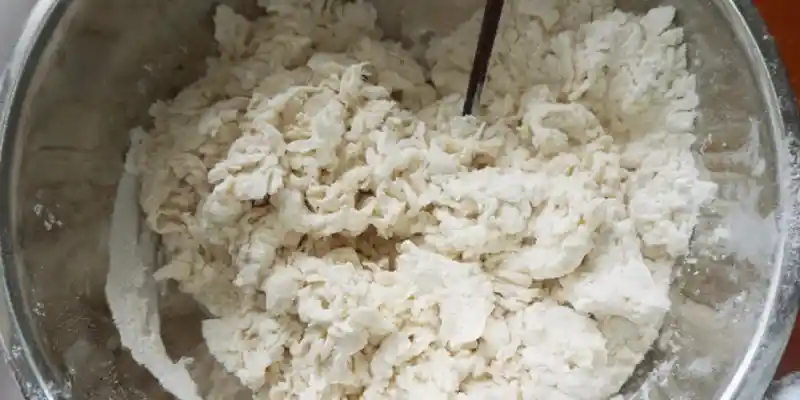
These ingredients are all edible, can be combined in any order, and can produce many other types of doughs.
The main ingredient in playdough is wheat flour, so it’s not safe for kids with celiac disease. High-protein ingredients like peanut butter and milk can cause allergies, so we need to find alternatives.
Wheat/Gluten Alternatives:
Peanut Alternatives:
Dairy Alternatives:
An easy way to think of making edible playdough is to think of it like cooking, and you’ll know what ingredients to choose.
Unlike homemade slime, making edible playdough requires cooking. Therefore, you need to prepare a pan and a silicone spatula.
Since the ingredients are edible and we cook them all, it is safe for children to put the dough in their mouths during play. Of course, make sure their hands are clean.
Note: Food coloring breaks down when heated, so it is best to add it when kneading the dough (i.e. step 3).
Before we make gluten-free playdough, we need to prepare some ingredients that are different from the basic recipe.
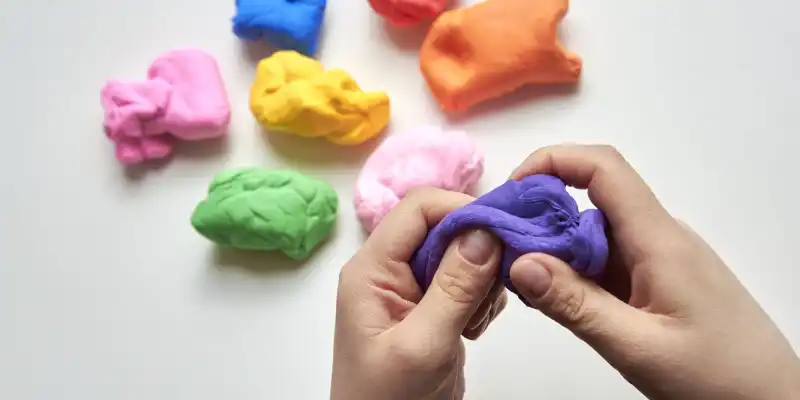
The steps for gluten-free playdough are similar to the basic recipe. We need to pour the ingredients into a pan and heat them, stirring with a silicone spatula.
When the ingredients become dough, we can take it out. Once the dough cools down, we can play with the children.
Note: Make sure the dough is completely cool to avoid burning the little hands.
We can add some colors and decorations to the playdough to make it more interesting.
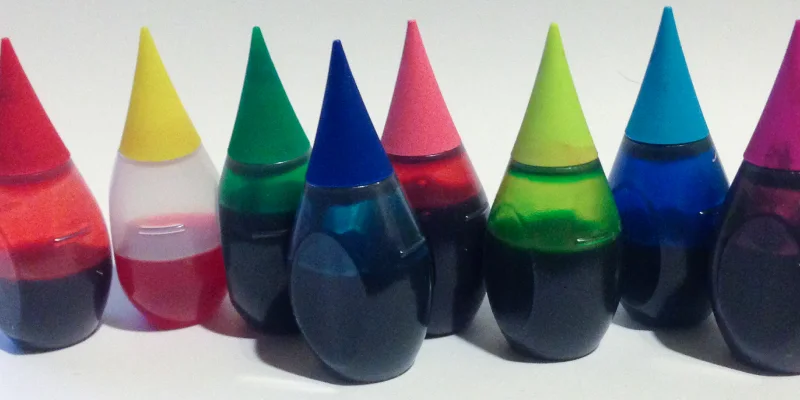
Natural food coloring comes from plant, animal or mineral sources, common ones are:
Natural food coloring is often preferred over synthetic coloring because people think they are healthier and cleaner.
However, they can also contain potential allergens, such as carmine from cochineal insects. And some natural food colorings are more expensive, such as the golden yellow from saffron.
You can add some sequins or glitter to your playdough to make it prettier. But be aware that when you add these things, the dough is no longer edible.

Add some crushed peanuts, small nuts, or rainbow sprinkles, you will make wonderful texture to your playdough. These add-ins are edible, so you don’t have to worry about your children eating them.
Of course, if your children are allergic to peanuts or nuts, you can also substitute other foods.
Be careful not to add ingredients that go bad easily, such as meat, fruit, or vegetables. These foods can breed bacteria and become smelly, even if you put them in the refrigerator.
When you finish playing, you must put the edible playdough in the refrigerator. Seal the dough with plastic wrap and preferably label it with the date. This will ensure that you can play with it at the best time.
Before you put the playdough in the fridge, spray it with some water. This will prevent the dough from drying out.
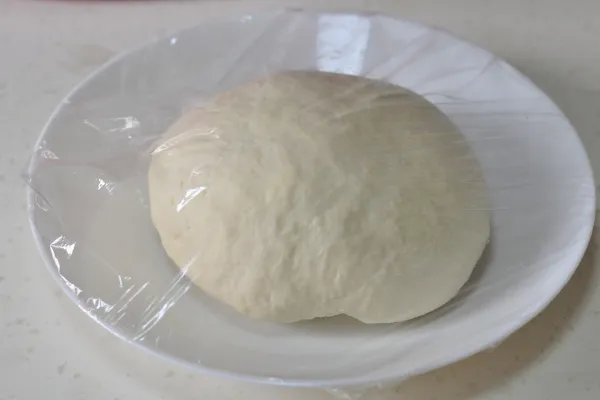
Secondly, do not put the dough into the freezer, as too low a temperature will make the dough hard and brittle. Moreover, it will take longer for the frozen dough to become soft again.
Of course, you can’t keep the dough at room temperature, especially in the hot summer. The heat and humidity will shorten the life of the dough because bacteria can more easily take root.
In fact, it is simple to judge the spoilage of playdough:
If any of the above signs appear, it means that the dough has gone bad and we should throw it away as soon as possible.
Sometimes, even if the dough is not bad, it may have some problems, such as sticky and hard. In this case, there are some small ways to fix it.
The dough is sticky because there’s too much water. You can add some corn starch to reduce the viscosity.
In addition, don’t be impatient when making it. Stir it a few more times with a spatula, and the dough will gradually become less sticky.
When playdough dries, it becomes too hard to shape. You can fix this by simply spraying the surface with water.
Note that too much water can also make the dough sticky.
Choosing playdough packaging? Explore key factors for private label containers, including airtightness, size, materials, branding, logistics, and cost.
Estimate the cost of custom playdough toys with this B2B guide covering pricing, customization, certifications, and manufacturing decisions.
A practical guide to private label playdough customization, covering packaging choices, color development, scent options, and safety considerations.
A burger comes out 🍔 #akia #fun #kidstoys #diy #clay #shorts