What Is the Best Colored Air-Dry Molding Clay
A practical guide to the best colored air-dry molding clay—covering texture, color quality, durability, and child-safe materials.

Air dry clay toys are simple craft objects shaped from clay that hardens in open air. No kiln or oven is needed. Because of this, the material is common in schools, homes, and art workshops. However, good results still depend on understanding how the clay behaves while it dries.
Air dry clay is a water-based modeling material. It usually contains natural clay minerals, cellulose fibers, and binders. These ingredients help the clay hold shape while wet and gain strength as water slowly evaporates.
When the clay is exposed to air, moisture leaves the material. As the water level drops, particles move closer and lock together. This process is called physical drying rather than firing, which is used for ceramic clay.
Because it dries without heat, the final structure is lighter and more porous than kiln-fired ceramics. Studies on clay drying behavior show that water loss can cause shrinkage and surface stress if drying is uneven (Reed, Principles of Ceramics Processing, Wiley).
Air dry clay works well for children’s toy crafts mainly because the process is simple. Kids can shape the clay by hand, and the piece hardens naturally over time. No special equipment is required.
Another reason is the working time. The clay stays soft for a while, so children can adjust shapes or fix mistakes. If it becomes dry, a small amount of water can restore flexibility.
The material also allows basic sculpting skills. Children learn how to roll, pinch, and join parts. These actions help develop fine motor control and spatial awareness during craft activities.
Beginners often notice cracks during drying. This usually happens when the surface dries faster than the inside. Uneven thickness or dry air can make the problem worse.
Another common issue is weak connections between parts. If two pieces of clay are joined without moisture or pressure, they may separate after drying. This is because the clay particles do not bond well.

Finally, shape distortion can occur while the clay loses water. Soft areas may sag under their own weight. To avoid this, beginners often need to control thickness and support larger forms during drying.
Before shaping toys, it helps to understand how air dry clay behaves. This material changes as water leaves the clay body. As a result, size, strength, and surface texture can shift during drying.
Air dry clay also behaves differently from other craft clays. Some clays harden with heat, while others cure through chemical change. Air dry clay mainly relies on moisture loss. Because of this, careful handling and steady drying conditions are important.
Air dry clay hardens when water evaporates from the material. As moisture leaves, clay particles move closer and form a solid structure. This process is physical drying rather than chemical curing.
In contrast, polymer clay hardens through heat. When baked, the plastic polymers cross-link and form a stable plastic network. This reaction changes the internal structure of the material.
Because of this difference, air dry clay shrinks slightly while drying. Polymer clay usually keeps its original size. The shrinkage of air dry clay can affect toy details and joints if the structure is not planned carefully.
Several physical properties influence how air dry clay behaves during toy making. These include moisture content, particle bonding, and surface texture. Each factor affects shaping, drying, and long-term durability.
For example, clay with higher moisture is easier to shape but may collapse under weight. On the other hand, clay that becomes too dry may crack when bent. Understanding these changes helps maintain stable toy forms.
During drying, water slowly moves from inside the clay to the surface. Then it evaporates into the surrounding air. This movement creates small internal stresses.
If the outside dries much faster than the inside, tension can form on the surface. This stress sometimes leads to visible cracks. Research on clay drying notes that uniform airflow and moderate humidity help reduce this problem (Reed, Principles of Ceramics Processing, Wiley).
Because of this, slow and even drying usually produces stronger clay toys.
Once dry, air dry clay becomes firm but not as strong as fired ceramic. The internal structure still contains tiny pores where water once existed.
These pores make the material lighter but also more fragile. Thin parts such as arms, tails, or narrow supports may break under pressure.
For toy making, balanced thickness improves strength. Wider connections between parts also help distribute stress more evenly.
Air dry clay usually has a soft and slightly fibrous texture. Many products contain cellulose fibers or fillers. These materials help the clay hold shape during modeling.
While working, the clay should feel smooth but not sticky. If it becomes too dry, small cracks may appear while shaping. A small amount of water can restore flexibility.
Good workability allows simple sculpting methods such as rolling, pressing, or joining pieces. These basic techniques are often enough for most small clay toys.
A good workspace supports stable shaping and controlled drying. Air dry clay reacts to dust, moisture, and surface texture. Therefore, the working area should stay clean, flat, and easy to wipe.
Lighting also matters. Clear light helps you see cracks, uneven edges, and small details early. In addition, steady room conditions reduce sudden moisture loss while the clay is still soft.
A smooth and clean surface prevents clay from sticking or tearing. Materials such as plastic boards, silicone mats, or sealed wood panels often work well.
Rough surfaces can pull moisture from the clay. This may cause the bottom layer to dry faster than the rest. As a result, small cracks can appear during shaping.
Cleaning the surface before each session also helps. Dust particles may mix with wet clay and create weak spots in thin areas.
Air dry clay reacts strongly to the surrounding air. Very dry rooms can speed up water loss. When this happens, the outer layer may harden while the inside stays wet.
Moderate room conditions are usually more stable. Many clay guides suggest working around normal indoor humidity and room temperature. Sudden heat from direct sunlight or heaters should be avoided.
If the air is very dry, covering unused clay with plastic can slow evaporation. This simple step keeps the material workable for a longer time.
Basic tools make shaping more precise. Simple items such as wooden sticks, small rollers, and plastic modeling knives are often enough.
These tools help cut clean edges and smooth surfaces. They also allow better control when forming small toy parts like eyes, ears, or joints.
It is useful to keep a small cup of water nearby. Water helps smooth seams and repair small cracks during the modeling stage.

Conditioning prepares the clay for shaping. Fresh clay from a package may feel stiff or uneven. Gentle preparation helps distribute moisture and improve flexibility.
Without conditioning, the clay may crack during bending or shaping. Even a short preparation stage can improve how the material responds to pressure and detail work.
Conditioning spreads moisture evenly through the clay body. When the water level is balanced, the particles move more smoothly during shaping.
This also reduces weak spots inside the clay. Uneven moisture sometimes leads to small internal fractures. These fractures may appear later during drying.
In simple terms, conditioning helps the clay behave in a predictable way while you sculpt.
One common method is hand kneading. Press and fold the clay repeatedly for several minutes. This motion distributes moisture and softens the material.
If the clay feels slightly dry, a few drops of water can help. The water should be added slowly. Too much water may make the clay sticky and hard to control.
Another method is rolling the clay into short cylinders and folding them back together. This technique works much like kneading dough.
Properly prepared clay feels smooth and slightly elastic. It should bend without cracking along the surface.
When pressed with a finger, the clay should leave a clear mark but slowly return to shape. This indicates balanced moisture inside the material.
If the clay still breaks along the edges while bending, it likely needs more kneading. A few extra minutes of conditioning usually solves the problem.
Simple shapes help beginners control form and balance. Air dry clay becomes weaker as parts become thinner or more complex. Starting with clear and stable forms makes the drying process more predictable.
Basic structures also reduce the chance of cracks or distortion. When the core shape is strong, small details can be added later without damaging the overall toy.
For beginners, toys based on simple objects are easier to build. Shapes such as small animals, balls, or block-like figures are common starting points.
These designs rely on round or oval forms. Such shapes spread stress evenly while drying. As a result, they are less likely to crack.
Working with simple designs also allows beginners to focus on basic techniques like rolling, pinching, and smoothing.
More complex toys often look difficult at first. However, most forms can be divided into simple shapes such as spheres, cylinders, and cones.
For example, a toy animal may start with one oval for the body and a smaller sphere for the head. Legs can be formed from short cylinders.
This step-by-step building method helps control size and proportion. It also makes it easier to adjust parts before the clay begins to dry.
Symmetry is important for many toy designs. Without planning, one side may become larger or heavier than the other.
A simple approach is to sketch the shape before sculpting. Even a quick drawing can guide size and placement of parts.
Another method is to compare both sides during shaping. Rotating the piece and checking it from several angles helps maintain balanced proportions.
Larger clay toys often require extra support. Air dry clay is soft when wet and may bend under its own weight. Internal support helps the structure keep its shape.
These supports are especially useful for toys with long limbs or upright forms. A stable structure reduces stress during both shaping and drying.
An armature is a simple internal support placed inside the clay. It can help hold the shape while the clay is still soft.
Armatures are useful for tall figures, standing animals, or toys with extended parts. Without support, these sections may sag before drying is complete.
Using an internal frame also allows thinner layers of clay. This can shorten drying time and reduce internal moisture stress.
One common technique is building the toy in stages. The main body is shaped first and allowed to firm slightly. Smaller parts are added later.
This staged method helps the base hold its weight. It also prevents delicate sections from bending.
Another useful approach is keeping walls evenly thick. Large differences in thickness can cause uneven drying and structural weakness.
Balanced weight improves stability. If one side of a toy is heavier, gravity may pull the structure out of shape while drying.
A wide base can help support upright toys. For example, figures often stand more securely when the lower section is slightly thicker.
Checking balance during sculpting is also helpful. Turning the piece and viewing it from different angles often reveals uneven areas early.
Detailed toys are often easier to build in stages. Air dry clay softens under pressure, so shaping many parts at once may damage earlier work. A layering method helps keep the base structure stable while details are added gradually.
This approach also improves precision. When the main form is already firm, smaller elements can be placed with better control. As a result, fine details stay clearer during the drying process.

A step-by-step method begins with the main body of the toy. This base shape provides support for later features such as ears, limbs, or decorations.
After shaping the base, the clay can rest for a short time. When the surface becomes slightly firm, additional pieces can be attached more safely.
Working in stages also allows time to correct proportions. If a part looks too large or too small, adjustments can be made before adding more layers.
Small decorative parts often hold better when the base is partly dry. At this stage, the clay is firm enough to support extra weight.
Before attaching new pieces, the surface should be slightly moistened. This improves bonding between the two clay sections.
Pressing the edges gently also helps join the particles together. A smooth seam reduces the chance that the piece will separate later.
Layering can sometimes change the original shape if too much pressure is applied. Soft clay underneath may bend or flatten.
To prevent this, light pressure should be used when attaching new parts. Supporting the opposite side of the toy with your hand can also help maintain its form.
Another useful habit is checking the shape often. Turning the toy and viewing it from different angles can reveal small distortions early.
Air dry clay begins to lose moisture as soon as it is exposed to air. During long craft sessions, this moisture loss can affect flexibility and surface quality.
Maintaining the right moisture level keeps the clay easy to shape. It also reduces the risk of cracks that appear when dry clay is bent or pressed.
Cracking often occurs when the outer layer dries faster than the inside. The surface becomes stiff while the inner clay remains soft.
When pressure is applied during shaping, the dry outer layer cannot stretch easily. Small fractures may then appear along the surface.
Scientific studies on clay drying show that uneven moisture loss creates stress between layers of material (Reed, Principles of Ceramics Processing, Wiley). Managing air exposure helps reduce this stress.
One simple method is covering the clay with plastic when it is not in use. This slows evaporation and keeps the material soft.
Lightly misting the surface with water can also help restore flexibility. However, the water should be applied in small amounts to avoid making the clay sticky.
Another useful habit is working with small portions of clay at a time. The rest can remain covered until needed.
During a craft session, unused clay should be sealed carefully. Plastic wrap or airtight containers are commonly used for short-term storage.
The clay should also be kept away from direct sunlight or warm air. Heat increases evaporation and causes the surface to harden quickly.
Before using the clay again, kneading it briefly helps restore an even moisture level. This simple step improves workability for the next stage of shaping.
Cracks and breakage are common problems when working with air dry clay. These issues usually appear during drying, when moisture leaves the clay body. If stress builds inside the structure, the surface may split.
Careful shaping and even thickness help reduce this risk. In addition, early inspection allows small problems to be corrected before the clay becomes fully hard.
One common cause is uneven thickness. Thick sections hold moisture longer, while thin areas dry quickly. This difference can create tension inside the clay.
Dry air or strong airflow can also increase cracking. When the surface dries too fast, it shrinks before the inner clay adjusts.
Another cause is weak joining between parts. If clay pieces are pressed together without moisture or blending, the joint may split as the clay shrinks during drying.
Weak areas often appear around thin parts or sharp edges. These areas can be strengthened by gently smoothing the clay surface.
Smoothing helps compress the clay particles together. This reduces small gaps that may later become cracks.
Reinforcing joints is also important. When two pieces meet, blending the seam with a small tool or finger spreads the material evenly and improves bonding.
Small cracks can often be repaired while the clay is still slightly damp. At this stage, the material can still bond with added moisture.
A small amount of water can be applied to the crack. Then the surface can be gently pressed and smoothed to close the gap.
For deeper cracks, a small piece of soft clay may be added. Pressing and blending the edges helps restore the shape before the toy continues drying.

Drying is a critical stage in air dry clay projects. During this time, the clay gradually loses moisture and becomes firm. If drying happens too quickly, structural stress may appear.
Allowing enough time for even drying helps maintain the toy’s shape. It also improves the final strength of the clay structure.
Several factors influence how fast air dry clay dries. The thickness of the toy is one of the most important. Thicker pieces hold water longer and require more time.
Room conditions also matter. Warm and dry air increases evaporation, while cooler or more humid air slows the process.
Air movement can also change drying speed. Strong airflow may dry the surface quickly but leave moisture inside the clay.
The safest method is natural air drying at room temperature. Placing the toy on a flat and breathable surface allows air to move around it.
Turning the toy occasionally can help both sides dry evenly. This reduces the chance of one side shrinking faster than the other.
Covering the toy loosely during the early stage can also slow surface drying. This method helps moisture escape more gradually.
One common mistake is placing clay toys near heat sources. Heaters, ovens, or direct sunlight can dry the outer layer too quickly.
Another problem occurs when toys are moved before they are firm. Soft clay may bend or flatten if lifted too early.
Uneven support during drying can also cause distortion. If one side hangs without support, gravity may slowly change the shape before the clay fully hardens.
Once air dry clay has hardened, the surface can still be adjusted. Minor shape corrections and surface smoothing are common finishing steps. These actions improve appearance and prepare the toy for coloring or decoration.
However, the clay is more fragile at this stage. Careful handling and light pressure are important to avoid chipping thin parts.
Light sanding helps remove rough edges or small bumps. Fine sandpaper is often used because it smooths the surface without removing too much material.
The sanding process should be gentle and gradual. Strong pressure may damage thin sections or corners of the toy.
Dust from sanding should also be wiped away. A clean surface makes later decoration steps more effective.
Small dents or uneven lines may appear after drying. These imperfections can sometimes be corrected with careful sanding or scraping.
If a deeper flaw exists, a small amount of fresh clay can be added. The new clay should be pressed firmly and blended with the existing surface.
After repair, the area should be allowed to dry again. This helps the added clay bond properly with the original structure.
Before decoration, the toy surface should be clean and dry. Dust, loose particles, or oils from hands can affect how color materials attach.
A light wipe with a dry or slightly damp cloth usually removes surface dust. This step improves adhesion for paint or other finishes.
A smooth surface also allows color layers to spread evenly. This helps maintain clear details in the final design.
Color and finishing steps give clay toys their final appearance. These steps are usually done after the clay is completely dry. Applying color too early may trap moisture inside the clay.
Simple coloring methods are often enough for toy crafts. The goal is to enhance shapes and details rather than cover them completely.
Painting should begin only when the clay feels fully dry and firm. If the clay still feels cool or slightly soft, moisture may remain inside.
Applying paint too early can slow the drying process. In some cases, trapped moisture may lead to surface cracks later.
Waiting until the clay is fully dry helps the paint attach more evenly and keeps the toy stable.
Water-based paints are commonly used for clay crafts. These paints are easy to apply and clean up with water.
Thin layers usually work better than thick ones. A thin coat dries faster and reduces the chance of covering fine details.
Soft brushes also help children control the paint. This makes it easier to add color to small areas without damaging the clay surface.

Texture can add interest to simple toy shapes. Small tools or everyday objects can create patterns on the clay surface.
For example, pressing fabric, leaves, or textured tools onto soft clay can produce repeating patterns. These textures often remain visible even after painting.
Color can also highlight surface details. Light shading or contrasting colors can make raised patterns easier to see.
After drying and decorating, clay toys still need protection. Air dry clay remains slightly porous, which means it can absorb moisture from the air. Over time, this may weaken the structure.
Protective steps help maintain shape and surface quality. They also reduce the risk of damage during handling or storage.
Sealing creates a thin protective layer on the clay surface. This layer limits contact with air and moisture, which can slowly affect the material.
Without sealing, small pores in the clay may absorb water. This can soften the surface or cause minor swelling in humid conditions.
A sealed surface is also easier to clean. Dust and dirt are less likely to stick to a smooth, protected finish.
Protective finishes are usually applied after paint has fully dried. A thin and even layer works best to avoid uneven surfaces.
Brush-on sealers are often used for small clay toys. They allow control over coverage, especially on detailed areas.
It is important to let each layer dry before adding another. Multiple thin layers often provide better protection than one thick layer.
Moisture is one of the main factors that can affect air dry clay over time. Even after drying, the material can react to high humidity.
Keeping clay toys in a dry environment helps maintain their structure. Storage in closed containers or dry rooms is often effective.
Avoid placing clay toys in areas with frequent water exposure. Bathrooms or outdoor spaces may increase the risk of gradual damage.
Air dry clay toys are not only craft objects but also learning tools. The process of shaping and building supports both creative thinking and basic problem-solving skills.
Simple projects can help children explore ideas through hands-on work. This makes clay a useful material for both play and learning.
Working with clay introduces basic physical concepts. Children observe how soft material changes shape and becomes firm over time.
They also learn cause and effect. For example, adding too much pressure can change a shape, while careful handling keeps it stable.
These small observations help build early understanding of materials and simple processes.
Clay work involves repeated hand movements such as rolling, pressing, and pinching. These actions help improve hand control and coordination.
Fine motor skills develop as children handle small details. Shaping tiny parts requires steady movement and attention.
Over time, these skills support other tasks such as writing, drawing, and tool use.
Handmade clay toys can become part of creative play. Children often give their creations names, roles, or simple stories.
This kind of play supports imagination and language use. A simple clay figure can turn into a character in a larger story.
Making and using the toy together creates a link between crafting and storytelling. This adds another layer of engagement to the activity.
Safety is an important part of any clay activity. Air dry clay is generally easy to use, but it still requires basic care during handling. Small tools, moisture, and fine particles can create risks if not managed properly.
Clear rules and simple habits help reduce these risks. With proper guidance, children can work safely while focusing on the creative process.
Supervision should match the child’s age and skill level. Younger children often need close guidance, especially when using tools or handling small parts.
Older children may work more independently, but periodic checks are still useful. This helps ensure that techniques are safe and materials are used correctly.
It is also helpful to set simple rules before starting. For example, clay should not be placed in the mouth, and tools should be used only for their intended purpose.

Even basic clay tools can cause minor injuries if used incorrectly. Tools with sharp edges should be introduced carefully and used under supervision.
Children should learn to cut or shape clay away from their hands. This reduces the risk of slips or small cuts during use.
Keeping tools organized also improves safety. When tools are placed in a fixed area, children are less likely to misuse or drop them.
Cleaning the workspace after use helps prevent accidental contact with dried clay dust. Fine particles should be wiped with a damp cloth rather than brushed into the air.
Hands should be washed after handling clay. This removes residue and reduces the chance of transferring material to the face or eyes.
Unused clay should be stored in sealed containers to prevent drying. Tools should also be cleaned and dried before storage to maintain safe and consistent use in future sessions.
Air dry clay toy making is a simple process, yet it depends on careful control of moisture, structure, and timing. By using basic techniques such as even shaping, slow drying, and proper layering, beginners can avoid common problems like cracks or weak joints.
Small habits, such as keeping clay covered and smoothing surfaces early, also make a clear difference. Over time, these methods help build stable and well-formed toys. With patience and practice, air dry clay becomes a reliable material for both creative work and hands-on learning.
A practical guide to the best colored air-dry molding clay—covering texture, color quality, durability, and child-safe materials.
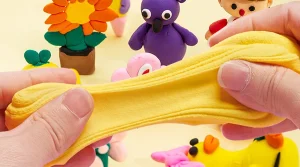
A practical guide on pre-colored air dry clay safety, including potential risks, handling tips, and ensuring safe creative play for children.

Air dry clay made easy: practical miniature-making advice for smoother sculpting, safer handling, and more durable tiny designs.
Expert insights on choosing the best clay for miniature figures, highlighting polymer, air dry, and modeling clays for creative and detailed projects.